Loading...
Done
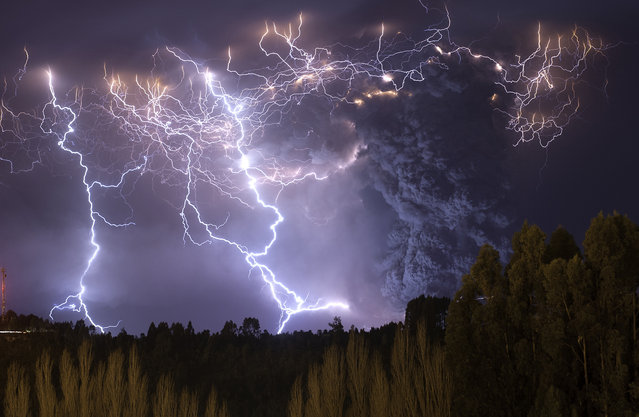
The eruption of Cordon Caulle began on June 4, 2011, located in the Region of Los Rios in Chile. For about 12 months, people and animals became accustomed to living with the daily fall of ash, which also caused problems in the air traffic in South America. The explosions and lightning during first days of the eruption could be seen from hundreds of miles around. This photograph was taken on the second night of eruption from the town of Lago Ranco. (Photo and caption by Francisco Negroni/National Geographic Traveler Photo Contest)

The eruption of Cordon Caulle began on June 4, 2011, located in the Region of Los Rios in Chile. For about 12 months, people and animals became accustomed to living with the daily fall of ash, which also caused problems in the air traffic in South America. The explosions and lightning during first days of the eruption could be seen from hundreds of miles around. This photograph was taken on the second night of eruption from the town of Lago Ranco. (Photo and caption by Francisco Negroni/National Geographic Traveler Photo Contest)

ATTENTION! All pictures are presented in high resolution. To see Hi-Res images – just TWICE click on any picture. In other words, click small picture – opens the BIG picture. Click BIG picture – opens VERY BIG picture.
Details
23 Jun 2013 11:24:00
A man lies in the sea grass at a beach on July 18, 2016 in Qingdao, Shandong Province of China. The enteromorpha prolifera spread on the beaches in Qingdao and were under clearing. (Photo by VCG/VCG via Getty Images)

A man lies in the sea grass at a beach on July 18, 2016 in Qingdao, Shandong Province of China. The enteromorpha prolifera spread on the beaches in Qingdao and were under clearing. (Photo by VCG/VCG via Getty Images)
Details
20 Jul 2016 10:23:00
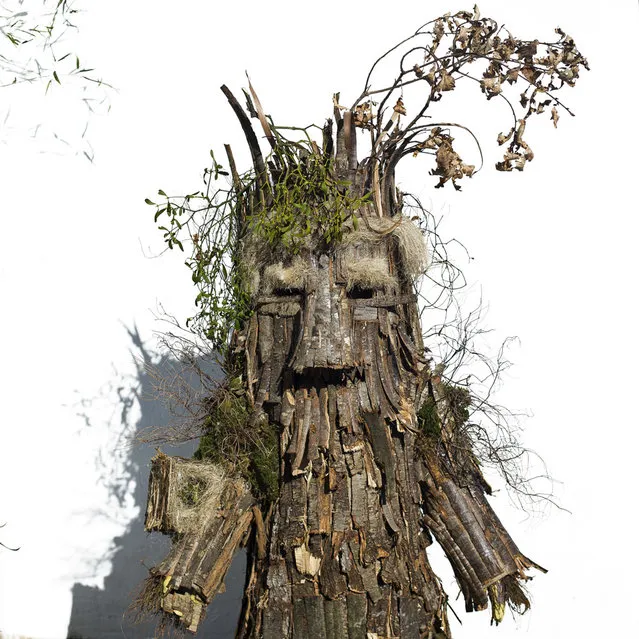
A man dressed as a  “Trapajon”, representing entities of nature, poses for a picture after taking part in the Vijanera Festival in Silio, northern Spain, Sunday, Jan. 6, 2013. The Vijanera masquerade, of pre-Roman origin, is the first carnival of the year in Europe symbolizing the triumph of good over evil and involving the participation of crowds of residents wearing different masks, animal skins and brightly colored clothing with its own complex function and symbolism and becoming the living example of the survival of archaic cults to nature. (Photo by Daniel Ochoa de Olza/AP Photo)

A man dressed as a “Trapajon”, representing entities of nature, poses for a picture after taking part in the Vijanera Festival in Silio, northern Spain, Sunday, Jan. 6, 2013. The Vijanera masquerade, of pre-Roman origin, is the first carnival of the year in Europe symbolizing the triumph of good over evil and involving the participation of crowds of residents wearing different masks, animal skins and brightly colored clothing with its own complex function and symbolism and becoming the living example of the survival of archaic cults to nature. (Photo by Daniel Ochoa de Olza/AP Photo)
Details
19 Jan 2013 13:01:00
Martin Lacey Jr. with a lion during the premiere of the Circus Krone program “Circus der Preistraeger” at Circus Krone on February 2, 2016 in Munich, Germany. (Photo by Hannes Magerstaedt/Getty Images)

Martin Lacey Jr. with a lion during the premiere of the Circus Krone program “Circus der Preistraeger” at Circus Krone on February 2, 2016 in Munich, Germany. (Photo by Hannes Magerstaedt/Getty Images)
Details
04 Feb 2016 12:02:00
Rita Ora arrives for the Echo Award at Messe Berlin on April 12, 2018 in Berlin, Germany. (Photo by Andreas Rentz/Getty Images)

British singer Rita Ora arrives for the Echo Award at Messe Berlin on April 12, 2018 in Berlin, Germany. (Photo by Andreas Rentz/Getty Images)
Details
15 Apr 2018 00:01:00
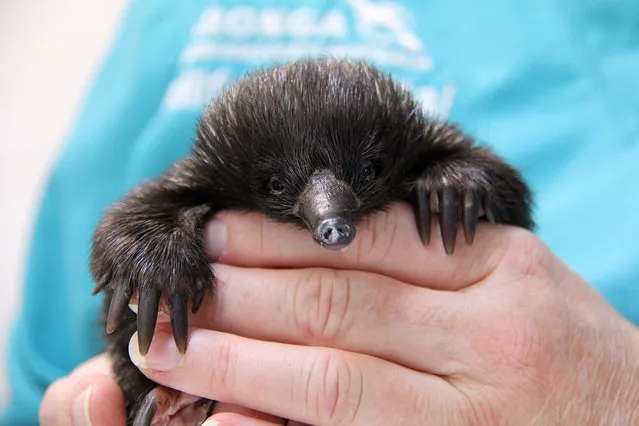
An undated handout picture made available on 29 April 2016 by the Toronga Zoo shows a baby echidna making a remarkable recovery after being attacked by chickens in a family's backyard at the Taronga Zoo in Sydney, Australia. (Photo by EPA/Taronga Zoo)

An undated handout picture made available on 29 April 2016 by the Toronga Zoo shows a baby echidna making a remarkable recovery after being attacked by chickens in a family's backyard at the Taronga Zoo in Sydney, Australia. (Photo by EPA/Taronga Zoo)
Details
01 May 2016 10:56:00
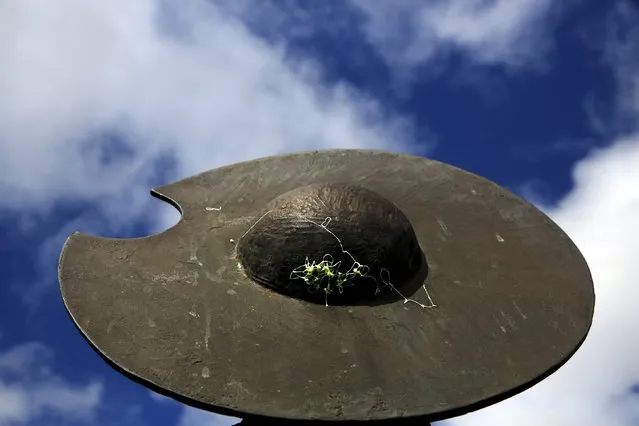
A sculpture of Don Quixote shows him wearing the basin he mistook for the enchanted helmet of the fictional Moorish king Mambrino in Alcazar de San Juan, Spain, April 5, 2016. (Photo by Susana Vera/Reuters)

A sculpture of Don Quixote shows him wearing the basin he mistook for the enchanted helmet of the fictional Moorish king Mambrino in Alcazar de San Juan, Spain, April 5, 2016. The arid central Spanish region of La Mancha is the setting for “Don Quixote”, the seventeenth-century novel by Miguel de Cervantes. Four hundred years after his death, references to the characters of Don Quixote, his loyal squire Sancho Panza and his beautiful lady Dulcinea abound in the surrounding villages from sweet treats to theatre productions involving livestock. Cervantes did not give away the name of the birthplace of Don Quixote, a middle-aged gentleman who becomes obsessed with chivalrous ideals. But many identify the village of Argamasilla de Alba as his hometown. The anniversary of Cervantes’ death is marked on the 23 April. (Photo by Susana Vera/Reuters)
Details
21 Apr 2016 12:32:00
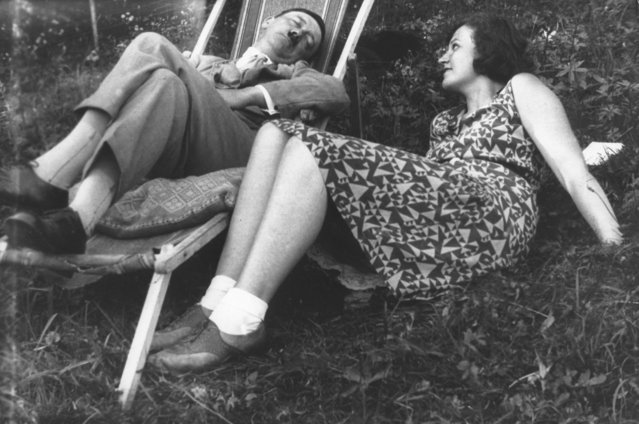
Adolf Hitler (left), German Nazi politician, in a deck chair next to is niece Angela (Geli) Raubal – around 1930. (Photo by Ullstein Bild/Ullstein Bild via Getty Images)

Adolf Hitler (left), German Nazi politician, in a deck chair next to is niece Angela (Geli) Raubal – around 1930. (Photo by Ullstein Bild/Ullstein Bild via Getty Images)
Details
03 Sep 2018 08:06:00