Loading...
Done
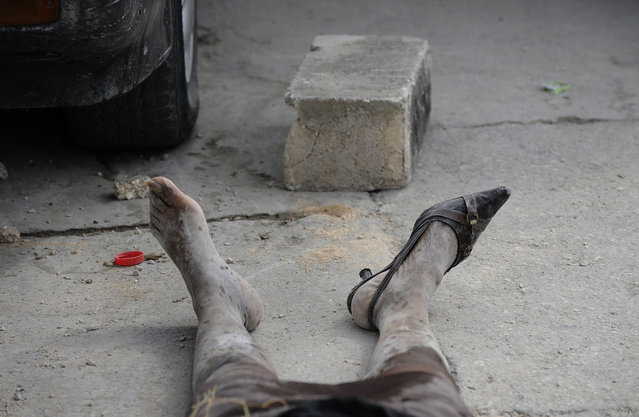
In this photo submitted by the Washington Post tilted “The Moment Time Stopped”, survivors piled bodies of the dead outside for weeks after earthquake on January 14, 2010 in Port-au-Prince, Haiti. The Washington Post has won a Pulitzer Prize for breaking news photography on Monday, April 18, 2011 for images taken in Haiti following the earthquake there.(Photo by Carol Guzy/AP Photo/The Washington Post)

In this photo submitted by the Washington Post tilted “The Moment Time Stopped”, survivors piled bodies of the dead outside for weeks after earthquake on January 14, 2010 in Port-au-Prince, Haiti. The 7.0 magnitude earthquake struck in 2010, and the Haitian government has said more than 300,000 people were killed. The exact toll is unknown because there was no systematic effort to count bodies among the chaos and destruction. (Photo by Carol Guzy/AP Photo/The Washington Post)
Details
13 Jan 2015 14:17:00
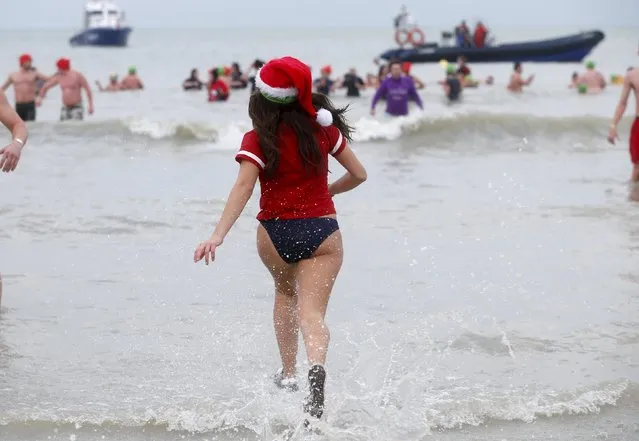
A participant runs towards the waters of the North Sea during the annual New Year's plunge event in Ostend, Belgium, January 2, 2016. (Photo by Francois Lenoir/Reuters)

A participant runs towards the waters of the North Sea during the annual New Year's plunge event in Ostend, Belgium, January 2, 2016. (Photo by Francois Lenoir/Reuters)
Details
04 Jan 2016 08:06:00
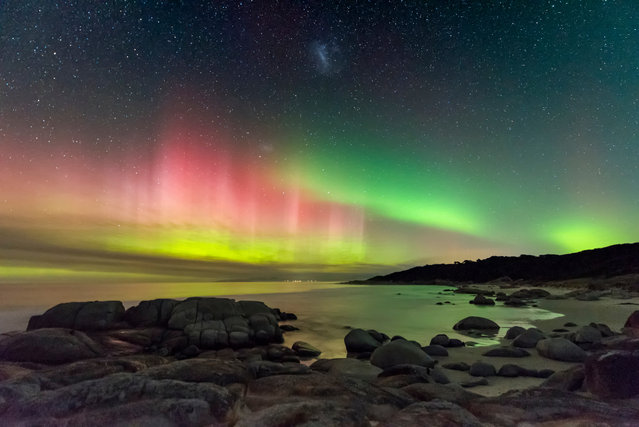
Aurora Australis from Beerbarrel Beach, by James Stone. Runner Up: Aurorae. (Photo by James Stone/Astronomy Photographer of the Year)

Aurora Australis from Beerbarrel Beach, by James Stone. Runner Up: Aurorae. (Photo by James Stone/Astronomy Photographer of the Year)
Details
14 Sep 2019 00:05:00
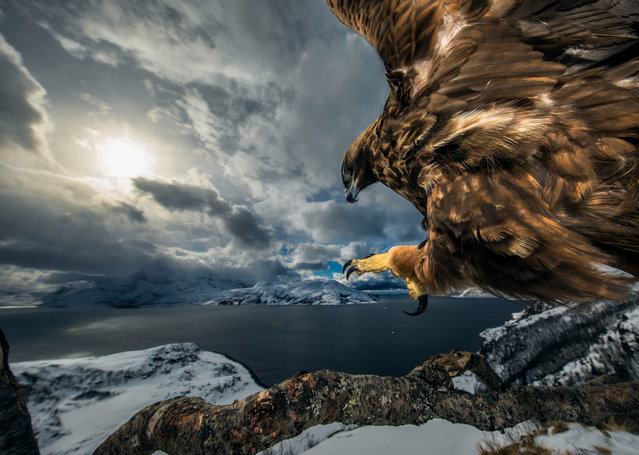
Birds behaviour winner: Land of the Eagle by Audun Rikardsen, Norway. High on a ledge, on the coast near his home in northern Norway, Rikardsen carefully positioned an old tree branch that he hoped would make a perfect golden eagle lookout. To this, he bolted a tripod head with a camera, flashes and motion sensor attached, and built himself a hide a short distance away. From time to time, he left road‑kill carrion nearby. Very gradually – over the next three years – a golden eagle got used to the camera and started to use the branch regularly to survey the coast below. (Photo by Audun Rikardsen/2019 Wildlife Photographer of the Year)

Birds behaviour winner: Land of the Eagle by Audun Rikardsen, Norway. High on a ledge, on the coast near his home in northern Norway, Rikardsen carefully positioned an old tree branch that he hoped would make a perfect golden eagle lookout. To this, he bolted a tripod head with a camera, flashes and motion sensor attached, and built himself a hide a short distance away. From time to time, he left road‑kill carrion nearby. Very gradually – over the next three years – a golden eagle got used to the camera and started to use the branch regularly to survey the coast below. (Photo by Audun Rikardsen/2019 Wildlife Photographer of the Year)
Details
17 Oct 2019 00:03:00
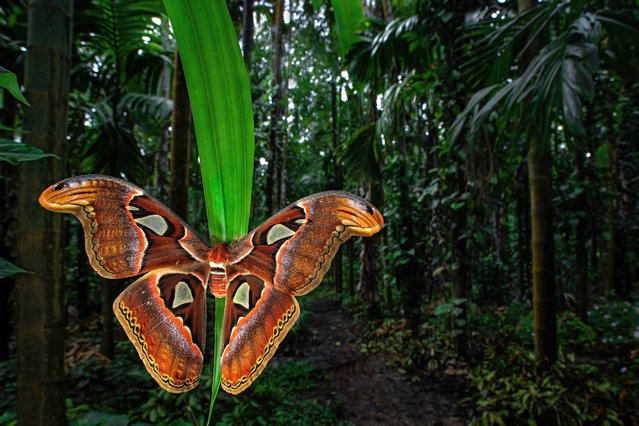
A huge atlas moth, with a wingspan of more than 9in, photographed on an areca nut plantation in Sirsi, India. (Photo by Uday Hegde/Close Up Photographer of the Year)

A huge atlas moth, with a wingspan of more than 9in, photographed on an areca nut plantation in Sirsi, India. (Photo by Uday Hegde/Close Up Photographer of the Year)
Details
09 Jan 2023 06:04:00
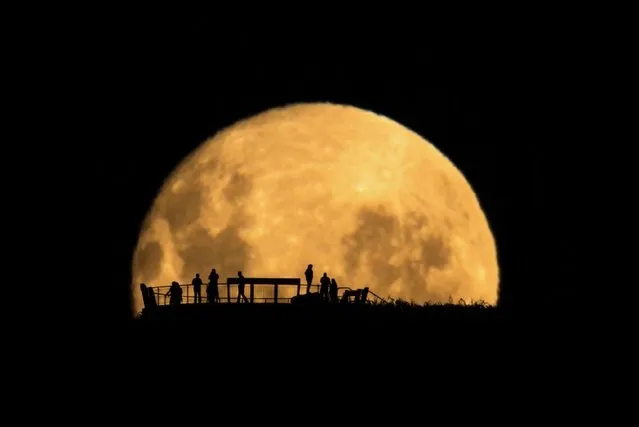
Astronomy Photographer Of The Year 2013 Part1

The Royal Observatory just announced its Astronomy Photographer Of The Year 2013 winners. Australian photographer Mark Gee was chosen among a thousand amateur and professional photographers around the globe to win the top title. His work is part of an exhibition of the winning photographers, which opened on Sept. 19 at the Royal Observatory Greenwich. The Royal Observatory shared with us the winners and notable mentions of the competition. Their descriptions of the prizewinners can be found below the images.
Details
04 Oct 2013 11:45:00
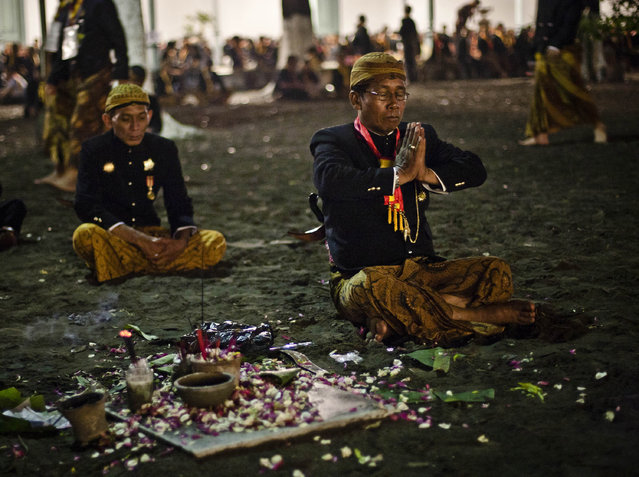
Javanese people pray before rituals night carnival “1st Suro” (Javanese calender) during  Islamic New Year celebrations at Kasunanan Palace on November 14, 2012 in Solo City, Central Java, Indonesia. Javanese will celebrate the national holiday with ceremonies and rituals marking the 1434th Islamic New Year's Eve or “1st Suro”. The parade started from Keraton Kasunanan and is headed by a group of albino buffaloes, known as Kebo Bule. Local people believe that the parade of Heirlooms and Kebo Bule will bring them a better life. (Photo by Ulet Ifansasti)

Javanese people pray before rituals night carnival “1st Suro” (Javanese calender) during Islamic New Year celebrations at Kasunanan Palace on November 14, 2012 in Solo City, Central Java, Indonesia. Javanese will celebrate the national holiday with ceremonies and rituals marking the 1434th Islamic New Year's Eve or “1st Suro”. The parade started from Keraton Kasunanan and is headed by a group of albino buffaloes, known as Kebo Bule. Local people believe that the parade of Heirlooms and Kebo Bule will bring them a better life. (Photo by Ulet Ifansasti)
Details
16 Nov 2012 07:37:00
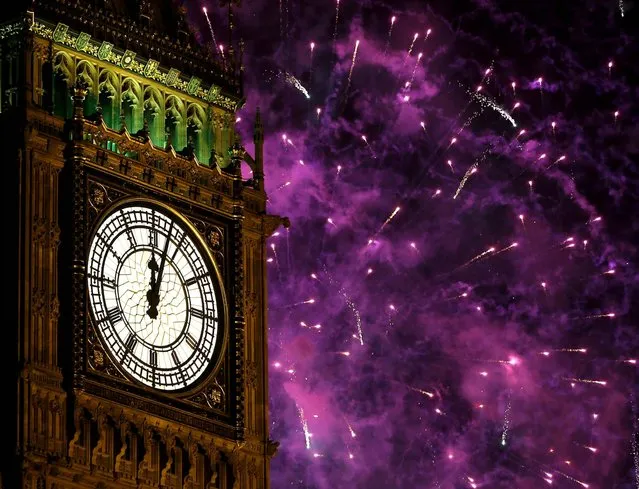
Fireworks explode over Elizabeth Tower housing the Big Ben clock in London. (Photo by Kirsty Wigglesworth/Associated Press)

Fireworks explode over Elizabeth Tower housing the Big Ben clock in London. (Photo by Kirsty Wigglesworth/Associated Press)
Details
01 Jan 2013 10:27:00