Loading...
Done
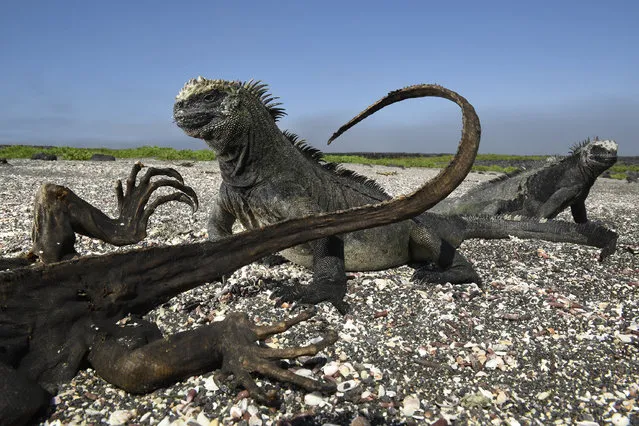
Galapagos – Rocking the Cradle: Four major ocean currents converge along the Galapagos archipelago, creating the conditions for an extraordinary diversity of animal life, April 25, 2016. The islands are home to at least 7,000 flora and fauna species, of which 97 percent of the reptiles, 80 percent of the land birds, 50 percent of the insects and 30 percent of the plants are endemic. The local ecosystem is highly sensitive to the changes in temperature, rainfall and ocean currents that characterize the climatic events known as El Niño and La Niña. These changes cause marked fluctuations in weather and food availability. Many scientists expect the frequency of El Niño and La Niña to increase as a result of climate change, making the Galapagos a possible early-warning location for its effects. (Photo by Thomas P. Peschak for National Geographic/World Press Photo)

Galapagos – Rocking the Cradle: Four major ocean currents converge along the Galapagos archipelago, creating the conditions for an extraordinary diversity of animal life, April 25, 2016. The islands are home to at least 7,000 flora and fauna species, of which 97 percent of the reptiles, 80 percent of the land birds, 50 percent of the insects and 30 percent of the plants are endemic. (Photo by Thomas P. Peschak for National Geographic/World Press Photo)
Details
16 Apr 2018 00:01:00
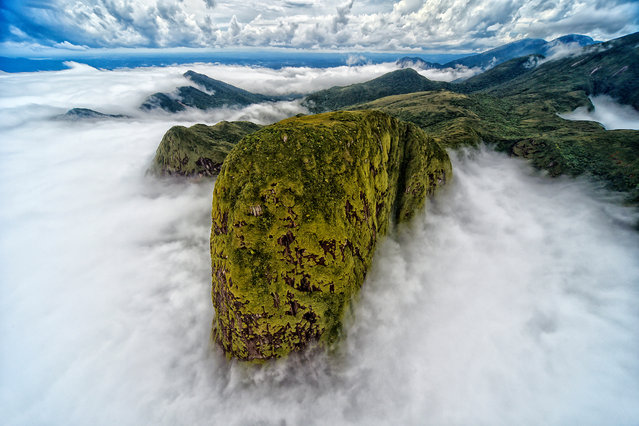
Landscape second place: Denis Ferreira Netto, Brazil. “In a helicopter flight through the sea mountain range, I came across this white cloud cover, which resulted in this magnificent image that resembles the head of a dinosaur”, the photographer said. (Photo by Denis Ferreira Netto/TNC Photo Contest 2021)

Landscape second place: Denis Ferreira Netto, Brazil. “In a helicopter flight through the sea mountain range, I came across this white cloud cover, which resulted in this magnificent image that resembles the head of a dinosaur”, the photographer said. (Photo by Denis Ferreira Netto/TNC Photo Contest 2021)
Details
06 Oct 2021 07:52:00
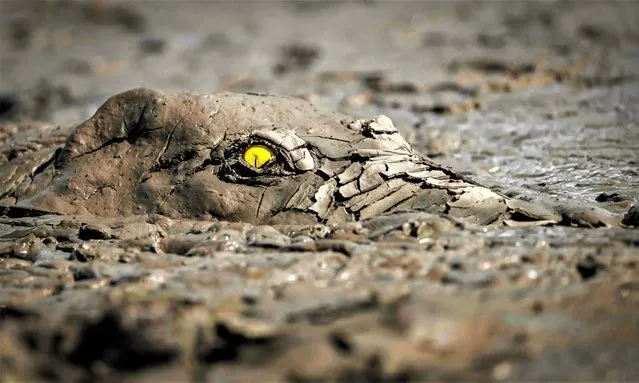
“Danger in the mud” – a crocodile at Mana Pools National Park, Zimbabwe. The grand prize winner. (Photo by Jens Cullmann/World Nature Photography Awards 2022)

“Danger in the mud” – a crocodile at Mana Pools National Park, Zimbabwe. The grand prize winner. (Photo by Jens Cullmann/World Nature Photography Awards 2022)
Details
08 Mar 2023 04:28:00
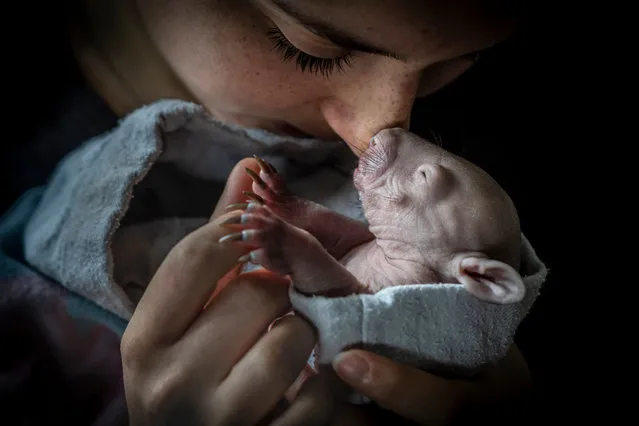
Nose to Nose; Human/Nature winner. “Doug Gimesy was documenting work at the Joey and Bat Sanctuary near Melbourne when he met a wombat (Vombatus ursinus) whose mother had been killed by a car. Gimesy watched as a young veterinary student bottle-fed the orphaned joey, then touched her nose to the joey’s in a tender moment of interspecies bonding”. (Photo by Doug Gimesy/BigPicture)

Nose to Nose; Human/Nature winner. “Doug Gimesy was documenting work at the Joey and Bat Sanctuary near Melbourne when he met a wombat (Vombatus ursinus) whose mother had been killed by a car. Gimesy watched as a young veterinary student bottle-fed the orphaned joey, then touched her nose to the joey’s in a tender moment of interspecies bonding”. (Photo by Doug Gimesy/BigPicture)
Details
25 Jun 2023 05:33:00
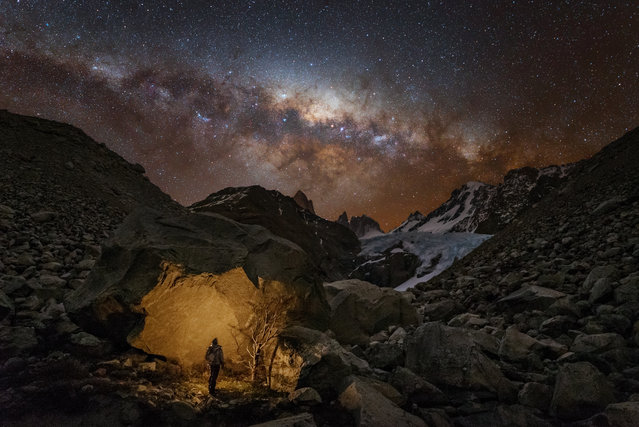
“People and Space”. Winner: Wanderer in Patagonia by Yuri Zvezdny (Russia) A lone stargazer stares up at the stars of our galaxy, the Milky Way, as they stretch across the night sky over the glacier “White Stones” (Piedras Blancas) in the Los Glaciares National Park, Argentina. El Chaltén, Santa Cruz Province, Argentina, 27 September 2016 iOptron Sky-Tracker mount, Sony A7S camera, 18 mm f/2.8 lens, ISO 5000, 30-second exposure Wanderer in Patagonia. (Photo by Yuri Zvezdny/Insight Astronomy Photographer of the Year 2017)

“People and Space”. Winner: Wanderer in Patagonia by Yuri Zvezdny (Russia) A lone stargazer stares up at the stars of our galaxy, the Milky Way, as they stretch across the night sky over the glacier “White Stones” (Piedras Blancas) in the Los Glaciares National Park, Argentina. El Chaltén, Santa Cruz Province, Argentina, 27 September 2016 iOptron Sky-Tracker mount, Sony A7S camera, 18 mm f/2.8 lens, ISO 5000, 30-second exposure Wanderer in Patagonia. (Photo by Yuri Zvezdny/Insight Astronomy Photographer of the Year 2017)
Details
18 Sep 2017 07:09:00
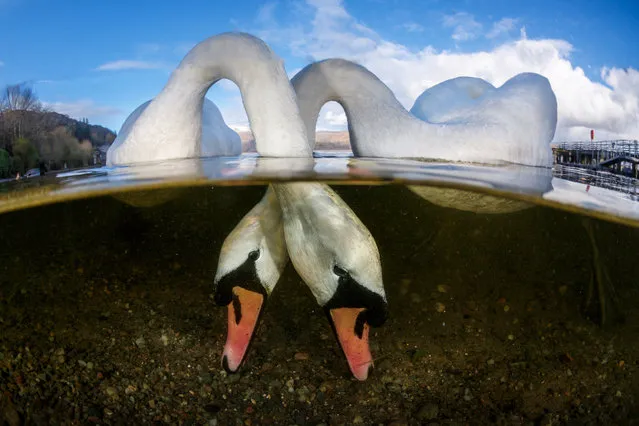
British underwater photographer of the year – winner. “Love Birds” by Grant Thomas (UK). Location: Luss Pier, Loch Lomond, Scotland. Thomas’s initial idea was to frame a split shot of one swan feeding below the surface of the water but when he noticed how comfortable they were around him he was confident, with some patience, he could get that magical shot of the two. (Photo by Grant Thomas/UPY 2018)

British underwater photographer of the year – winner. “Love Birds” by Grant Thomas (UK). Location: Luss Pier, Loch Lomond, Scotland. Thomas’s initial idea was to frame a split shot of one swan feeding below the surface of the water but when he noticed how comfortable they were around him he was confident, with some patience, he could get that magical shot of the two. (Photo by Grant Thomas/UPY 2018)
Details
16 Feb 2018 00:02:00
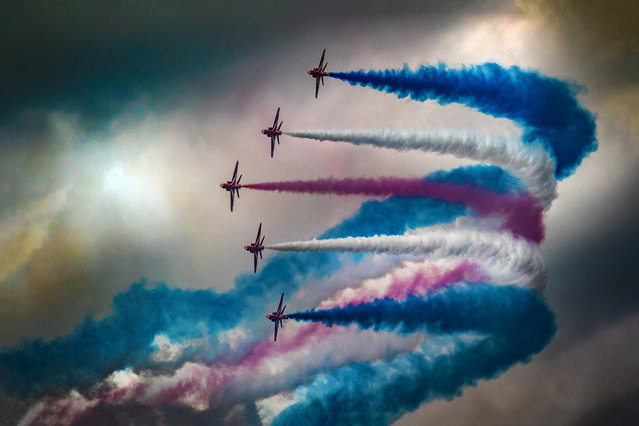
“Red Arrows” at the 2016 royal air tattoo, RAF Fairford, UK. By Jonny Williams, finalist: action. (Photo by Jonny Williams/UK National Geographic Traveller Photography Competition 2018)

“Red Arrows” at the 2016 royal air tattoo, RAF Fairford, UK. By Jonny Williams, finalist: action. (Photo by Jonny Williams/UK National Geographic Traveller Photography Competition 2018)
Details
02 Mar 2018 00:01:00
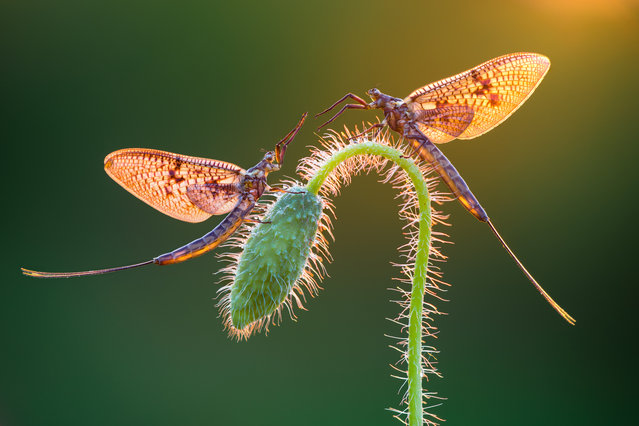
Winner: Mayflies by Petar Sabol, Goričan, Croatia. (Photo by Sabol Petar/International Garden Photographer of the Year)

International photographic competition, which runs in association with the Royal Botanic Gardens in Kew, London, awards special prize for the best close-up images. Here: Winner – Mayflies by Petar Sabol, Goričan, Croatia. (Photo by Sabol Petar/International Garden Photographer of the Year)
Details
25 Jul 2018 00:03:00