Loading...
Done


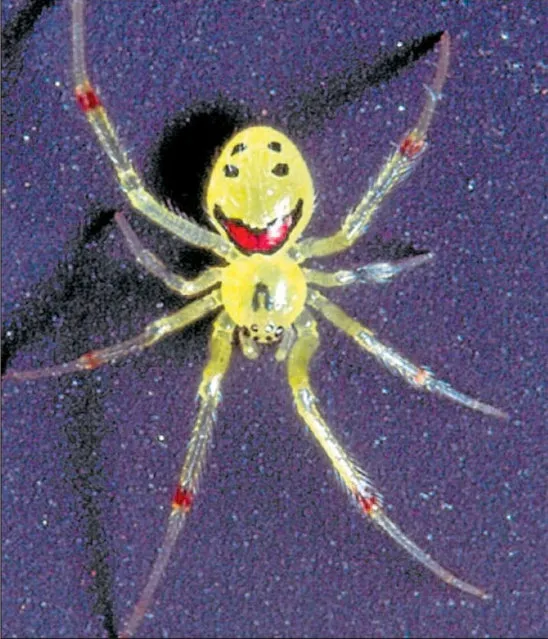
Theridion grallator, also known as the "happy face spider", is a spider in the family Theridiidae. Its Hawaiian name is nananana makakiʻi (face-patterned spider). The specific epithet grallator is Latin for "stilt walker", a reference to the species' long, spindly legs.
Details
16 Mar 2013 16:08:00
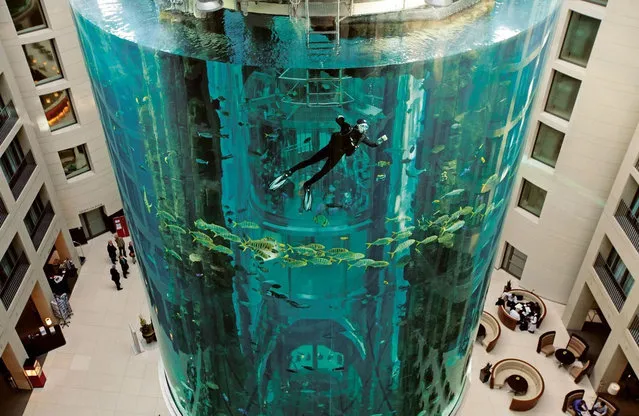
Aquarium In Radisson Sas Hotel

In the middle of the lobby of the Radisson SAS Hotel in Berlin stands a AquaDom standing 25 meters tall and is the largest cylindrical aquarium ever built. It’s filled with about 900,000 liters of seawater and has 2600 fish of 56 species.
Details
01 Dec 2013 09:12:00


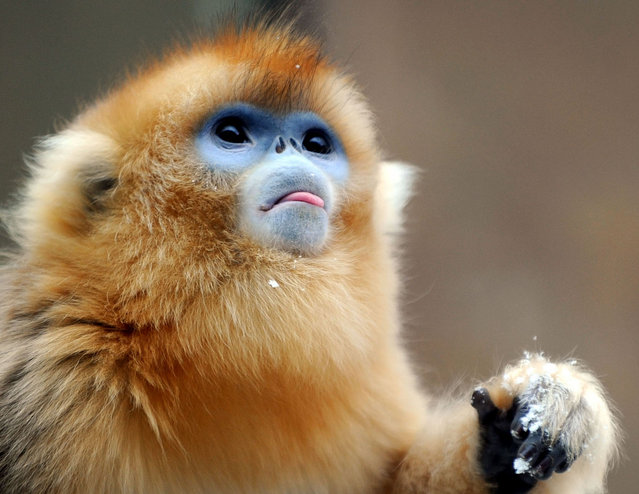
The golden monkey (Cercopithecus kandti) is a species of Old World monkey found in the Virunga volcanic mountains of Central Africa, including four national parks: Mgahinga, in south-west Uganda; Volcanoes, in north-west Rwanda; and Virunga and Kahuzi-Biéga, in the eastern Democratic Republic of Congo. It is restricted to highland forest, especially near bamboo.
Details
07 May 2012 04:39:00
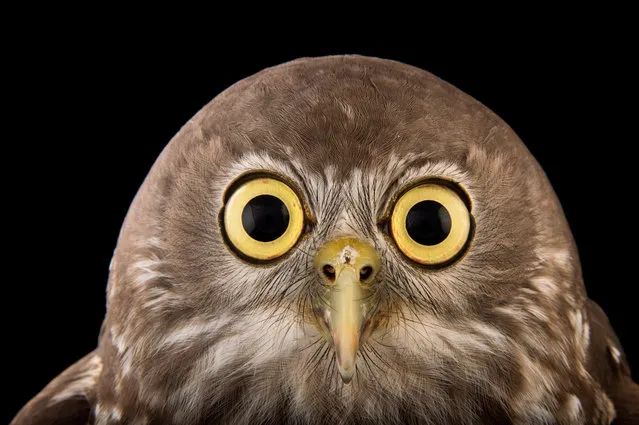
The National Geographic Photo Ark is a travelling exhibition of photographer Joel Sartore’s quest to create a photo archive of biodiversity around the world. So far, Sartore has captured studio portraits of more than 6,000 species – a number that he hopes to double. On 1 July, the ark will open at Melbourne zoo – the first time it has been exhibited in the southern hemisphere. More than 50 portraits will be on display, including many of Australian endangered animals being protected by programs at the zoo itself. These captions have been edited from text supplied by Melbourne zoo. Here: Barking owl. So-named because its call sounds like a barking dog, these birds are native to Australia, Indonesia and Papua New Guinea. In Victoria they are listed as an endangered species, and in 2003 there were estimated to be fewer than 50 breeding pairs. The main threat to the species in Victoria is loss of habitat, especially large trees with hollows in which they can nest and on which many of their prey depend. Apart from a bark, they may utter a chilling scream when they feel threatened. (Photo by Joel Sartore/National Geographic Photo Ark/The Guardian)

The National Geographic Photo Ark is a travelling exhibition of photographer Joel Sartore’s quest to create a photo archive of biodiversity around the world. So far, Sartore has captured studio portraits of more than 6,000 species – a number that he hopes to double. On 1 July, the ark will open at Melbourne zoo – the first time it has been exhibited in the southern hemisphere. More than 50 portraits will be on display, including many of Australian endangered animals being protected by programs at the zoo itself. These captions have been edited from text supplied by Melbourne zoo. Here: Barking owl. (Photo by Joel Sartore/National Geographic Photo Ark/The Guardian)
Details
01 Jul 2017 07:45:00


Orange Caramel (오렌지 캬라멜) – 까탈레나 (Catallena) – Korean. Is it worth eating live beings? This is a philosophical question: the history of our species and the ontology of being are saying that it's more likely yes, and on the other hand your mind and empathy are more likely to be against this idea. Or at least like in this Korean clip – eat, but with tears in your eyes.
Details
12 Sep 2017 09:18:00
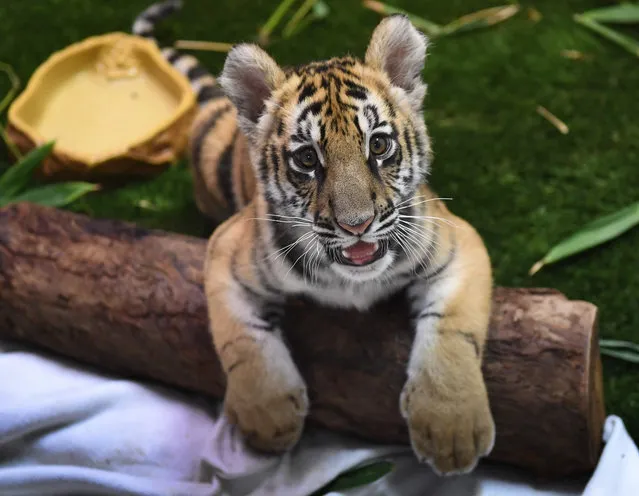
A young Bengal tiger cub smuggled into the US and seized at the Mexico border is displayed for the media during Operation Jungle Book at the US Fish and Wildlife Service in Torrance, California on October 20, 2017. Operation Jungle Book, a law enforcement initiative led by the US Fish and Wildlife Service that targeted wildlife smuggling, resulting in federal criminal charges against defendants who allegedly participated in the illegal importation and/ or transportation of numerous animal species – including a tiger, monitor lizards, cobras, Asian “lucky” fish, exotic songbirds and several coral species. (Photo by Mark Ralston/AFP Photo)

A young Bengal tiger cub smuggled into the US and seized at the Mexico border is displayed for the media during Operation Jungle Book at the US Fish and Wildlife Service in Torrance, California on October 20, 2017. Operation Jungle Book, a law enforcement initiative led by the US Fish and Wildlife Service that targeted wildlife smuggling, resulting in federal criminal charges against defendants who allegedly participated in the illegal importation and/ or transportation of numerous animal species – including a tiger, monitor lizards, cobras, Asian “lucky” fish, exotic songbirds and several coral species. (Photo by Mark Ralston/AFP Photo)
Details
29 Oct 2017 08:30:00


“Yucca is a genus of perennial shrubs and trees in the agave family, Agavaceae. Its 40-50 species are notable for their rosettes of evergreen, tough, sword-shaped leaves and large terminal panicles of white or whitish flowers. They are native to the hot and dry (arid) parts of North America, Central America, South America, and the Caribbean. Early reports of the species were confused with the cassava (Manihot esculenta). Consequently, Linnaeus mistakenly derived the generic name from the Carib word for the latter, yuca. It is also colloquially known in the midwest United States as “Ghosts in the graveyard”, as it is commonly found growing in rural graveyards and when in bloom the flowers appear as an apparition floating.” – Wikipedia

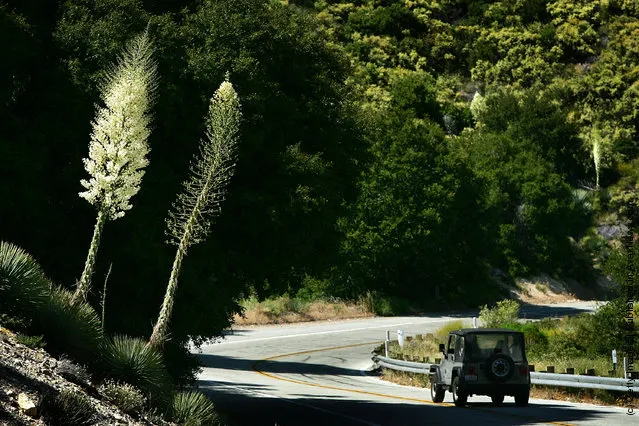
Photo: A yucca standing among flowers bursts forth a very large stalk of flowers as a heavy wildflower bloom on June 21, 2005 in the Angeles National Forest northwest of La Canada, California. (Photo by David McNew/Getty Images)

Details
29 Mar 2011 07:31:00
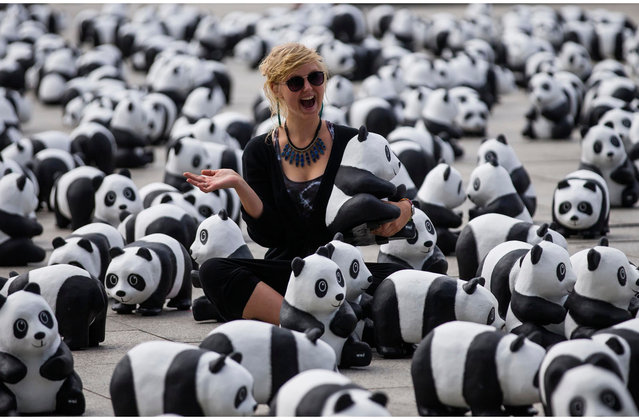
A woman poses as she has her picture taken amid 1600 panda bear sculptures in Berlin August 5, 2013. Marking the 50th anniversary of its existence, on Monday the German branch of the World Wide Fund for Nature  (WWF) environmental conservation organisation placed 1600 panda bear sculptures on front of Berlin's main train station to draw attention to the plight of the endangered species that serves as the NGO's mascot. There are currently 1600 panda bears alive in the wild, the organisation said in a press release. (Photo by Thomas Peter/Reuters)

A woman poses as she has her picture taken amid 1600 panda bear sculptures in Berlin August 5, 2013. Marking the 50th anniversary of its existence, on Monday the German branch of the World Wide Fund for Nature (WWF) environmental conservation organisation placed 1600 panda bear sculptures on front of Berlin's main train station to draw attention to the plight of the endangered species that serves as the NGO's mascot. There are currently 1600 panda bears alive in the wild, the organisation said in a press release. (Photo by Thomas Peter/Reuters)
Details
06 Aug 2013 08:28:00