Loading...
Done
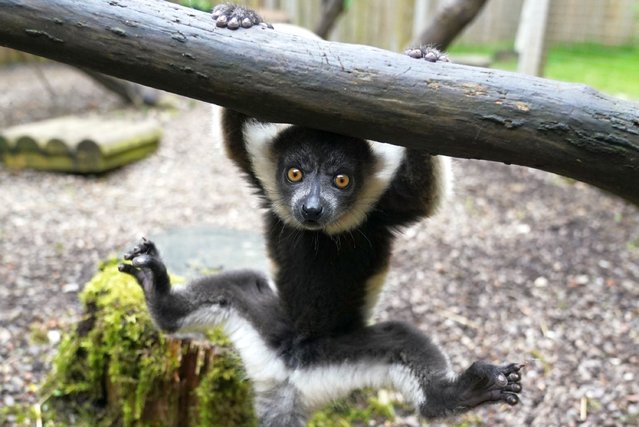
One of two black-and-white ruffed lemur pups born at Blair Drummond Safari and Adventure Park, near Stirling, UK on Friday, May 24, 2024.The critically endangered lemur pups, both female were born on April 14 and have been named Nova, meaning “new” and Evie meaning “life”. (Photo by Andrew Milligan/PA Images via Getty Images)

One of two black-and-white ruffed lemur pups born at Blair Drummond Safari and Adventure Park, near Stirling, UK on Friday, May 24, 2024.The critically endangered lemur pups, both female were born on April 14 and have been named Nova, meaning “new” and Evie meaning “life”. (Photo by Andrew Milligan/PA Images via Getty Images)
Details
04 Oct 2025 04:29:00
Stone Footprints By Iain Blake

Iain Blake is an amateur photographer that has gained his popularity on the Internet thanks to his photoset of “Stone Footprints”. By finding the right stones and perfectly arranging them, Iain was able to make a number of very appealing pictures. For some reason, these “footprints” look adorable. It could have something to do with the cartoony appearance that they have. In our opinion, the finest photo out of this whole set is the one with a large footprint and a smaller one on top of it, as if a child has stepped into the footprint left by his or her parent. (Photo by Iain Blake)
Details
23 Oct 2014 11:08:00
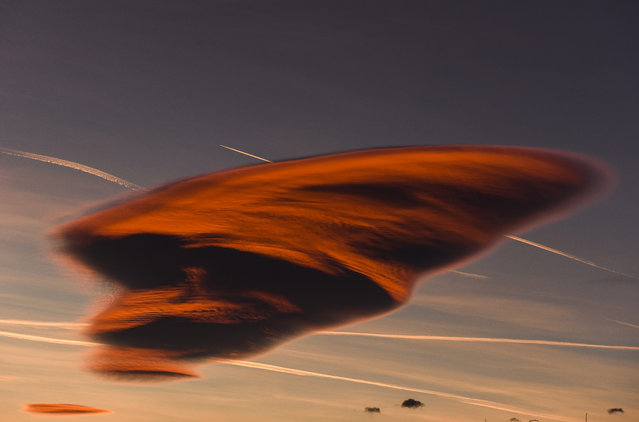
This photo taken on December 2, 2015 shows a lenticular cloud forming as white streaks from airplanes mark the blue sky, in a rare atmospheric phenomena above the town of Gevgelija on December 2, 2015. Lenticular clouds have been regularly confused for UFOs throughout history due to the their smooth, round or oval lens-shaped structure. (Photo by Armend Nimani/AFP Photo)

This photo taken on December 2, 2015 shows a lenticular cloud forming as white streaks from airplanes mark the blue sky, in a rare atmospheric phenomena above the town of Gevgelija on December 2, 2015. Lenticular clouds have been regularly confused for UFOs throughout history due to the their smooth, round or oval lens-shaped structure. (Photo by Armend Nimani/AFP Photo)
Details
31 Dec 2019 00:03:00
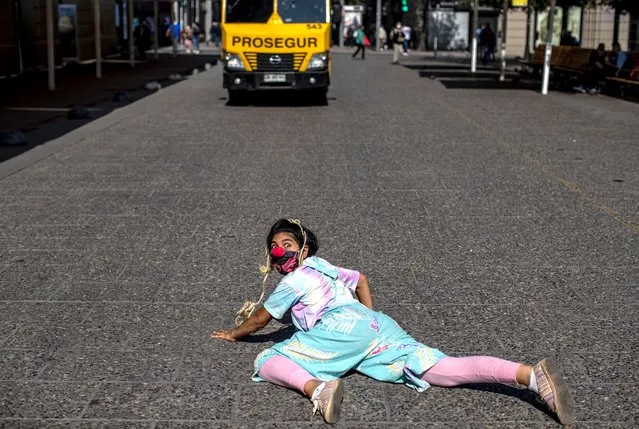
Constanza Mena poses for a photo during a red-nosed walk organized by the Flying Laughter clown group amid the new coronavirus pandemic, in downtown Santiago, Chile, Wednesday, April 28, 2021. The group aims to show that people do not lose the right to play and have fun in the street while pandemic protective measures are in effect. (Photo by Esteban Felix/AP Photo)

Constanza Mena poses for a photo during a red-nosed walk organized by the Flying Laughter clown group amid the new coronavirus pandemic, in downtown Santiago, Chile, Wednesday, April 28, 2021. The group aims to show that people do not lose the right to play and have fun in the street while pandemic protective measures are in effect. (Photo by Esteban Felix/AP Photo)
Details
30 Apr 2021 09:00:00
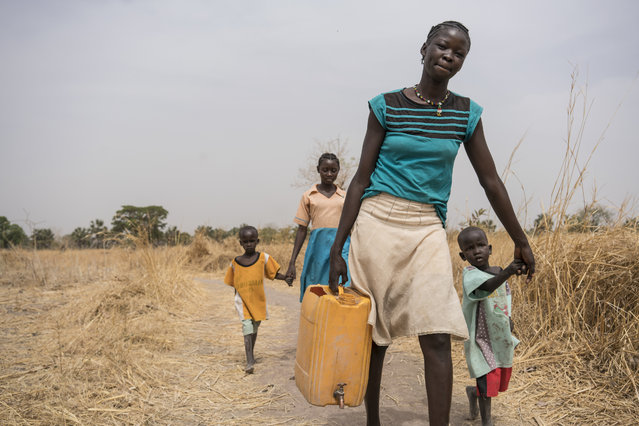
In this photo taken Sunday, March 12, 2017, a girl Abuk walks home with her brothers and friends after collecting clean water from a water point four kilometers away from her home, in Aweil, in South Sudan. As World Water Day approaches on March 22, more than 5 million people in South Sudan, do not have access to safe, clean water, compounding the problems of famine and civil war, according to the UNICEF. (Photo by Mackenzie Knowles-Coursin/UNICEF via AP Photo)

In this photo taken Sunday, March 12, 2017, a girl Abuk walks home with her brothers and friends after collecting clean water from a water point four kilometers away from her home, in Aweil, in South Sudan. As World Water Day approaches on March 22, more than 5 million people in South Sudan, do not have access to safe, clean water, compounding the problems of famine and civil war, according to the UNICEF. (Photo by Mackenzie Knowles-Coursin/UNICEF via AP Photo)
Details
21 Mar 2017 07:53:00


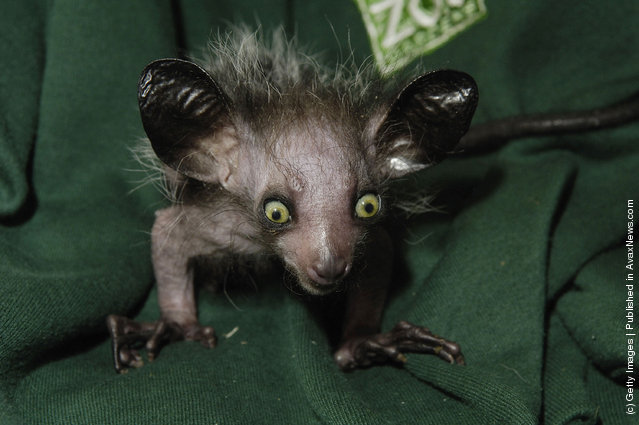
“The aye-aye (Daubentonia madagascariensis) is a lemur, a strepsirrhine primate native to Madagascar that combines rodent-like teeth and a special thin middle finger to fill the same ecological niche as a woodpecker. It is the world's largest nocturnal primate, and is characterized by its unusual method of finding food; it taps on trees to find grubs, then gnaws holes in the wood and inserts its narrow middle finger to pull the grubs out. The only other animal species known to find food in this way is the striped possum. From an ecological point of view the aye-aye fills the niche of a woodpecker as it is capable of penetrating wood to extract the invertebrates within”. – Wikipedia

Photo: In this handout image from Bristol Zoo is seen the first captive bred aye-aye in the UK named “Kintana” (meaning star in Malagasy) April 15, 2005 at Bristol Zoo Gardens, England. The zoo announced today only the second baby aye-aye to be hand-reared in the world (the first was in Jersey Zoo) and has now made his first public appearance since his birth on 11 February 2005. (Photo by Rob Cousins/Bristol Zoo via Getty Images)
Details
13 Apr 2011 13:33:00
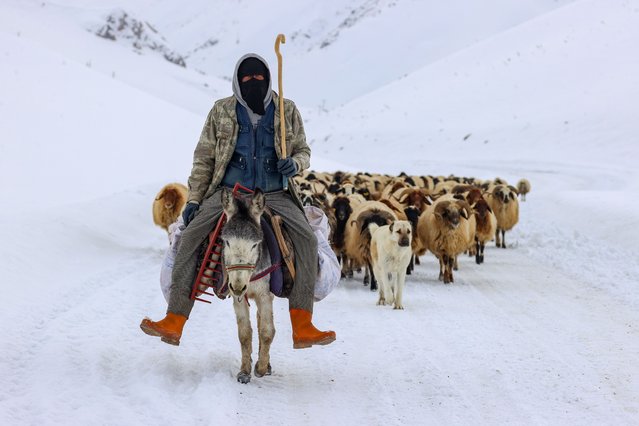
A shepherd rides a donkey as he leads sheep during winter in Van, Turkiye on February 19, 2022. Despite the terrible winter weather and the hard geology of the region, breeders in Van's Gurpnar district, where livestock is the most important source of revenue, do not disregard the care of their animals. Livestock farmers in the Cepkenli and Topcudegirmeni neighborhoods have the similar difficulties as those in rural areas, where the snow depth reaches one meter. (Photo by Ozkan Bilgin/Anadolu Agency via Getty Images)

A shepherd rides a donkey as he leads sheep during winter in Van, Turkiye on February 19, 2022. Despite the terrible winter weather and the hard geology of the region, breeders in Van's Gurpnar district, where livestock is the most important source of revenue, do not disregard the care of their animals. Livestock farmers in the Cepkenli and Topcudegirmeni neighborhoods have the similar difficulties as those in rural areas, where the snow depth reaches one meter. (Photo by Ozkan Bilgin/Anadolu Agency via Getty Images)
Details
04 Mar 2022 06:01:00
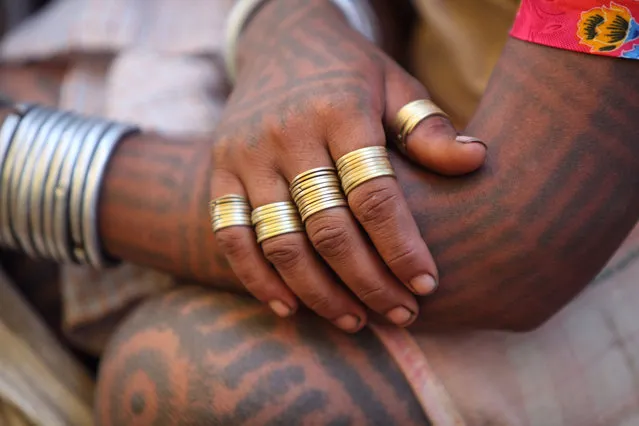
Once applied, the designs are washed using warm water and cow dung. Herbs are applied to promote faster healing. (Photo by Ronny Sen/WaterAid/The Guardian)

For more than 2,000 years, women from the Baiga tribe in the highland district of Dindori, in central India’s Madhya Pradesh state, have been tattooed. Sumintra, 25, from Bona village, has the markings across her forehead, legs and arms. The women who work as tattoo artists are knowledgable about the different types of designs and pigments preferred by various tribes, and their meanings are passed to them by their mothers. The tattooing ‘season’ begins with the approach of winter. (Photo by Ronny Sen/WaterAid/The Guardian)
Details
19 Aug 2017 08:48:00