Loading...
Done
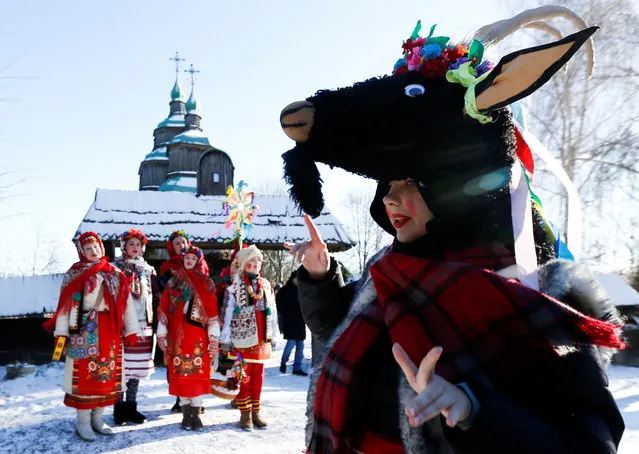
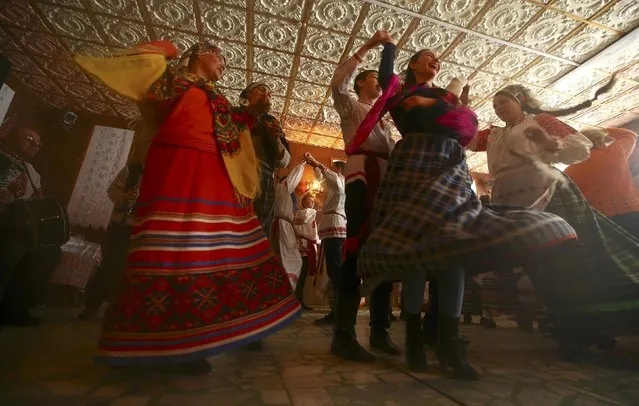
People dressed in traditional costumes sing Christmas carols as they gather to celebrate Orthodox Christmas at a compound of the National Architecture museum in Kyiv, Ukraine on January 7, 2022. (Photo by Valentyn Ogirenko/Reuters)

People dressed in traditional costumes sing Christmas carols as they gather to celebrate Orthodox Christmas at a compound of the National Architecture museum in Kyiv, Ukraine on January 7, 2022. (Photo by Valentyn Ogirenko/Reuters)
Details
08 Jan 2022 08:15:00
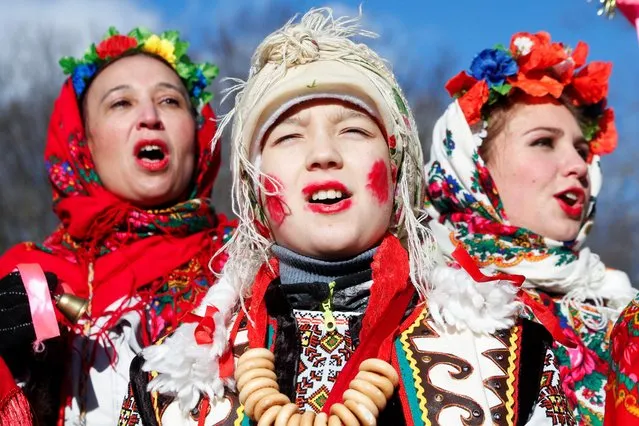
Women dressed in traditional costumes sing Christmas carols as they gather to celebrate Orthodox Christmas at a compound of the National Architecture museum in Kyiv, Ukraine on January 7, 2022. (Photo by Valentyn Ogirenko/Reuters)

Women dressed in traditional costumes sing Christmas carols as they gather to celebrate Orthodox Christmas at a compound of the National Architecture museum in Kyiv, Ukraine on January 7, 2022. (Photo by Valentyn Ogirenko/Reuters)
Details
24 Jan 2022 05:03:00
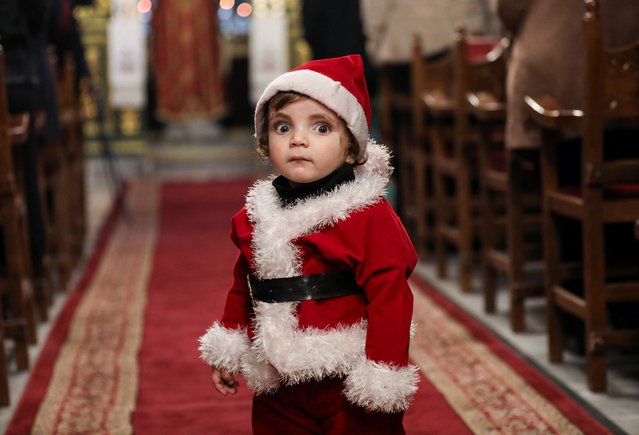
A child dressed in a Santa Claus costume reacts, on the day Palestinian Christians attend an Orthodox Christmas Mass at the Greek Orthodox Saint Porphyrius Church, amid the ongoing conflict between Israel and Hamas, in Gaza City on January 7, 2025. (Photo by Dawoud Abu Alkas/Reuters)

A child dressed in a Santa Claus costume reacts, on the day Palestinian Christians attend an Orthodox Christmas Mass at the Greek Orthodox Saint Porphyrius Church, amid the ongoing conflict between Israel and Hamas, in Gaza City on January 7, 2025. (Photo by Dawoud Abu Alkas/Reuters)
Details
31 Jan 2025 03:15:00
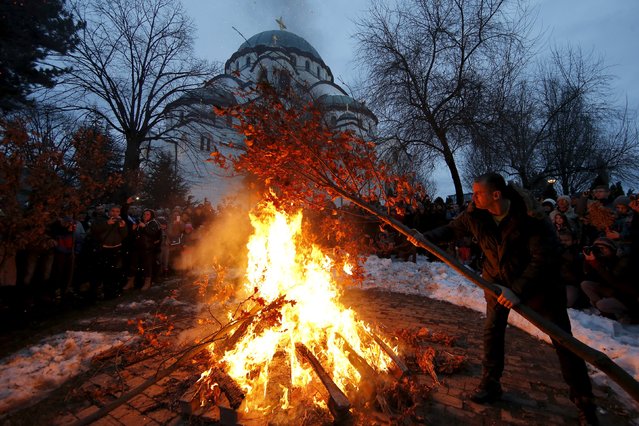
Believers burn dried oak branches, which symbolizes the Yule log, on Orthodox Christmas Eve in front of the St. Sava temple in Belgrade, Serbia, January 6, 2016. (Photo by Marko Djurica/Reuters)

Believers burn dried oak branches, which symbolizes the Yule log, on Orthodox Christmas Eve in front of the St. Sava temple in Belgrade, Serbia, January 6, 2016. Serbian Orthodox believers celebrate Christmas on January 7, according to the Julian calendar. (Photo by Marko Djurica/Reuters)
Details
08 Jan 2016 08:00:00
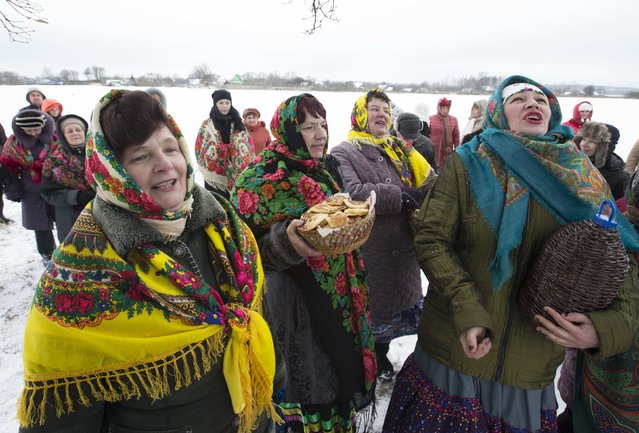
Local residents take part in the celebrations of Kolyada pagan holiday, which over the centuries has merged with Orthodox Christmas festivities and marks the upcoming end of winter, in the village of Noviny, Belarus, January 21, 2017. (Photo by Vasily Fedosenko/Reuters)

Local residents take part in the celebrations of Kolyada pagan holiday, which over the centuries has merged with Orthodox Christmas festivities and marks the upcoming end of winter, in the village of Noviny, Belarus, January 21, 2017. (Photo by Vasily Fedosenko/Reuters)
Details
22 Jan 2017 09:38:00
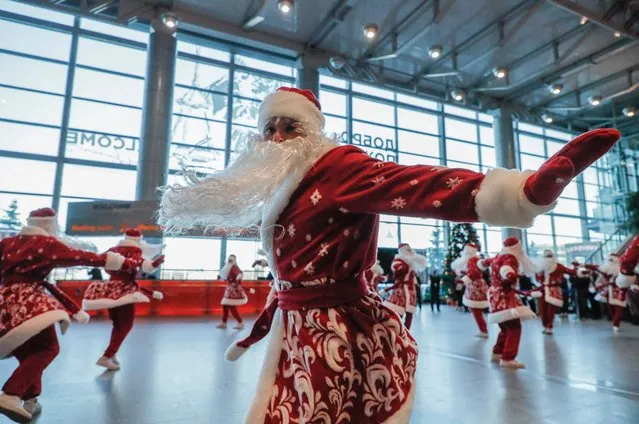
Actors dressed as Father Frost perform in the main building of the Domodedovo airport named after Mikhail Lomonosov in Moscow, Russia, 27 December 2021. Russians are preparing to celebrate New Year's Eve on 31 December and Christmas which is observed on 07 January, according to the Russian Orthodox Julian calendar, 13 days after Christmas on 25 December on the Gregorian calendar. (Photo by Sergei Ilnitsky/EPA/EFE)

Actors dressed as Father Frost perform in the main building of the Domodedovo airport named after Mikhail Lomonosov in Moscow, Russia, 27 December 2021. Russians are preparing to celebrate New Year's Eve on 31 December and Christmas which is observed on 07 January, according to the Russian Orthodox Julian calendar, 13 days after Christmas on 25 December on the Gregorian calendar. (Photo by Sergei Ilnitsky/EPA/EFE)
Details
28 Dec 2021 09:03:00
Villagers take part in Kolyada holiday celebrations in the village of Martsiyanauka, east of the capital Minsk, January 21, 2015. Local residents took part in the celebrations to mark the end of a pagan winter holiday Kolyada, which over the centuries has merged with Orthodox Christmas celebrations. (Photo by Vasily Fedosenko/Reuters)

Villagers take part in Kolyada holiday celebrations in the village of Martsiyanauka, east of the capital Minsk, January 21, 2015. Local residents took part in the celebrations to mark the end of a pagan winter holiday Kolyada, which over the centuries has merged with Orthodox Christmas celebrations. (Photo by Vasily Fedosenko/Reuters)
Details
22 Jan 2015 13:48:00
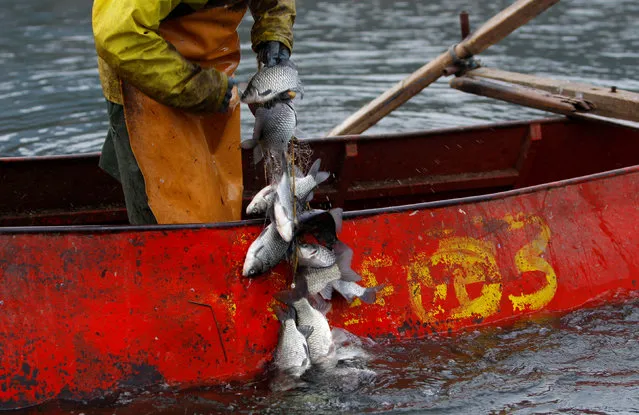
Fishermen collect their catch from a net at Dojran Lake, Macedonia, January 4, 2017. (Photo by Ognen Teofilovski/Reuters)

Fishermen collect their catch from a net at Dojran Lake, Macedonia, January 4, 2017. Fish from the lake is a traditional food for locals for orthodox Christmas eve, which falls on January 6. The lake faced sustainability issues during the 1990s due to drought and excessive use of its water but has since recovered after measures were taken to replenish and sustain water levels, according to local media. Dojran Lake is one of the three natural lakes in Macedonia, and also the warmest. It is said it is also the richest lake in fish in Europe. (Photo by Ognen Teofilovski/Reuters)

Details
05 Jan 2017 13:41:00