Loading...
Done
“One in Eight Hundred” by Mario Wezel, from Germany, is the winner of the “People” category. The title refers to the odds given to Martin and Karina at their prenatal screening before their daughter, Emmy, was born. The five-year-old from Denmark has Down's Syndrome. (Photo by Mario Wezel/Sony World Photography Awards)

“One in Eight Hundred” by Mario Wezel, from Germany, is the winner of the “People” category. The title refers to the odds given to Martin and Karina at their prenatal screening before their daughter, Emmy, was born. The five-year-old from Denmark has Down's Syndrome. (Photo by Mario Wezel/Sony World Photography Awards)
Details
02 May 2014 10:53:00
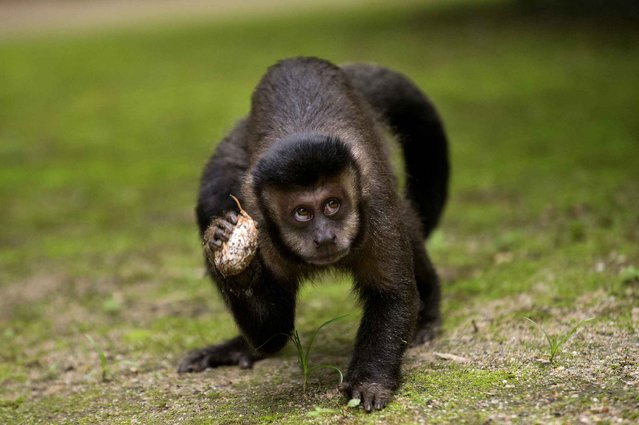
A brown capuchin monkey holds a fruit in the Botanic Garden of Rio de Janeiro, Brazil, on July 5, 2013. (Photo by Pablo Porciuncula/AFP Photo)

A brown capuchin monkey holds a fruit in the Botanic Garden of Rio de Janeiro, Brazil, on July 5, 2013. (Photo by Pablo Porciuncula/AFP Photo)
Details
06 Jul 2013 11:58:00
Adrienne Sipe (L) and Brooke Gilliam of Washington D.C. leap off a snow podium they made near the U.S. Capitol in Washington February 13, 2014. A deadly and intensifying winter storm packing heavy snow, sleet and rain pelted a huge swath of the U.S. East Coast on Thursday, grounding flights and shuttering schools and government offices. (Photo by Kevin Lamarque/Reuters)

Adrienne Sipe (L) and Brooke Gilliam of Washington D.C. leap off a snow podium they made near the U.S. Capitol in Washington February 13, 2014. A deadly and intensifying winter storm packing heavy snow, sleet and rain pelted a huge swath of the U.S. East Coast on Thursday, grounding flights and shuttering schools and government offices. (Photo by Kevin Lamarque/Reuters)
Details
14 Feb 2014 09:20:00
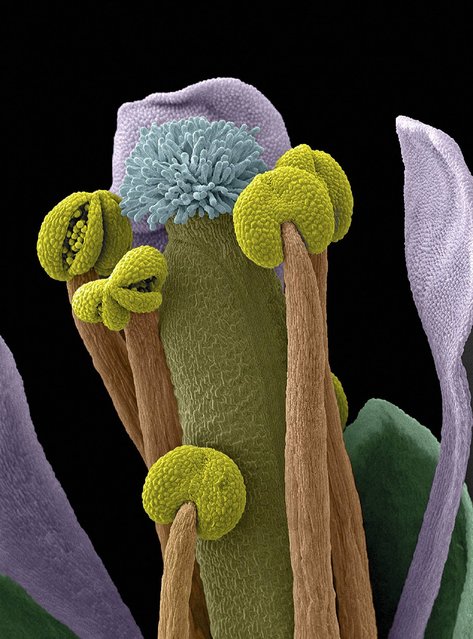
Scanning electron micrograph (SEM) of an Arabidopsis thaliana flower, also commonly known as thale cress. Some of the anthers are open, revealing pollen grains ready for dispersal. Arabidopsis was the first plant to have its entire genome sequenced and is widely used as a model organism in molecular and plant biology. Horizontal width of image is 1200 microns. Magnification 100x. (Photo by Stefan Eberhard/Wellcome Images)

Beautiful, strange and occasionally alarming pictures from the shortlist for this year’s Wellcome image awards – which celebrate the very best in science photography and imaging – from an x-ray of a bat to a micrograph of a kidney stone. The exhibition opens on 12 March at three science centres and the Museum of Science and Industry in Manchester. Photo: Scanning electron micrograph (SEM) of an Arabidopsis thaliana flower, also commonly known as thale cress. Some of the anthers are open, revealing pollen grains ready for dispersal. Arabidopsis was the first plant to have its entire genome sequenced and is widely used as a model organism in molecular and plant biology. Horizontal width of image is 1200 microns. Magnification 100x. (Photo by Stefan Eberhard/Wellcome Images)
Details
11 Mar 2014 05:58:00
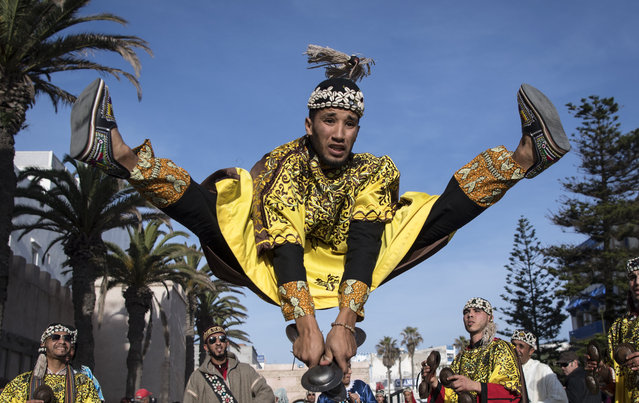
A Gnawa traditional group performs in the city of Essaouira on December 14, 2019, to celebrate the decision of adding the Gnawa culture to UNESCO's list of Intangible Cultural Heritage of Humanity. Gnawa culture, a centuries-old Moroccan practice rooted in music, African rituals and Sufi traditions, was added to UNESCO's list of Intangible Cultural Heritage of Humanity earlier in the week. Gnawa refers to a “set of musical productions, fraternal practices and therapeutic rituals where the secular mixes with the sacred”, according to the nomination submitted by Morocco. Often dressed in colourful outfits, Gnawa musicians play the guenbri, a type of lute with three strings, accompanied by steel castanets called krakebs. (Photo by Fadel Senna/AFP Photo)


A Gnawa traditional group performs in the city of Essaouira on December 14, 2019, to celebrate the decision of adding the Gnawa culture to UNESCO's list of Intangible Cultural Heritage of Humanity. Gnawa culture, a centuries-old Moroccan practice rooted in music, African rituals and Sufi traditions, was added to UNESCO's list of Intangible Cultural Heritage of Humanity earlier in the week. Gnawa refers to a “set of musical productions, fraternal practices and therapeutic rituals where the secular mixes with the sacred”, according to the nomination submitted by Morocco. Often dressed in colourful outfits, Gnawa musicians play the guenbri, a type of lute with three strings, accompanied by steel castanets called krakebs. (Photo by Fadel Senna/AFP Photo)
Details
18 Dec 2019 00:05:00
A mother reacts as she pleads with police to allow her daughter to pass a checkpoint for cancer treatment after she arrived from Hubei province at the Jiujiang Yangtze River Bridge in Jiujiang, China, February 1, 2020. (Photo by Thomas Peter/Reuters)

A mother reacts as she pleads with police to allow her daughter to pass a checkpoint for cancer treatment after she arrived from Hubei province at the Jiujiang Yangtze River Bridge in Jiujiang, China, February 1, 2020. (Photo by Thomas Peter/Reuters)
Details
08 Feb 2020 00:03:00
A fisherman waits to catch fish as he sits atop a stilt in the sea in Koggala, Sri Lanka on July 4, 2019. (Photo by Dinuka Liyanawatte/Reuters)

A fisherman waits to catch fish as he sits atop a stilt in the sea in Koggala, Sri Lanka on July 4, 2019. (Photo by Dinuka Liyanawatte/Reuters)
Details
11 Feb 2020 00:03:00
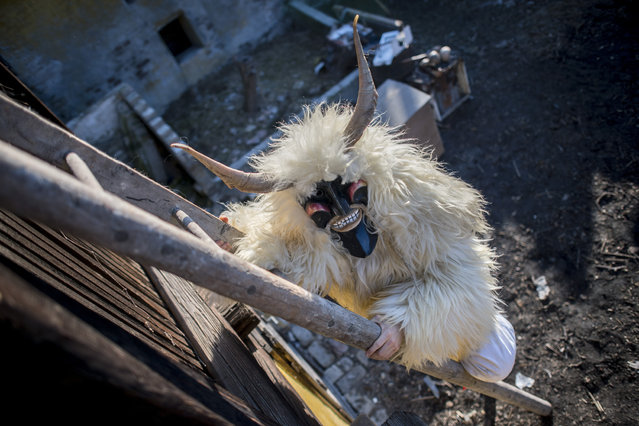
A man wears a busho mask and a costume made of sheep pelt while climbing up a ladder outside a barn in Mohacs, Hungary, 20 February 2020, on the first day of carnival. The traditional Busho carnival, which marks the end of winter, dates back to the 16th century. According to local legend, members of an ethnic South Slavic group living in Mohacs at the time dressed up in similar costumes and wore wooden masks to scare away Ottoman invaders, who mistook them for demons. (Photo by Tamas Soki/EPA/EFE)

A man wears a busho mask and a costume made of sheep pelt while climbing up a ladder outside a barn in Mohacs, Hungary, 20 February 2020, on the first day of carnival. The traditional Busho carnival, which marks the end of winter, dates back to the 16th century. According to local legend, members of an ethnic South Slavic group living in Mohacs at the time dressed up in similar costumes and wore wooden masks to scare away Ottoman invaders, who mistook them for demons. (Photo by Tamas Soki/EPA/EFE)
Details
23 Feb 2020 00:07:00