Loading...
Done


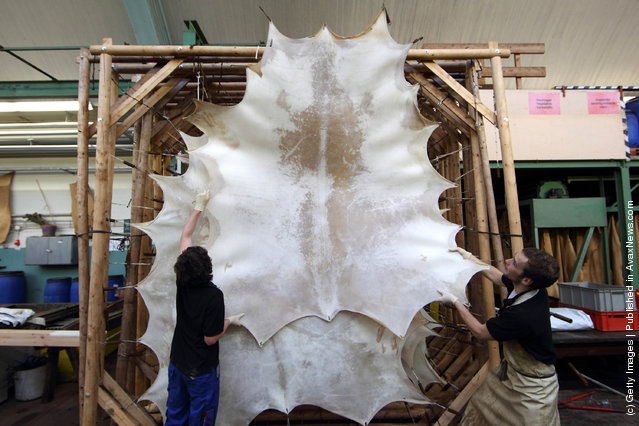
REUTLINGEN, GERMANY - NOVEMBER 17: Students hang out finished parchment leather at the LGR (Lederinstitut Gerberschule Reutlingen) tannery school on November 17, 2010 in Reutlingen, Germany. Even in early antiquity and up their hair or dried goat and sheep skins were used as material for documents. In the small Asian city Pergamon these skins were processed in large quantities for this purpose, so they formed the main trading arm of the city, of which the name is parchment is derived. In medieval times, reached the parchment is of great importance, it was such as France's production under the supervision of the University of Paris. Even now, important documents, placed on their unlimited shelf life as possible large value (eg diplomas, addresses, memory, writings, documents for primary and keystones) written on parchment...
Details
20 Nov 2011 18:17:00
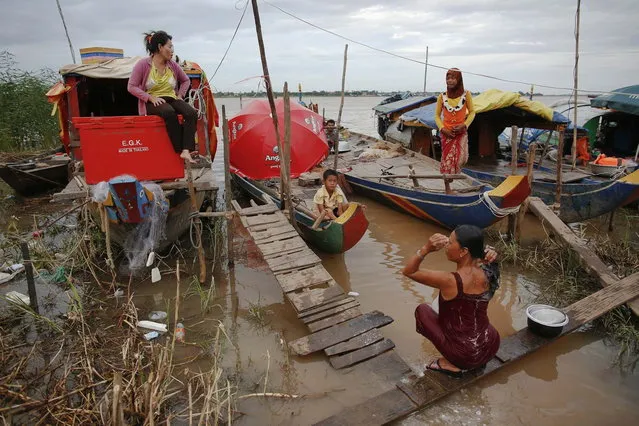
Ethnic Cham Muslim people pass the time near their boats on banks of Mekong river in Phnom Penh July 29, 2013. (Photo by Damir Sagolj/Reuters)

Ethnic Cham Muslim people pass the time near their boats on banks of Mekong river in Phnom Penh July 29, 2013. About 100 ethnic Cham families, made up of nomads and fishermen without houses or land who arrived at the Cambodian capital in search of better lives, live on their small boats on a peninsula where the Mekong and Tonle Sap rivers meet, just opposite the city's centre. The community has been forced to move several times from their locations in Phnom Penh as the land becomes more valuable. They fear that their current home, just behind a new luxurious hotel under construction at the Chroy Changva district is only temporary and that they would have to move again soon. (Photo by Damir Sagolj/Reuters)
Details
31 Jul 2013 06:34:00
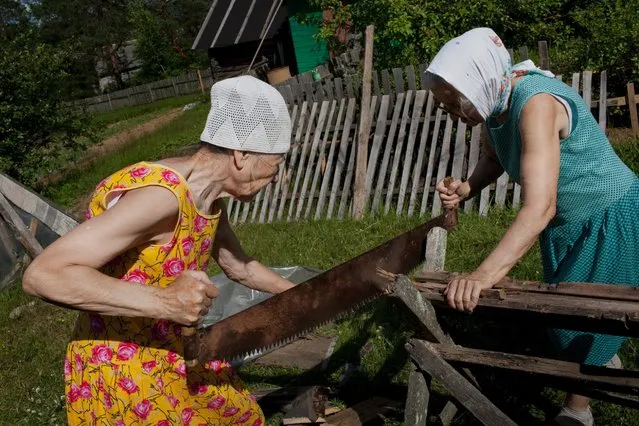
“Two-Handed Saw, 2014”. “Most of the neighbors have switched to power tools to run their households, the buzz of chain saws and weed-whackers overpowering the quieter sounds of country life, but my aunts hold on to the two-handed saw that's decades old, the sickle and scythe that need to be sharpened and polished after each use, the old axe that's becoming heavier each year. Each of these objects is familiar, holding memories of their brother, who succumbed to cancer a few years ago, of days before my grandfather lost his vision in the 50's, of busier days and longer futures”, Sablin told. (Photo by Nadia Sablin)

In northwest Russia, in a small village called Alekhovshchina, Nadia Sablin's aunts spend the warmer months together in the family home and live as the family has always lived, chopping wood to heat the house and making their own clothes. Sablin's book of photographs, “Aunties: The Seven Summers of Alevtina and Ludmila”, is published by Duke University Press. Here: “Two-Handed Saw, 2014”. (Photo by Nadia Sablin)
Details
25 Feb 2016 12:12:00
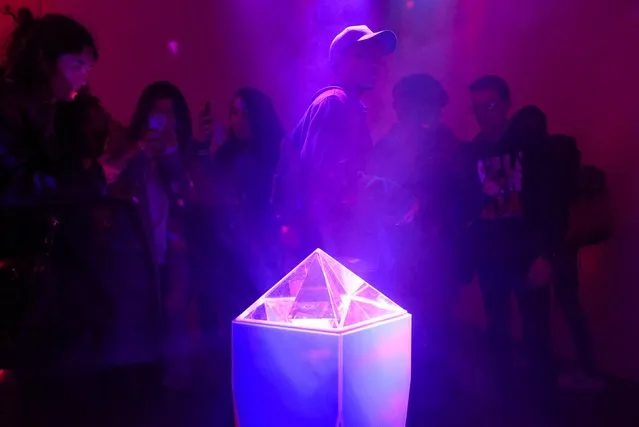
The Museum of Feelings doesn't really have “exhibits" in the conventional sense; rather, visitors move from one themed alcove to another, five in total, each with its own distinctive aroma.  (Photo by Stephanie Keith/Reuters)

The Museum of Feelings doesn't really have “exhibits" in the conventional sense; rather, visitors move from one themed alcove to another, five in total, each with its own distinctive aroma. The “Optimistic Room," bathed in vivid pink and purple light, is little more than a lightshow, with patrons using small reflective panels to bounce light around the room. Here: People interact in the “optimistic” room at the Museum of Feelings, a pop-up installation in New York, December 15, 2015. (Photo by Stephanie Keith/Reuters)
Details
19 Dec 2015 08:00:00
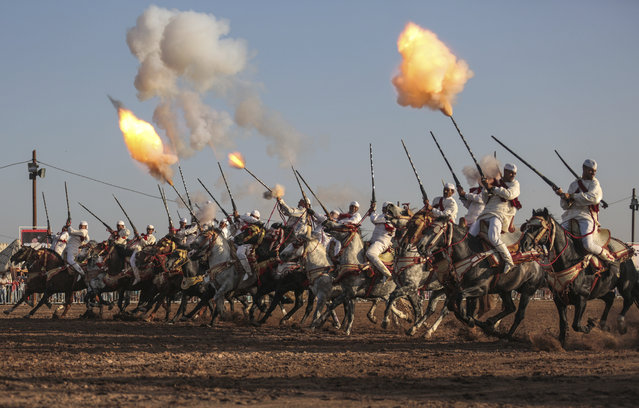
In this Thursday, August 17, 2017 photo, a troupe charges and fires their rifles during Tabourida, a traditional horse riding show also known as Fantasia, in Mansouria, near Casablanca, Morocco. (Photo by Mosa'ab Elshamy/AP Photo)

In this Thursday, August 17, 2017 photo, a troupe charges and fires their rifles during Tabourida, a traditional horse riding show also known as Fantasia, in Mansouria, near Casablanca, Morocco. Thousands gathered recently in Mansouria, a small town south of the capital Rabat, to attend one of the oldest festivals in Morocco. Nineteen horse troupes came from different parts of the kingdom to celebrate a three-day event that blends courage, skill and tradition. (Photo by Mosa'ab Elshamy/AP Photo)
Details
04 Sep 2017 07:57:00


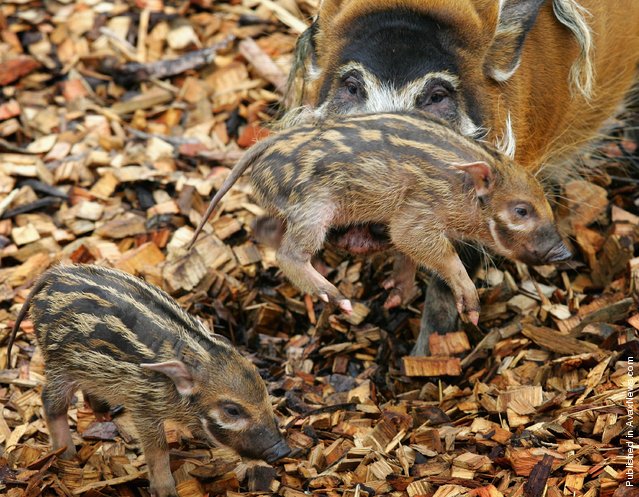
“The Red River Hog (Potamochoerus porcus), also known as the Bush Pig (but not to be confused with P. larvatus, common name “Bushpig”), is a wild member of the pig family living in Africa, with most of its distribution in the Guinean and Congolian forests. It is rarely seen away from rainforests, and generally prefers areas near rivers or swamps.

Red River Hogs eat grass, berries, roots, insects, molluscs, small vertebrates and carrion. They are capable of causing damage to plantations. Red River Hogs typically live in herds of 6-20 members led by a dominant boar. Sows rear 3-6 piglets at a time.”

Photo: Two 17 day old red river hoglet twins forage for food next to their mother Bahiti at London Zoo on August 23, 2007 in London, England. Red River hoglets inhabit the forests and swamps of West and Central Africa. The recent additions to the London Zoo pig pen have been eagerly awaited by zoo keepers. (Photo by Chris Jackson/Getty Images)
Details
18 Mar 2011 15:15:00


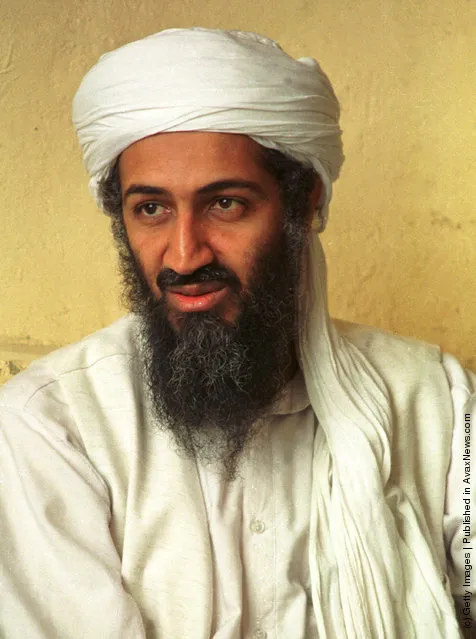
“Osama bin Laden has been killed in an American operation in Pakistan, President Obama announced from the White House on Sunday, calling his death “the most significant achievement to date in our nation's effort to defeat al-Qaida”. In a statement delivered from the East Room, Obama said a small team of U.S. personnel attacked a compound in Pakistan's Abbottabad Valley, where bin Laden had been hiding since late last summer. The U.S. team killed the 54-year-old al-Qaida leader after a firefight and “took custody of his body”, Obama said.” – Nwsource.com

Photo: Saudi dissident Osama bin Laden in an undated photo. October 10, 2001. Afghanistan's ruling Taliban lifted restrictions on Bin Laden, giving him permission to conduct “Jihad”, or holy war, against Afghanistan's enemies. (Photo by Getty Images)
Details
02 May 2011 07:36:00
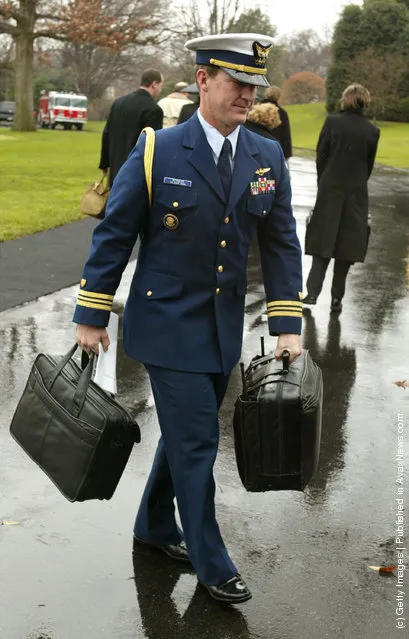
Nuclear Football

“The nuclear football (also known as the atomic football, the president's emergency satchel, the button, the black box, or just the football) is a briefcase, the contents of which are to be used by the President of the United States of America to authorize a nuclear attack while away from fixed command centers, such as the White House Situation Room. It functions as a mobile hub in the strategic defense system of the United States. It is a metallic Zero Halliburton briefcase carried in a black leather “jacket”. The package weighs around 45 pounds (20 kilograms). A small antenna protrudes from the bag near the handle”. – Wikipedia

Photo: A U.S. Military officer carries the “football”, which carries nuclear launch codes, on South Lawn after returning with U.S. President George W. Bush to the White House January 7, 2002 in Washington, DC. (Photo by Mark Wilson/Getty Images)
Details
06 Aug 2011 12:53:00