Loading...
Done
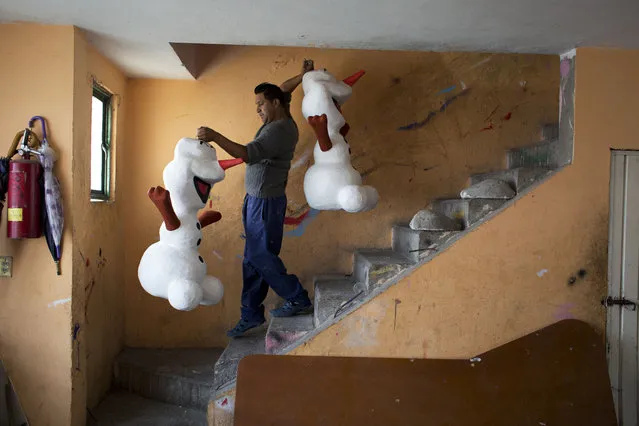
In this January 23, 2015 photo, Guillermo Luna Martinez, 36, carries freshly painted piñatas representing Disney's Frozen snowman character Olaf downstairs to where his wife Elvia Vicente Albarran will use paper to craft the character's eyes, teeth, and distinctive tuft of hair, at the family's workshop in the Iztapalapa neighborhood of Mexico City. (Photo by Rebecca Blackwell/AP Photo)

In this January 23, 2015 photo, Guillermo Luna Martinez, 36, carries freshly painted piñatas representing Disney's Frozen snowman character Olaf downstairs to where his wife Elvia Vicente Albarran will use paper to craft the character's eyes, teeth, and distinctive tuft of hair, at the family's workshop in the Iztapalapa neighborhood of Mexico City. Though Luna and his wife have chosen to work in the family business, they plan to let their children, Guillermo, 10, and Melissa, 9, decide for themselves. “Who knows if the business will last forever”, said Luna, “I'd prefer that they study and get a career, for them to have a better future”. (Photo by Rebecca Blackwell/AP Photo)
Details
01 Feb 2015 10:43:00
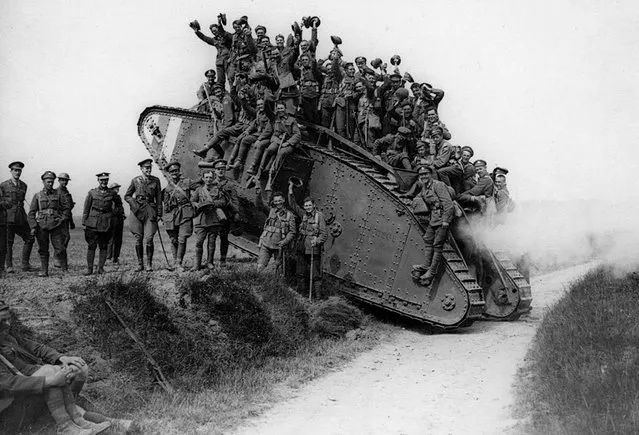
These black-and-white photos are taken from the new book “Armoured Warfare in the First World War 1916 – 1918” by Anthony Tucker-Jones and published by Pen & Sword Military. “Interestingly the British, French and Germans took completely different approaches with varying results”. The British military produced “Little Willie” in Autumn 1915 weighing 18 tonnes, which had a crew of two plus four gunners. “Inspired by a tracked artillery tractor “Little Willie” was referred to as a water tank – hence the name tank – to ensure secrecy”, said Anthony. “This led to the strange looking Mark I with its peculiar rhomboid shape, designed to cross trenches with guns in sponsons on either side. The Germans saw the tank as unchivalrous and were slow to grasp its utility. They favoured the Stormtrooper (specialist soldiers used to infiltrate enemy trenches) and artillery, not the tank”, said Anthony. “However, they didn’t hesitate to make use of captured British tanks. Although the tank helped secure victory and German soldiers dubbed it “Germany’s Downfall” the country was ultimately brought to its knees by the Allies blockade”. Here: British troops hitch a ride on a Mark IV after the massed tank fleet spearheading attack at Cambrai on November 20, 1917. (Photo by Anthony Tucker-Jones/Mediadrumworld.com)

These black-and-white photos are taken from the new book “Armoured Warfare in the First World War 1916 – 1918” by Anthony Tucker-Jones and published by Pen & Sword Military. Here: British troops hitch a ride on a Mark IV after the massed tank fleet spearheading attack at Cambrai on November 20, 1917. (Photo by Anthony Tucker-Jones/Mediadrumworld.com)
Details
23 Feb 2017 00:02:00
Senji Nakajima sleeps with his Love Doll “Saori” at Love Hotel on June 4, 2016 in Nagano, Japan. Senji Nakajima, 61 years old, lives with his life-size 'love doll' named “Saori” in his apartment in Tokyo, Japan. Nakajima, married with two children, who lives away from home for work, first started his life with Saori six years ago. At first, he used to imagine as if the doll was his first girl friend, and used it only for sexual purposes to fill the loneliness, but months later, he started to find Saori actually has an original personality. “She never betrays, not after only money. I'm tired of modern rational humans. They are heartless”, Nakajima says, “for me, she is more than a doll. Not just a silicon rubber. She needs much help, but still is my perfect partner who shares precious moments with me and enriches my life”. (Photo by Taro Karibe/Getty Images)

Senji Nakajima sleeps with his Love Doll “Saori” at Love Hotel on June 4, 2016 in Nagano, Japan. Senji Nakajima, 61 years old, lives with his life-size “love doll” named “Saori” in his apartment in Tokyo, Japan. Nakajima, married with two children, who lives away from home for work, first started his life with Saori six years ago. (Photo by Taro Karibe/Getty Images)
Details
07 Aug 2016 09:21:00
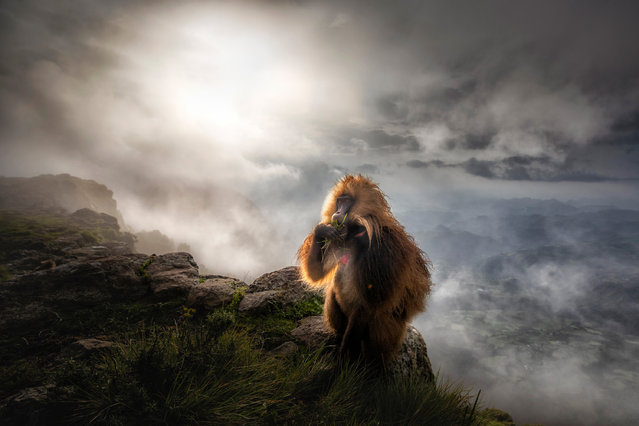
Highly commended, mammals: Gelada after the storm – Marco Gaiotti (Italy). “Gelada baboons are the only monkey species in the world that feed on grasses. They are native to the tableland of Ethiopia. Every morning large family groups wander from their sleeping places in the steep rock face, up to 1,000 metres high, to the feeding grounds at the tablelands. This image clearly depicts their feeding strategy: they pull out bunches of grass, sort the stalks and then lift them to their mouth. This shot was taken towards the end of the rainy season after a heavy storm”. (Photo by Marco Gaiotti/2019 GDT European Wildlife Photographer of the Year)

Highly commended, mammals: Gelada after the storm – Marco Gaiotti (Italy). “Gelada baboons are the only monkey species in the world that feed on grasses. They are native to the tableland of Ethiopia. Every morning large family groups wander from their sleeping places in the steep rock face, up to 1,000 metres high, to the feeding grounds at the tablelands. This image clearly depicts their feeding strategy: they pull out bunches of grass, sort the stalks and then lift them to their mouth. This shot was taken towards the end of the rainy season after a heavy storm”. (Photo by Marco Gaiotti/2019 GDT European Wildlife Photographer of the Year)
Details
31 Oct 2019 00:03:00
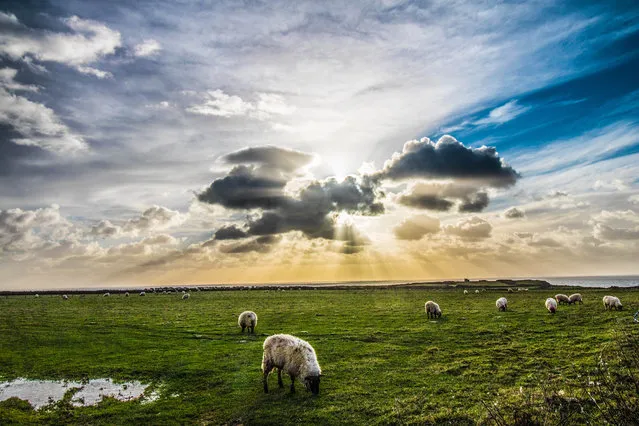
“After an afternoon of hiking and exploring the caves of Rhossili Bay, West Glamorgan, we caught the sun breaking through the clouds”. (Photo by Megan Warren-Davis/The Guardian)

“After an afternoon of hiking and exploring the caves of Rhossili Bay, West Glamorgan, we caught the sun breaking through the clouds”. (Photo by Megan Warren-Davis/The Guardian)
Details
05 Feb 2017 01:05:00
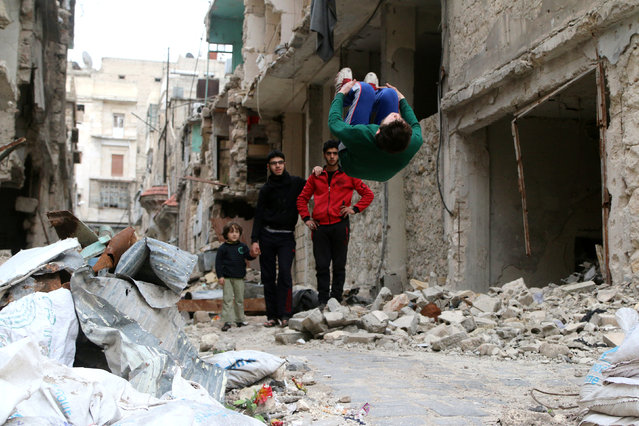
Gymnast Ahmad al-Sawas performs gymnastic moves near damaged buildings in the rebel-held Bustan al-Qasr neighbourhood of Aleppo, Syria March 26, 2016. As Syrian gymnast Ahmad al-Sawas watched his country fall apart, his Olympic dream collapsed too. The last national champion before the fighting began, he knew that supporting the anti-government side in the five-year-old civil war would prevent him from being selected for the Rio Games. “I chose to be an athlete who participates in the revolution”, said Ahmad, who trains where he can for two hours a day – be it on a mattress on a soccer field, in a local hall or somersaulting off a wall. (Photo by Abdalrhman Ismail/Reuters)

Gymnast Ahmad al-Sawas performs gymnastic moves near damaged buildings in the rebel-held Bustan al-Qasr neighbourhood of Aleppo, Syria March 26, 2016. As Syrian gymnast Ahmad al-Sawas watched his country fall apart, his Olympic dream collapsed too. The last national champion before the fighting began, he knew that supporting the anti-government side in the five-year-old civil war would prevent him from being selected for the Rio Games. (Photo by Abdalrhman Ismail/Reuters)
Details
05 Aug 2016 13:25:00
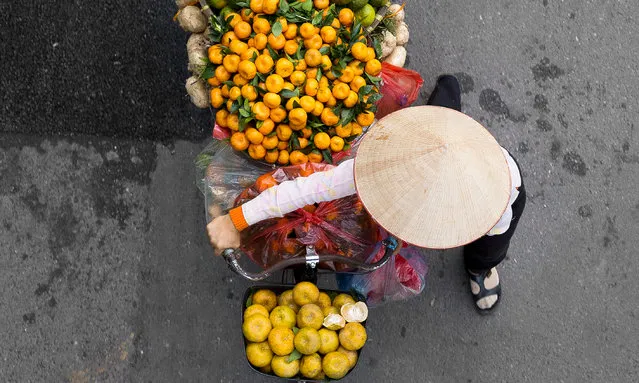
Photographer Loes Heerink spent hours waiting on bridges in Hanoi to capture the street vendors who walked underneath. She recently launched a Kickstarter project to publish a book of these images. Here: “In Hanoi there are a lot of street vendors who roam the city with their bicycles trying to sell goods, from vegetables to flowers”. (Photo by Loes Heerink/The Guardian)

Photographer Loes Heerink spent hours waiting on bridges in Hanoi to capture the street vendors who walked underneath. She recently launched a Kickstarter project to publish a book of these images. Here: “In Hanoi there are a lot of street vendors who roam the city with their bicycles trying to sell goods, from vegetables to flowers”. (Photo by Loes Heerink/The Guardian)
Details
05 Nov 2016 12:16:00
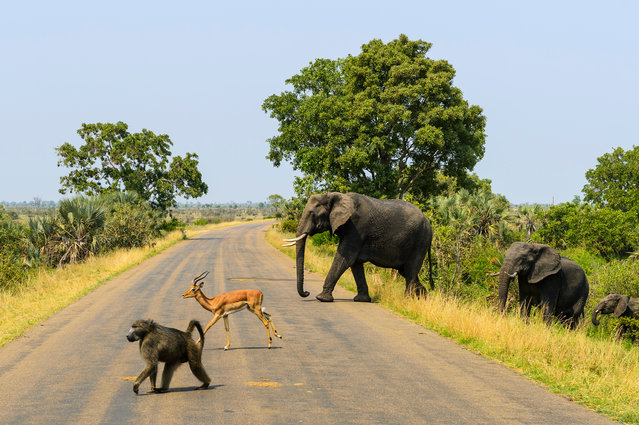
“This was taken on a safari in Kruger national park, South Africa. The scene was like something straight out of a storybook: a wild baboon, impala and elephant crossing the road together, all lined up neatly in a row”. (Photo by Will Clarke/The Guardian)

This month’s selection of travel imagery mixes quiet moments and superlative views. The overall 2018 prize is a West Greenland trip with Wild Photography Holidays. Here: “This was taken on a safari in Kruger national park, South Africa. The scene was like something straight out of a storybook: a wild baboon, impala and elephant crossing the road together, all lined up neatly in a row”. (Photo by Will Clarke/The Guardian)
Details
02 Aug 2018 00:05:00