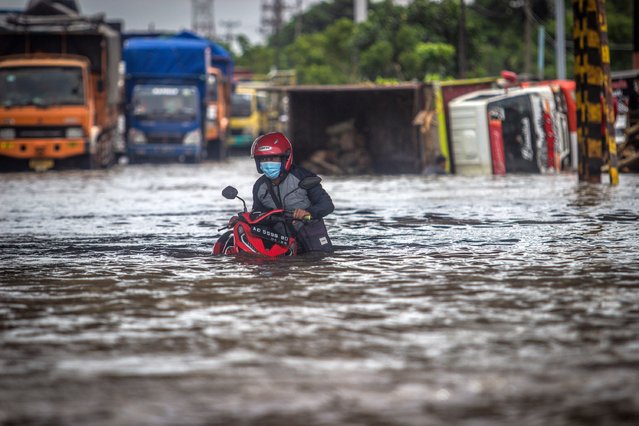
A resident pushes their motorbike through flood waters caused by torrential rain in Semarang, central Java, Indonesia on February 23, 2021. (Photo by W.F. Sihardian/NurPhoto/Rex Features/Shutterstock)
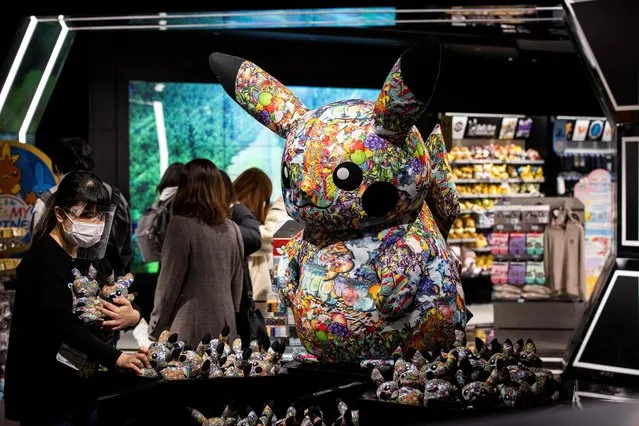
An employee places goods of Pokemon video game characters on display at a Pokemon store in Tokyo on February 26, 2021. Twenty-five years after Pokemon first began delighting children and adults alike, the phenomenon is still capturing hearts, with smartphone craze Pokemon Go enjoying record success in virus-hit 2020. (Photo by Behrouz Mehri/AFP Photo)
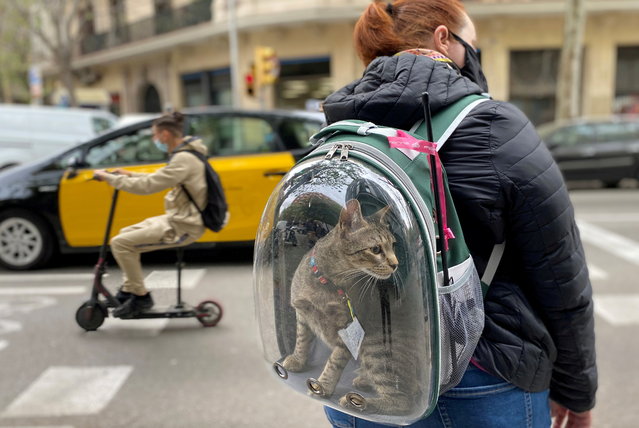
A woman wearing a protective face mask carries her pet cat in a backpack as they wait to cross a street, amid the coronavirus disease (COVID-19) outbreak in Barcelona, Spain on April 9, 2021. (Photo by Nacho Doce/Reuters)
A general view of Copacabana beach during the coronavirus disease (COVID-19) outbreak in Rio de Janeiro, Brazil, March 22, 2020. (Photo by Ricardo Moraes/Reuters)
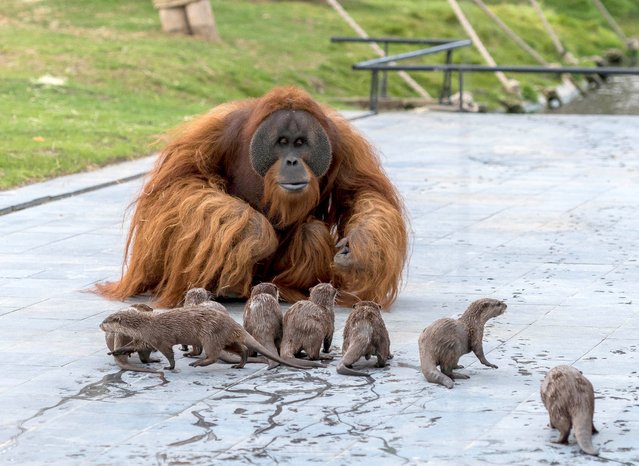
The three orangutans at Pairi Daiza zoo, Belgium, developed a “special bond” with the otters after their river was run through the ape enclosure on March 2020. The zoo said it enriched both species’ environments. An animal – and this is even more the case of orangutans, with whom humans share 97 per cent of their DNA – must be entertained, occupied, challenged and kept busy mentally, emotionally and physically at all times. (Photo by Pascale Jones/The Sun)
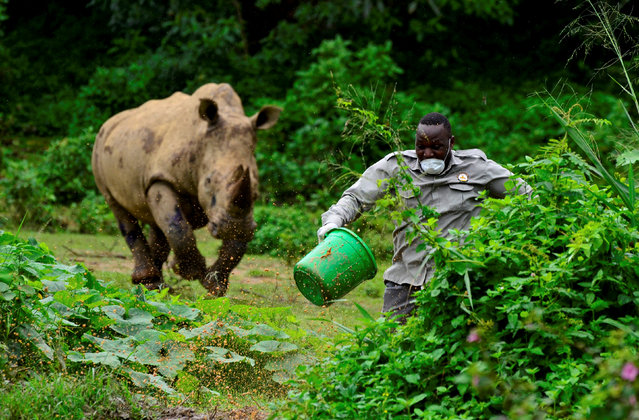
Steven Busulwa, an animal keeper, runs away from a charging rhino at the Uganda Wildlife Conservation Education Center (UWEC) amid the lockdown as part of the measures taken to prevent the spread of the coronavirus disease (COVID-19), within Wakiso district, in Entebbe, Uganda on April 20, 2020. (Photo by Abubaker Lubowa/Reuters)
Medical workers wearing protective gear to protect against coronavirus infection, carry a patient at infectious diseases hospital where patients with coronavirus are treated in St.Petersburg, Russia, Wednesday, June 3, 2020. (Photo by Dmitri Lovetsky/AP Photo)