Loading...
Done
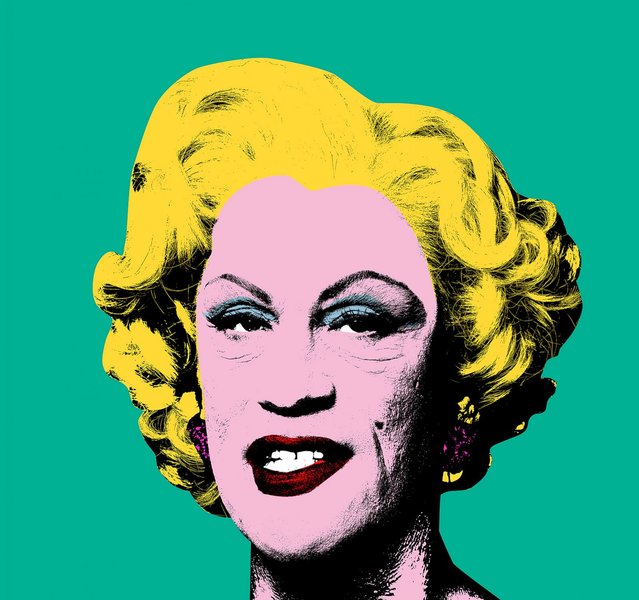
John Malkovich as Marilyn Monroe in a re-creation of Andy Warhol's 1962 painting. The image is a part of the series, “The Malkovich Sessions”, by photographer Sandro Miller and on display at the Catherine Edelman Gallery in Chicago. Miller wanted to pay homage to the artists who influence his photographic career, and approached Malkovich with the idea of re-creating the famous portraits. (Photo by Sandro Miller/Catherine Edelman Gallery)

John Malkovich as Marilyn Monroe in a re-creation of Andy Warhol's 1962 painting. The image is a part of the series, “The Malkovich Sessions”, by photographer Sandro Miller and on display at the Catherine Edelman Gallery in Chicago. Miller wanted to pay homage to the artists who influence his photographic career, and approached Malkovich with the idea of re-creating the famous portraits. (Photo by Sandro Miller/Catherine Edelman Gallery)
Details
06 Oct 2014 08:54:00
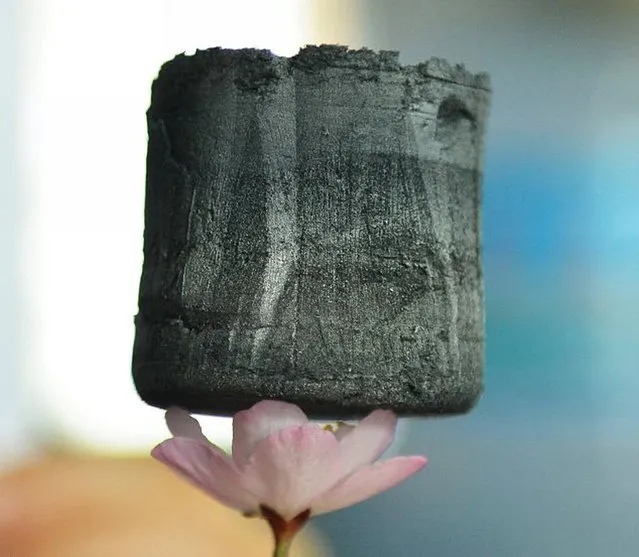
Carbon Aerogel The New Lightest Material

The lightest material ever made has been produced by a team of scientists in China, a Chinese university announced.
Details
07 Jan 2014 11:03:00
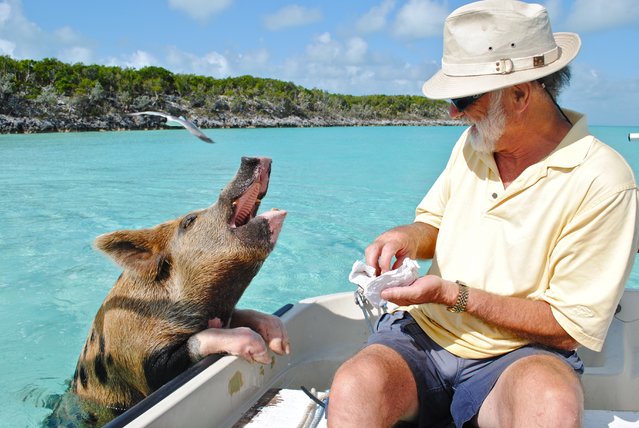
“So you're on a boat in Bahamas and then this pig swims by begging for food”. (Photo and caption by Lisa Larsen/Public Domain)

The Bahamas, the Commonwealth nation of hundreds of islands roughly the size of Connecticut and with population of just a bit over Anaheim, is known for its crystal waters and pristine beaches. This is possibly one of the world’s most beautiful havens of nature, yet people are coming here to see pigs. It is unclear when the pigs first appeared on Exuma Island or where they come from. There’s talk about a daring escape from a shipwreck, or sailors releasing the swine on purpose. In all probability, there were no pigs on this tropical paradise before European settlers came, so their mere presence is the work of human. The intriguing feat of nature, however, is that this population of pigs developed a fine aptitude for swimming. Here: “So you're on a boat in Bahamas and then this pig swims by begging for food”. (Photo and caption by Lisa Larsen/Public Domain)
Details
03 Sep 2015 11:53:00
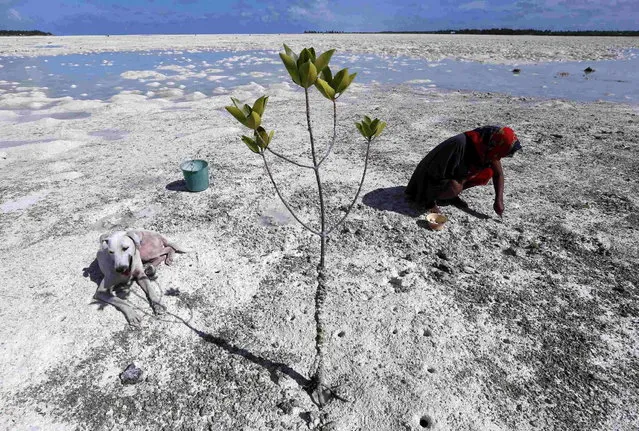
A dog sits in the shade of a mangrove tree as a woman uses a fork to dig for shellfish on the reef-mud flats of a lagoon located at South Tarawa in the central Pacific island nation of Kiribati May 23, 2013. (Photo by David Gray/Reuters)

A dog sits in the shade of a mangrove tree as a woman uses a fork to dig for shellfish on the reef-mud flats of a lagoon located at South Tarawa in the central Pacific island nation of Kiribati May 23, 2013. Kiribati consists of a chain of 33 atolls and islands that stand just metres above sea level, spread over a huge expanse of otherwise empty ocean. With surrounding sea levels rising, Kiribati President Anote Tong has predicted his country will likely become uninhabitable in 30-60 years because of inundation and contamination of its freshwater supplies. (Photo by David Gray/Reuters)
Details
13 Jun 2013 09:23:00
Handout grab taken from YouTube of Commander Chris Hadfield who has said goodbye to life on the International Space Station by making a cover version of David Bowie's Space Oddity. Issue date: Monday May 13, 2013. (Photo by Commander Chris Hadfield/YouTube/PA Wire)

Handout grab taken from YouTube of Commander Chris Hadfield who has said goodbye to life on the International Space Station by making a cover version of David Bowie's Space Oddity. Issue date: Monday May 13, 2013. (Photo by Commander Chris Hadfield/YouTube/PA Wire)
Details
14 May 2013 12:37:00
The Untouchables By Erik Ravelo

Erik Ravelo goes straight for the jugular in his series, Los Intocables (The Untouchables). Depicting children in one the most vulnerable poses of all time, Ravelo attempts to speak for those who cannot properly articulate their pain. The sick, twisted games that adults play can come at a cost to future generations and Ravelo’s series gives a voice to those children who get caught in the crossfire.
Details
11 Jan 2014 19:38:00
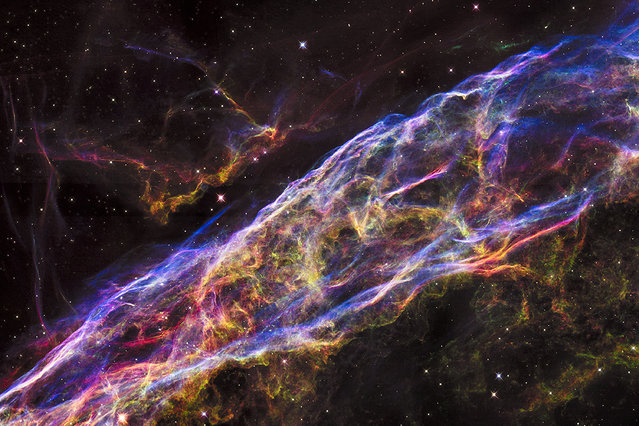
A small section of the expanding remains of the Veil Nebula, a massive star that exploded about 8,000 years ago. The entire nebula is 110 light-years across, covering six full moons on the sky as seen from Earth, and resides about 2,100 light-years away in the constellation Cygnus, the Swan. Image taken by NASA's Hubble Space Telescope. Released September 24, 2015. (Photo by Reuters/NASA/ESA/Hubble Heritage Team)

A small section of the expanding remains of the Veil Nebula, a massive star that exploded about 8,000 years ago. The entire nebula is 110 light-years across, covering six full moons on the sky as seen from Earth, and resides about 2,100 light-years away in the constellation Cygnus, the Swan. Image taken by NASA's Hubble Space Telescope. Released September 24, 2015. (Photo by Reuters/NASA/ESA/Hubble Heritage Team)
Details
10 Dec 2015 08:01:00
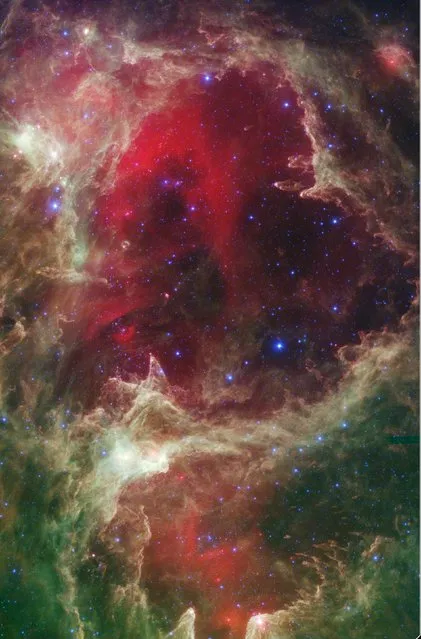
An infrared portrait from NASA's Spitzer Space Telescope which shows generations of stars is seen in this undated NASA handout image released February 14, 2013. In this wispy star-forming region, called W5, the oldest stars can be seen as blue dots in the centers of the two hollow cavities (other blue dots are background and foreground stars not associated with the region). Red shows heated dust that pervades the region's cavities, while green highlights dense clouds. (Photo by NASA/Reuters/JPL-Caltech/Harvard-Smithsonian/Handout)

An infrared portrait from NASA's Spitzer Space Telescope which shows generations of stars is seen in this undated NASA handout image released February 14, 2013. In this wispy star-forming region, called W5, the oldest stars can be seen as blue dots in the centers of the two hollow cavities (other blue dots are background and foreground stars not associated with the region). Red shows heated dust that pervades the region's cavities, while green highlights dense clouds. (Photo by NASA/Reuters/JPL-Caltech/Harvard-Smithsonian/Handout)
Details
03 Mar 2013 08:44:00