Loading...
Done
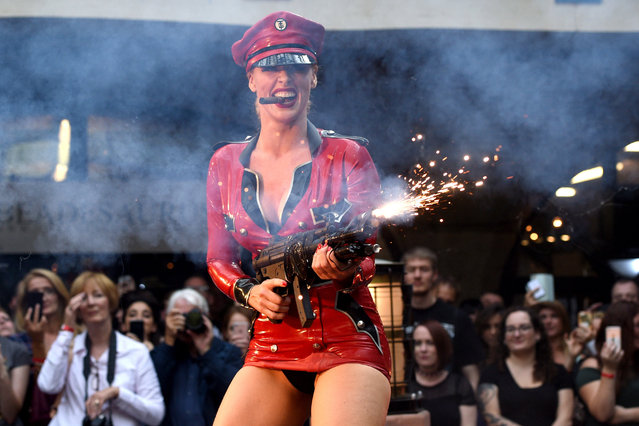
A Burlesque performer onstage during the London Tattoo Convention at the Tobacco Docks, in London, Britain, 24 September 2017. (Photo by Facundo Arrizabalaga/EPA/EFE)

A Burlesque performer onstage during the London Tattoo Convention at the Tobacco Docks, in London, Britain, 24 September 2017. (Photo by Facundo Arrizabalaga/EPA/EFE)
Details
26 Sep 2017 09:16:00
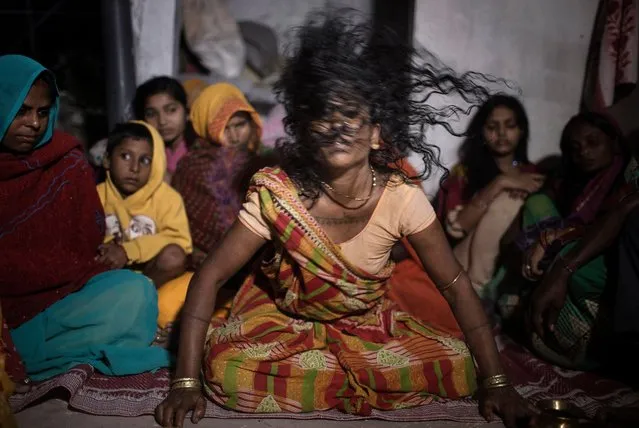
Marani Devi Chaudhary (C), aged 40, performs a ritual in front of shaman Paltan Yadav (unseen) at her home in Rajaur village in Dhanusha district, Nepal, 02 November 2017. The shaman identified Marani Devi to be possessed by their lineage god who was dissatisfied by their worship is thought by the family to have caused them misfortune and is even feared lead to their death. Therefore Marani Devi spent 1,500 USD to perform a healing ritual at the Ghost Festival held at the banks of Kamala River in Dhanusha district two days later. Every family or community has their own sacred god, called 'Kuldevta' in Nepali which means family deity or lineage god. Only family members or people within communities of the same caste can worship to the deity. They have their own rules and regulations of worship which varies from one family and community to another. Being unable to follow the rules and regulations or carry out worship is believed to cause misfortune. (Photo by Narendra Shrestha/EPA/EFE)

Marani Devi Chaudhary (C), aged 40, performs a ritual in front of shaman Paltan Yadav (unseen) at her home in Rajaur village in Dhanusha district, Nepal, 02 November 2017. The shaman identified Marani Devi to be possessed by their lineage god who was dissatisfied by their worship is thought by the family to have caused them misfortune and is even feared lead to their death. (Photo by Narendra Shrestha/EPA/EFE)
Details
17 Nov 2017 06:53:00
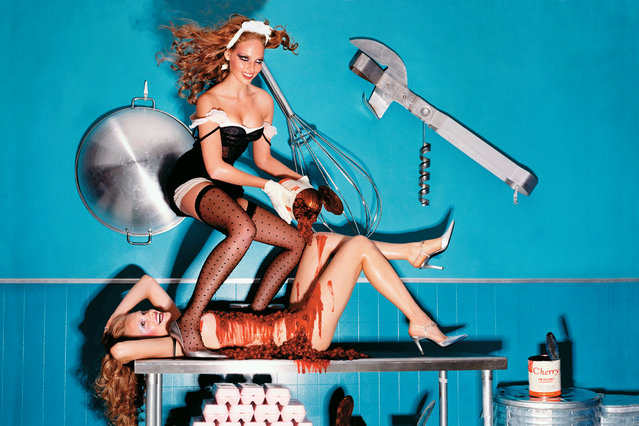
Issues tackled in the show include gender, wealth, consumerism, the environment, protest and identity building. Here: David LaChapelle – October 2004. (Photo by David LaChapelle/The Guardian)

Vogue Italia is hosting a series of shows in Milan exploring how the magazine seeks to engage with hot social and political issues and provoke debate through images by top photographers. The Photo Vogue festival in Milan is hosting three exhibitions. The first, Fashion and Politics in Vogue Italia, looks at the magazine’s ambition to be a catalyst for change – in subtle and playful ways. Here: David LaChapelle – October 2004. (Photo by David LaChapelle/The Guardian)
Details
22 Nov 2017 06:10:00
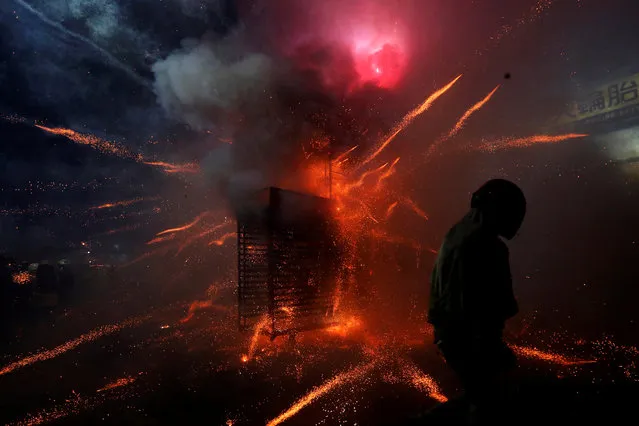
A participant wearing a motorcycle helmet gets sprayed with firecrackers, during the “Beehive Firecrackers” festival at the Yanshui district in Tainan, Taiwan on March 1, 2018. (Photo by Tyrone Siu/Reuters)

A participant wearing a motorcycle helmet gets sprayed with firecrackers, during the “Beehive Firecrackers” festival at the Yanshui district in Tainan, Taiwan on March 1, 2018. According to Taiwan's Tourism Bureau, the “beehive” festival started in the late 1885 as a request to the gods to spare Yanshui from a cholera outbreak which was making its way through the villages. (Photo by Tyrone Siu/Reuters)
Details
05 Mar 2018 00:03:00
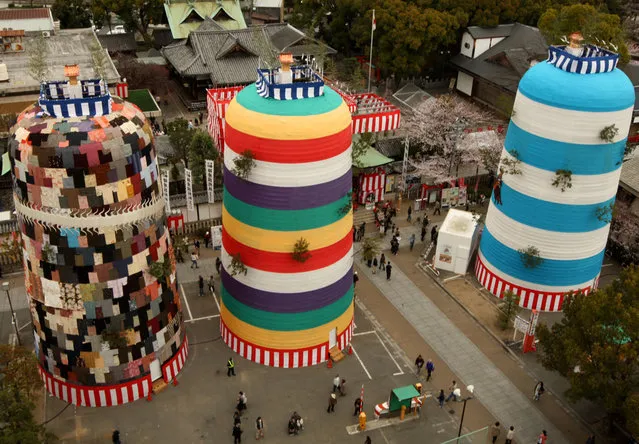
The main feature of the Mitsuyama Taisai Festival, three 18 meters tall 'mountains.' are displayed at the Itate Hyozu Shrine on March 31, 2013 in Himeji, Japan. The festival is held once in 20 years since 1593, Priests of Itate Hyozu Shrine welcome to all the gods across the country for top of the three mountains and treat with food seven days from today as to pray for peace and prosperity.  (Photo by Buddhika Weerasinghe)

The main feature of the Mitsuyama Taisai Festival, three 18 meters tall “mountains”. are displayed at the Itate Hyozu Shrine on March 31, 2013 in Himeji, Japan. The festival is held once in 20 years since 1593, Priests of Itate Hyozu Shrine welcome to all the gods across the country for top of the three mountains and treat with food seven days from today as to pray for peace and prosperity. (Photo by Buddhika Weerasinghe)
Details
02 Apr 2013 12:14:00
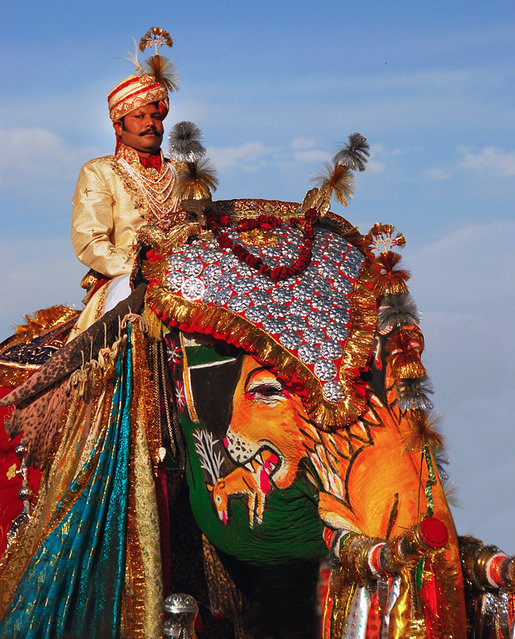
Elephant

Elephant Festival is a festival celebrated in Jaipur city in Rajasthan state in India. It is held on the day of Holi festival, usually in the month of March.The festival features Elephant polo and Elephant Dance. The Elephant Festival begins with a beautiful procession of bedecked elephants, camels, horses and folk dancers. The owners proudly embellish their elephants with vibrant colors, jhools (saddle cloth) and heavy jewellery. It is quite a treat to see female elephants wearing anklets, which tinkle as they walk. One can see people sprinkling 'gulaal' (colored powder) perched on top of the elephant. The most beautifully decorated elephant is awarded. Elephant polo, Elephant race, the tug-of-war between Elephant and 19 men and women are the featured events of the festival.
Details
30 Apr 2015 16:55:00
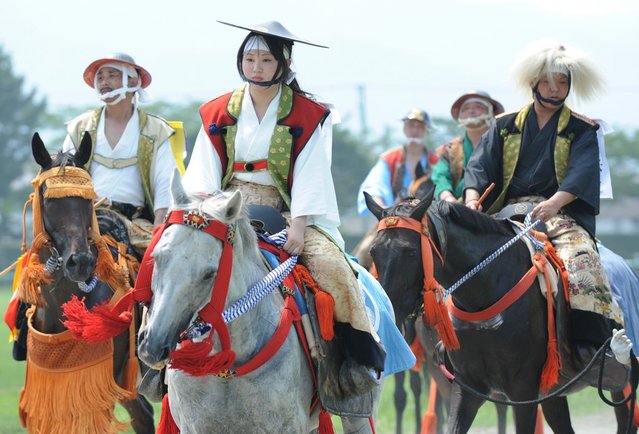
A young woman (C) clad in samurai costume leads other local poeple as she rides her horse during a parade at the annual Soma Nomaoi festival in Minamisoma, Fukushima Prefecture, on July 28, 2012.  The traditional full-scale festival kicked off for the first time after the accident of the Fukushima Dai-ichi Nuclear Power Plant following the massive earthquake and the tsunami on March 11, 2011. (Photo by Toru Yamanaka/AFP Photo)

Soma-Nomaoi is a festival that recreates a battle scene from more than 1,000 years ago. It is annually held for 4 days from July 22 to 25 in Haramachi City, Fukushima Prefecture, in the eastern part of Japan. In this historical event, 600 mounted samurai in traditional Japanese armor, with long swords at their side and ancestral flagstaffs streaming from their backs, ride across open fields. Soma-Nomaoi has been designated an Important Intangible Folk Cultural Property.

Photo: A young woman (C) clad in samurai costume leads other local poeple as she rides her horse during a parade at the annual Soma Nomaoi festival in Minamisoma, Fukushima Prefecture, on July 28, 2012. The traditional full-scale festival kicked off for the first time after the accident of the Fukushima Dai-ichi Nuclear Power Plant following the massive earthquake and the tsunami on March 11, 2011. (Photo by Toru Yamanaka/AFP Photo)
Details
02 Aug 2012 12:59:00


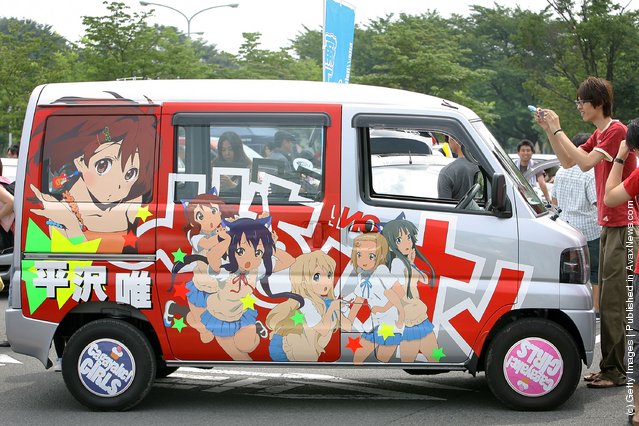
“Itasha (痛車), literally “painmobile”, is a Japanese term for an otaku fad of individuals decorating the bodies of their cars with fictional characters of anime, manga, or video games (especially bishōjo game or eroge). These characters are predominately “cute” female. The decorations usually involve paint schemes and stickers. Automobiles are called Itasha, while similar motorcycles and bicycles are called itansha (痛単車) and itachari (痛チャリ), respectively”. – Wikipedia


Photo: A visitor takes pictures of an anime-decorated «Itasha» car displayed during the “Moe Fes in Washimiya” at Washimiya Town Hall on July 18, 2009 in Washimiya, Saitama, Japan. Itasha, a word derived from “itai” (painful) and “sha” (car), are vehicles decorated with mostly female characters from Japanese manga, anime and video games. (Photo by Kiyoshi Ota/Getty Images)
Details
02 May 2011 08:38:00