Loading...
Done
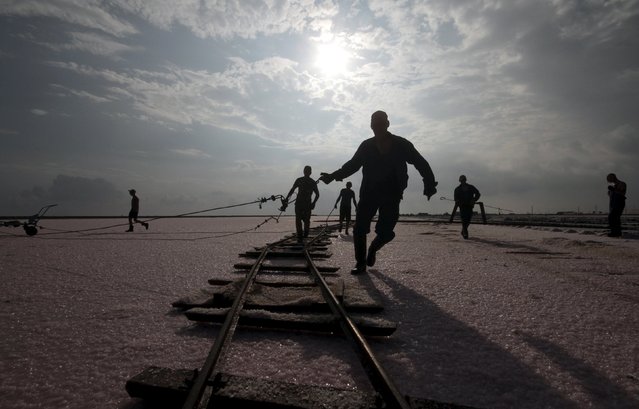
Workers adjust rails at the bed of a drained area of a lake used for the production of salt at the Sasyk-Sivash lake near the city of Yevpatoria, Crimea, September 25, 2015. The area has a long tradition of salt production, prepared from salt flats flooded with water from the Black Sea. (Photo by Pavel Rebrov/Reuters)

Workers adjust rails at the bed of a drained area of a lake used for the production of salt at the Sasyk-Sivash lake near the city of Yevpatoria, Crimea, September 25, 2015. The area has a long tradition of salt production, prepared from salt flats flooded with water from the Black Sea. (Photo by Pavel Rebrov/Reuters)
Details
28 Sep 2015 08:01:00
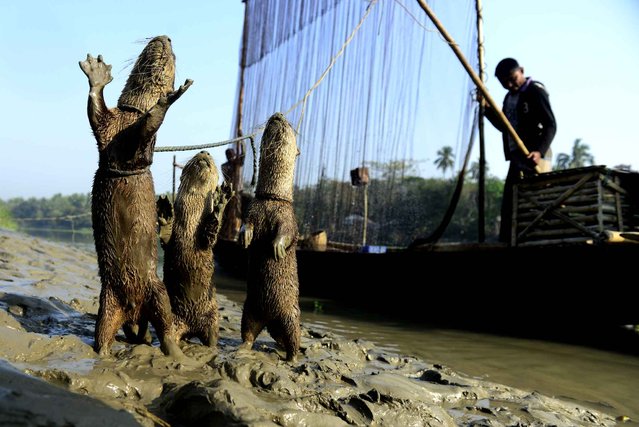
Bangladeshi fisherman feed their otters as they catch fish in Narail some 208 kms from Dhaka on March 11, 2014. The fishermen are using a rare technique that relies on coordination between man and trained otters, a centuries-old fishing partnership that has already long died out in other parts of Asia. (Photo by Munir Uz Zaman/AFP Photo)

Bangladeshi fisherman feed their otters as they catch fish in Narail some 208 kms from Dhaka on March 11, 2014. The fishermen are using a rare technique that relies on coordination between man and trained otters, a centuries-old fishing partnership that has already long died out in other parts of Asia. (Photo by Munir Uz Zaman/AFP Photo)
Details
22 Mar 2014 14:22:00
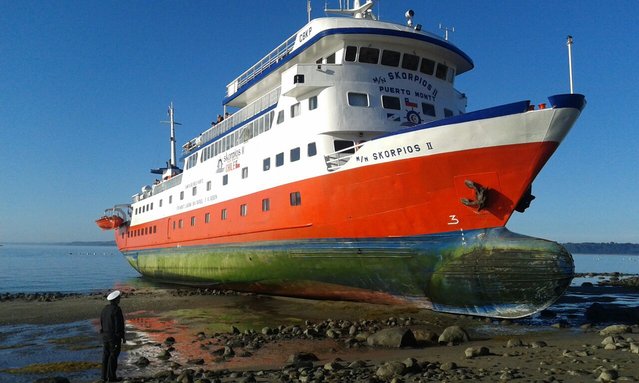
The Chilean ship “Skorpios II” is seen after it ran aground in “Maillen” island, near Puerto Montt, south of Santiago, in this handout picture from the Chilean Navy, February 5, 2015. According to the Chilean Navy, the ship's 89 passengers and 31 crew members were all evacuated and no oil spills or casualties were reported. (Photo by Reuters/Chilean Navy)

The Chilean ship “Skorpios II” is seen after it ran aground in “Maillen” island, near Puerto Montt, south of Santiago, in this handout picture from the Chilean Navy, February 5, 2015. According to the Chilean Navy, the ship's 89 passengers and 31 crew members were all evacuated and no oil spills or casualties were reported. (Photo by Reuters/Chilean Navy)
Details
07 Feb 2015 14:22:00
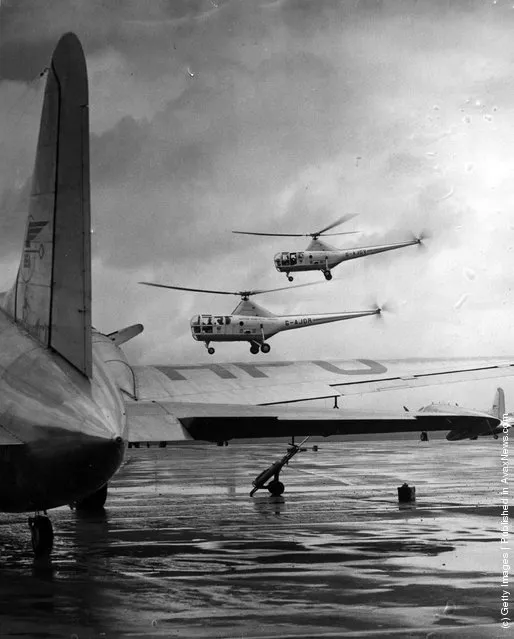
Sikorsky H-5 helicopters

“Igor Sikorsky (May 25, 1889 – October 26, 1972), born Igor Ivanovich Sikorsky was a Russian American pioneer of aviation in both helicopters and fixed-wing aircraft. He designed and flew the world's first multi-engine fixed-wing aircraft, the Russky Vityaz in 1913, and the first airliner, Ilya Muromets, in 1914. After immigrating to the United States in 1919, Sikorsky founded the Sikorsky Aircraft Corporation in 1923, and developed the first of Pan American Airways' ocean-conquering flying boats in the 1930s. In 1939 Sikorsky designed and flew the Vought-Sikorsky VS-300, the first viable American helicopter, which pioneered the rotor configuration used by most helicopters today. Sikorsky would modify the design into the Sikorsky R-4, which became the world's first mass-produced helicopter in 1942”. – Wikipedia

Photo: Westland Sikorsky H-5's, used by British European Airways Helicopters, which fly between London and Birmingham. The Sikorsky H-5, (aka R-5, S-51, HO3S-1, or Horse) (R-5 until 1948; company designation VS-327) is a helicopter built by Sikorsky Aircraft Corporation, formerly used by the United States Air Force, and its predecessor, the United States Army Air Forces, as well as the United States Navy and United States Coast Guard (with the designations HO2S and HO3S). (Photo by Harrison /Topical Press Agency/Getty Images). 22nd May 1951

Details
06 Sep 2011 10:18:00
A photographer has discovered a spectacular way of keeping warm during winter – using fire to heat up icy locations. Sam Scholes uses long-exposures to capture the movement of fire in front of ice-covered backdrops. After lighting steel wool his friend Scott Stringham swings the flaming object in order to make swirling patterns. (Photo by Sam Scholes/Caters News)

A photographer has discovered a spectacular way of keeping warm during winter – using fire to heat up icy locations. Sam Scholes uses long-exposures to capture the movement of fire in front of ice-covered backdrops. After lighting steel wool his friend Scott Stringham swings the flaming object in order to make swirling patterns. The result of this technique – captured at Midway Ice Castles in Utah is a vibrant image with the warm light dancing across the cold scenes. (Photo by Sam Scholes/Caters News)
Details
16 Jan 2015 13:13:00
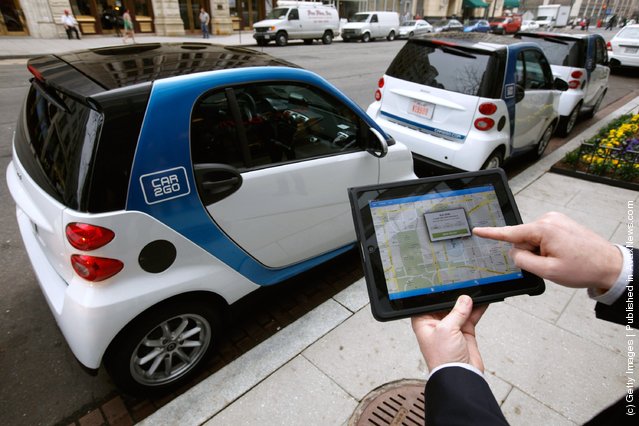
A car2go employee shows how members can use a smartphone or iPad app to locate and reservec car2go vehicles March 22, 2012 in Washington, DC

“Car2go fleet is located throughout the greater downtown area and can be accessed on-demand or booked 24 hours in advance. The members may use the vehicle for as long as they like, without committing to a specific return time or return location”. – Wikipedia

Photo: A car2go employee shows how members can use a smartphone or iPad app to locate and reservec car2go vehicles March 22, 2012 in Washington, DC. Beginning March 24, car2go will offer the first free-floating car-sharing service in Washington and Portland, Oregon, where customers can use the smartphone app within the 34-square-mile “Home Area”. After paying a one-time $35 membership fee, drivers can then rent the Smart Fortwo vehicles by the minute, paying only for the time they use the vehicle, with discounted rates for hourly and daily use. (Photo by Chip Somodevilla/Getty Images)
Details
23 Mar 2012 10:58:00
Pinhole Photography By Justin Quinnell

Justin Quinnell made a pinhole camera that he uses to take photos from inside his mouth. I know they’ve been floating around the interenet for a long while buy here they are again!
Details
26 Aug 2013 09:04:00


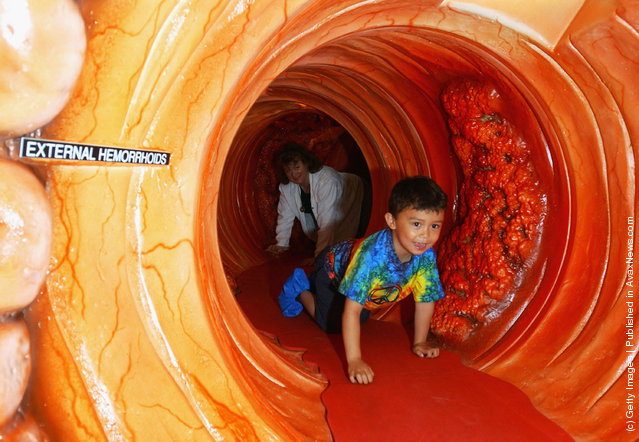
Five year old Michael Esteban and his mother Kari Esteban, crawl through a 40-foot long, 4-foot high replica of a human colon on July 11, 2003 in Seattle. The colon is used to educate people on colorectal cancer. (Photo by Ron Wurzer/Getty Images)
Details
01 Jul 2011 11:28:00