Loading...
Done
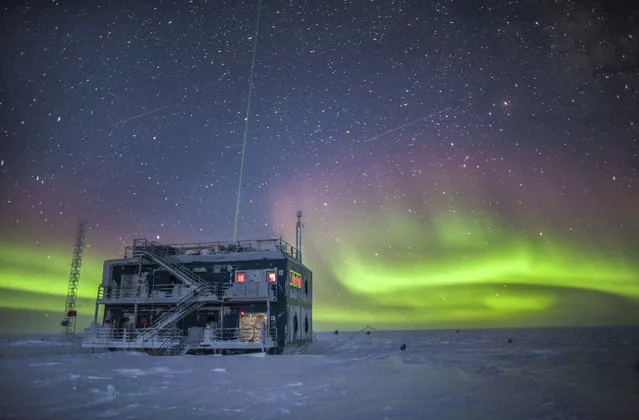
This undated photo provided by NOAA in May 2018 shows aurora australis near the South Pole Atmospheric Research Observatory in Antarctica. When a hole in the ozone formed over Antarctica, countries around the world in 1987 agreed to phase out several types of ozone-depleting chemicals called chlorofluorocarbons (CFCs). Production was banned, emissions fell and the hole shriveled. But according to a study released on Wednesday, May 16, 2018, scientists say since 2013, there’s more of a banned CFC going into the atmosphere. (Photo by Patrick Cullis/NOAA via AP Photo)

This undated photo provided by NOAA in May 2018 shows aurora australis near the South Pole Atmospheric Research Observatory in Antarctica. When a hole in the ozone formed over Antarctica, countries around the world in 1987 agreed to phase out several types of ozone-depleting chemicals called chlorofluorocarbons (CFCs). Production was banned, emissions fell and the hole shriveled. But according to a study released on Wednesday, May 16, 2018, scientists say since 2013, there’s more of a banned CFC going into the atmosphere. (Photo by Patrick Cullis/NOAA via AP Photo)
Details
15 Aug 2018 00:05:00
On August 31, 2012, a long filament of solar material that had been hovering in the sun's atmosphere, the corona, erupted out into space at 4:36 p.m. EDT. The coronal mass ejection, or CME, traveled at over 900 miles per second. The CME did not travel directly toward Earth, but did connect with Earth's magnetic environment, or magnetosphere, causing aurora to appear on the night of Monday, September 3. (Photo by NASA/GSFC/SDO)

On August 31, 2012, a long filament of solar material that had been hovering in the sun's atmosphere, the corona, erupted out into space at 4:36 p.m. EDT. The coronal mass ejection, or CME, traveled at over 900 miles per second. The CME did not travel directly toward Earth, but did connect with Earth's magnetic environment, or magnetosphere, causing aurora to appear on the night of Monday, September 3. (Photo by NASA/GSFC/SDO via The Atlantic)
Details
14 Sep 2012 09:01:00
A sticker is seen at the Rocky Mountain Guns and Ammo store in Parker, Colorado July 24, 2012. The killing of 12 people at a midnight screening of the new Batman movie in the Denver suburb of Aurora may spark a fresh round of soul-searching on America's relationship with guns but few predict any real change in the law. (Photo by Shannon Stapleton/Reuters)

A sticker is seen at the Rocky Mountain Guns and Ammo store in Parker, Colorado July 24, 2012. The killing of 12 people at a midnight screening of the new Batman movie in the Denver suburb of Aurora may spark a fresh round of soul-searching on America's relationship with guns but few predict any real change in the law. (Photo by Shannon Stapleton/Reuters)
Details
07 Apr 2013 07:38:00
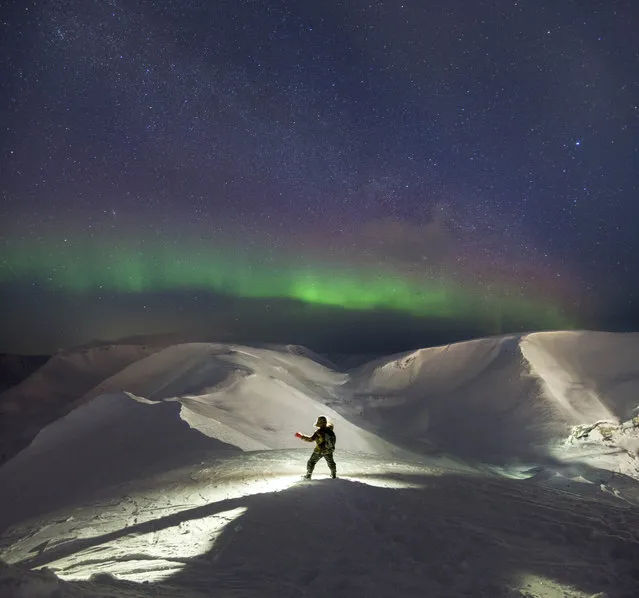
“I spend time trying to get the exposure right”, Vitaly Istomin explained. (Photo by Vitaly Istomin/Caters News Agency)

These Northern Lights “rainbows” have turned the sky greener than the Earth below. Vitaly Istomin, 26, spent several nights in freezing conditions under the stars in northern Russia’s Khibiny Mountains to capture the aurora’s “rainbows”. (Photo by Vitaly Istomin/Caters News Agency)
Details
22 Feb 2018 00:02:00
A ladyboy s*x worker wears a belt with a dollar sign on it while holding condoms and lube handed to her by Sisters, a transgendered outreach and community services organization in Pattaya, Thailand on August 25, 2016. Many of Thailand's ladyboys live in Pattaya, a large percentage of whom work in the s*x industry there. (Photo by Aaron Joel Santos/Getty Images/Aurora Creative)

A ladyboy sеx worker wears a belt with a dollar sign on it while holding condoms and lube handed to her by Sisters, a transgendered outreach and community services organization in Pattaya, Thailand on August 25, 2016. Many of Thailand's ladyboys live in Pattaya, a large percentage of whom work in the sеx industry there. (Photo by Aaron Joel Santos/Getty Images/Aurora Creative)
Details
26 Aug 2016 11:04:00
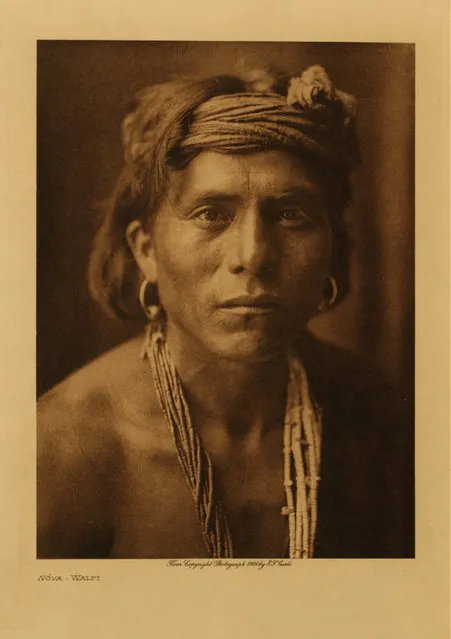
Nova, a Walpi, in 1906. (Photo by Edward S. Curtis)

At the beginning of the 20th century, Edward S. Curtis set out to document what he saw as a disappearing race: the Native American. From 1907 to 1930, Curtis took more than 2,000 photos of 80 tribes stretching from the Great Plains to the Pacific Northwest and Alaska. He then published and sold these photos, along with narrative text, in 20 volumes of work known as “The North American Indian”. It is one of the most significant collections of its kind, “probably the most important photographic document of its age and its topic,” said Jeffrey Garrett, associate university librarian for Special Libraries at Northwestern University. (Photo by Edward S. Curtis)
Details
07 Sep 2014 12:57:00
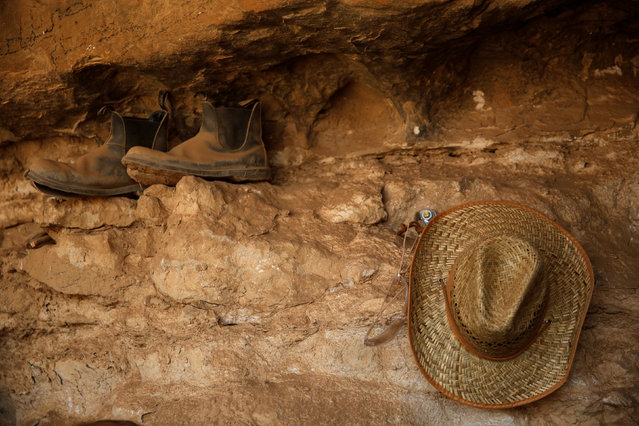
A hat and boots belonging to a volunteer with the Israeli Antique Authority are seen inside the Cave of the Skulls, an excavation site in the Judean Desert near the Dead Sea, Israel June 1, 2016. (Photo by Ronen Zvulun/Reuters)

A hat and boots belonging to a volunteer with the Israeli Antique Authority are seen inside the Cave of the Skulls, an excavation site in the Judean Desert near the Dead Sea, Israel June 1, 2016. A team of volunteers and archaeologists are searching for remains of The Dead Sea Scrolls, one of the oldest known Hebrew texts, in a national bid, initiated by the Israel Antiquities Authority (IAA), to prevent the robbery of such important artefacts and once found to hand them over to the state for preservation. (Photo by Ronen Zvulun/Reuters)
Details
02 Jun 2016 12:17:00
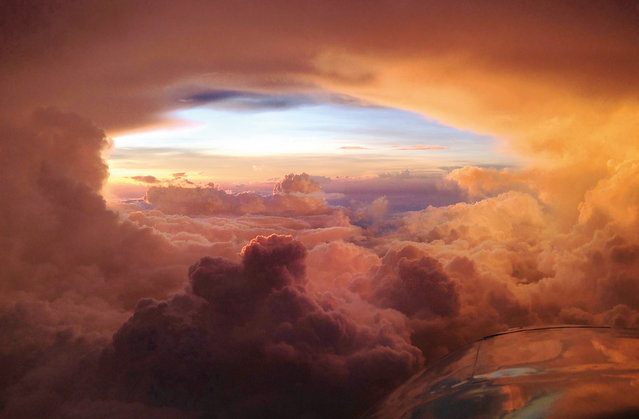
April. A path through the clouds between Townsville and Richmond, Queensland. (Photo by Captain Victoria Harrison/Australian Bureau of Meteorology)

The annual calendar features stunning shots of lighting, cloud formations and the aurora australis. Hundreds of photographers from every Australian state and territory submitted images to the Bureau of Meteorology for selection in the year’s calendar, with only the best chosen to represent the full spectrum of Australian weather. Here: April. A path through the clouds between Townsville and Richmond, Queensland. (Photo by Captain Victoria Harrison/Australian Bureau of Meteorology)
Details
09 Nov 2017 05:42:00