Loading...
Done
Ocean voyage

Do you think that history is a science? Well, not exactly. First, and foremost, history is the state's “legend of wars”, it’s official regalia. Of course, public historians are not interested in scientific truth – quite the opposite. In this respect, any attempt to present a state’s history as altruistic and benevolent as possible is welcomed and encouraged – as opposed to any revisionism attempts that may be more accurate. In this matter, Chinese have surpassed us all – they revised in highly creative manner (but rather shamelessly) the technology already invented by Europeans, a process that resulted in oldest state on the planet. Here is an interesting paradox: ask any sinologist about the Middle Kingdom during second century B.C., and he will describe it to you in such a vivid manner as if he has been living there all his life – but as soon as you will ask him to describe Chinese history in the 19-20th centuries… let's say, his eagerness will be greatly diminished. However, we will discuss China in a different article, and in the meantime we will try to understand how exactly historic “legend of wars” is formed and functions – based on a specific and well-known example. A great example is Ferdinand Magellan's first voyage around the world.
Details
14 Nov 2011 09:11:00
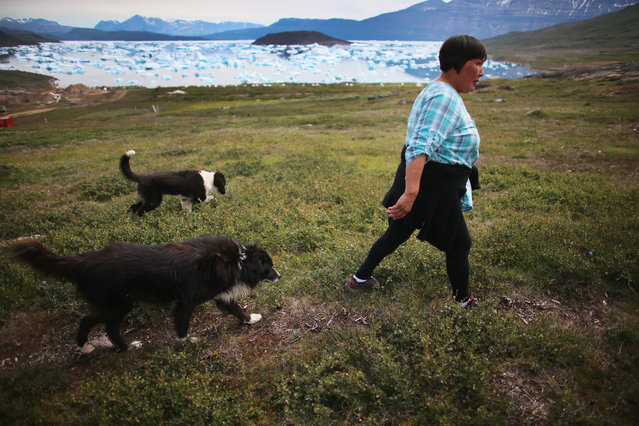
Arnaq Egede walks to the potato field on her family's farm on July 31, 2013 in Qaqortoq, Greenland. The farm, the largest in Greenland, has seen an extended crop growing season due to climate change. (Photo by Joe Raedle/Getty Images)

Arnaq Egede walks to the potato field on her family's farm on July 31, 2013 in Qaqortoq, Greenland. The farm, the largest in Greenland, has seen an extended crop growing season due to climate change. (Photo by Joe Raedle/Getty Images)
Details
22 Aug 2015 12:08:00
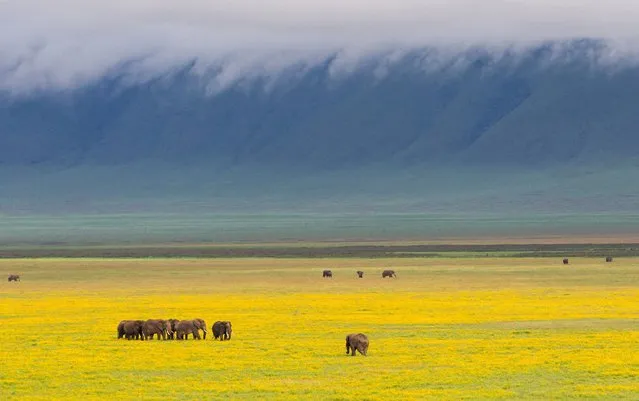
Ngorongoro Crater (Tanzania). At 610m deep and 260 sq km, this is the largest unflooded caldera in the world. A blue-green vision from above it's a haven for engangered wildlife and Maasai livestock. The crater was formed three million years ago when a giant volcano, which could have been as high as Kilimanjaro, exploded and collapsed. The caldera formed the concentric fractures in the crust cracked down to a magma reservoir deep underground. (Photo by John Bryant/Getty Images)

Ngorongoro Crater (Tanzania). At 610m deep and 260 sq km, this is the largest unflooded caldera in the world. A blue-green vision from above it's a haven for engangered wildlife and Maasai livestock. The crater was formed three million years ago when a giant volcano, which could have been as high as Kilimanjaro, exploded and collapsed. The caldera formed the concentric fractures in the crust cracked down to a magma reservoir deep underground. (Photo by John Bryant/Getty Images)
Details
28 Mar 2014 08:08:00
Four-year-old Solaris Arias (right) jumps through water spraying from an open fire hydrant in Providence, Rhode Island, on June 20, 2012. Much of the state remained under a heat advisory Tuesday afternoon because of the steamy air mass that has moved into the region resulting in temperatures in the 90s. (Photo by Steven Senne/AP Photo)

Four-year-old Solaris Arias (right) jumps through water spraying from an open fire hydrant in Providence, Rhode Island, on June 20, 2012. Much of the state remained under a heat advisory Tuesday afternoon because of the steamy air mass that has moved into the region resulting in temperatures in the 90s. (Photo by Steven Senne/AP Photo)
Details
17 Aug 2012 09:19:00
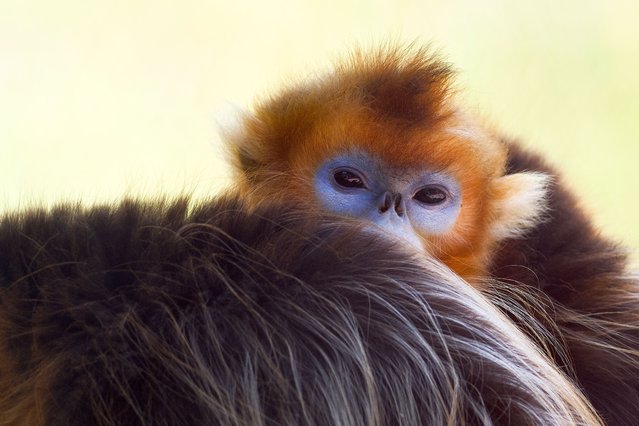
A golden snub-nosed monkeys (Rhinopitheque de Roxelane) looks through its enclosure after quarantine during its presentation at the Beauval Zoopark in Saint-Aignan Central France, on May 7, 2025. ZooParc de Beauval (Loir-et-Cher) welcomed three golden snub-nosed monkeys on April 3, 2025, an endangered species from China, as part of a conservation program, becoming the first zoo outside Asia to house these long-haired, red-furred primates with bluish faces. (Photo by Guillaume Souvant/AFP Photo)

A golden snub-nosed monkeys (Rhinopitheque de Roxelane) looks through its enclosure after quarantine during its presentation at the Beauval Zoopark in Saint-Aignan Central France, on May 7, 2025. ZooParc de Beauval (Loir-et-Cher) welcomed three golden snub-nosed monkeys on April 3, 2025, an endangered species from China, as part of a conservation program, becoming the first zoo outside Asia to house these long-haired, red-furred primates with bluish faces. (Photo by Guillaume Souvant/AFP Photo)
Details
18 May 2025 02:44:00
Reflected in the rearview mirror, Jose Collantes gets a hug from daughter Kehity while they're stopped at a red light, as Jose drives his five-year-old home from a playdate in Santiago, Chile, Sunday, September 6, 2020, three months after they lost his wife, her mother, to COVID-19. Their case highlights how COVID-19 deaths the world over are often the beginning of a new personal journey for those affected. (Photo by Esteban Felix/AP Photo)

Reflected in the rearview mirror, Jose Collantes gets a hug from daughter Kehity while they're stopped at a red light, as Jose drives his five-year-old home from a playdate in Santiago, Chile, Sunday, September 6, 2020, three months after they lost his wife, her mother, to COVID-19. Their case highlights how COVID-19 deaths the world over are often the beginning of a new personal journey for those affected. (Photo by Esteban Felix/AP Photo)
Details
15 Oct 2020 00:05:00
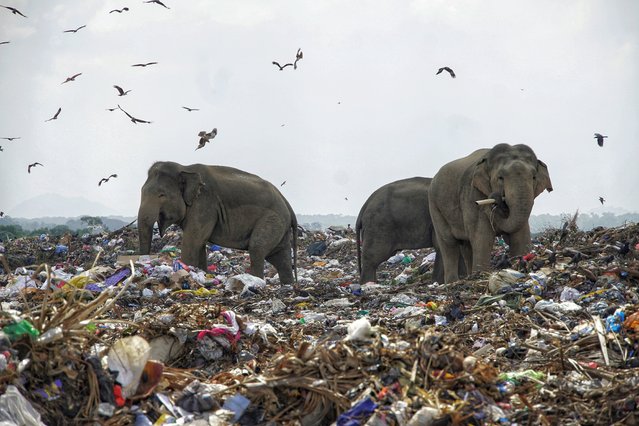
Elephants forage for food at a rubbish dump encroaching on their jungle habitat in Oluvil, Sri Lanka in September 2020. Examination of dead elephants has revealed undigested polythene and other plastic waste. (Photo by Tharmaplan Tilaxan/Cover Images)

Elephants forage for food at a rubbish dump encroaching on their jungle habitat in Oluvil, Sri Lanka in September 2020. Examination of dead elephants has revealed undigested polythene and other plastic waste. (Photo by Tharmaplan Tilaxan/Cover Images)
Details
11 Nov 2020 00:05:00
Participants compete in the High-Heels Race as part of the Pride celebrations, in the Chueca neighbourhood in Madrid on July 4 29, 2024. MADO (Madrid Pride) is a series of street celebrations that take place during the city´s LGBTIQ (lesbian, gay, bisеxual, transgender, intersеx and queer) Pride week. (Photo by Óscar del Pozo/AFP Photo)

Participants compete in the High-Heels Race as part of the Pride celebrations, in the Chueca neighbourhood in Madrid on July 4 29, 2024. MADO (Madrid Pride) is a series of street celebrations that take place during the city´s LGBTIQ (lesbian, gay, bisеxual, transgender, intersеx and queer) Pride week. (Photo by Óscar del Pozo/AFP Photo)
Details
01 Dec 2025 05:17:00