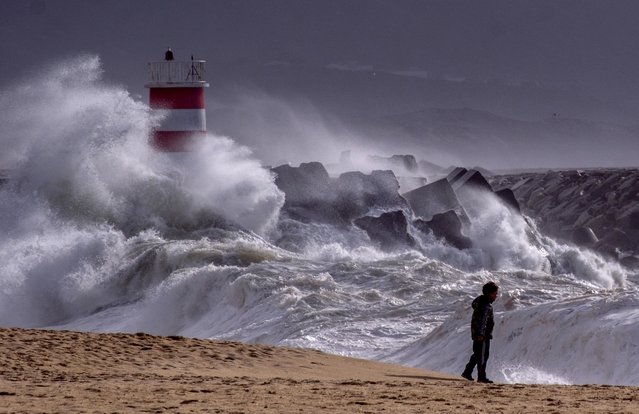
Big waves approach the beach of Nazare, Portugal, Tuesday, March 26, 2024. The high waves were caused by strong winds at one of the world's most popular surf spots. (Photo by Michael Probst/AP Photo)
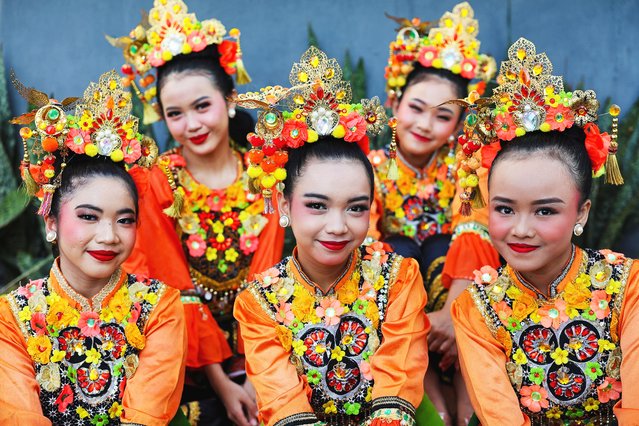
Dancers pose for a photo as they prepare during Festival Cilung or “Love the Environment” Festival, where boats made from recycled materials, mostly plastic bottles, sail on the Ciliwung River, one of the most polluted rivers in the world, to raise public awareness about river pollution, in Jakarta, Indonesia, on September 28, 2025. (Photo by Willy Kurniawan/Reuters)
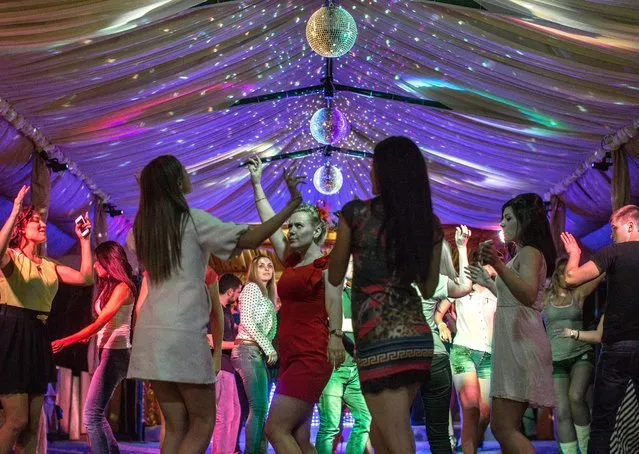
Young Ukrainians dance at nightclub House of Meteorologists, May 23, 2014. Sunday's upcoming election in Ukraine has not only exposed the divide between east and west, but between old and young. Unlike their elders, younger people have no memory of Soviet life, and most see themselves as Ukrainian. (Photo by Evelyn Hockstein/The Washington Post)
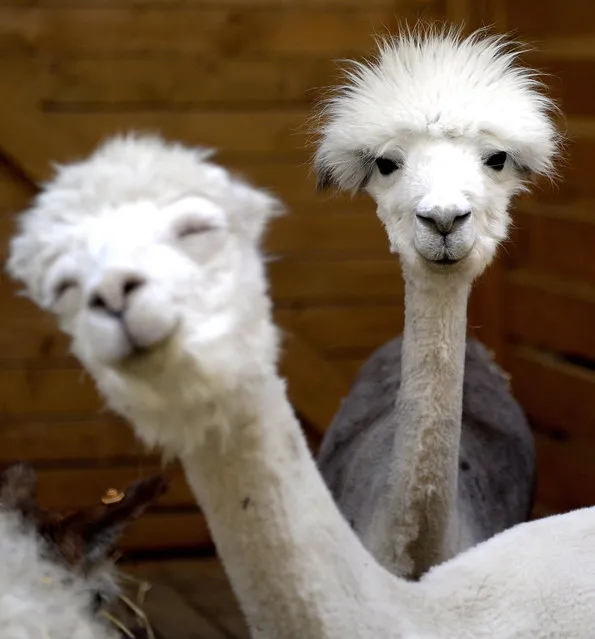
Alpacas peek out of their box in Kielnarowa, Poland, June 11, 2014. A total of 35 female and 3 male alpacas were imported from Chile by the Rzeszow University of Information Technology and Management Center Zoo to be used for the therapy of children. Alpacas also provide one of the most expensive wools. (Photo by Darek Demanowicz/EPA)
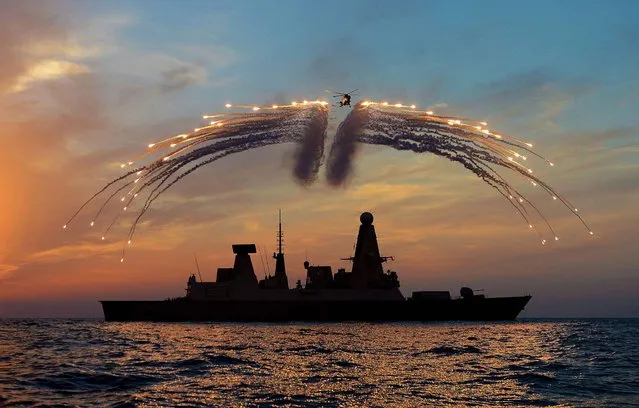
HMS Dragonís Mk8 Lynx Helicopter conducted day into night flying serial by L(Phot) Dave Jenkins which won the Media Operations Category which was awarded to the best single image that is judged to create the most impact as a news in the annual Peregrine Trophy awards. (Photo by Dave Jenkins/PA Wire)
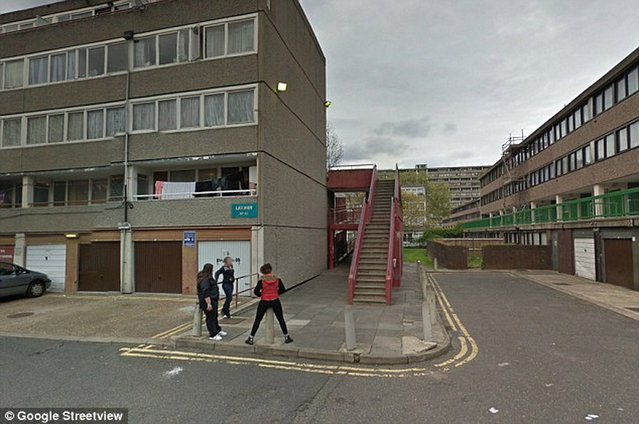
Take a walk on the wild side around some of the most down right dangerous places in the world - and all without leaving your desk, courtesy of Google Street View. Since 2007, Google's amazing technology has given people the chance to visit the Eiffel Tower, peer out over San Francisco's Golden Gate Bridge or walk along a beach in the Bahamas. But as well as mapping the tourist-friendly hotspots, Google also ventured into places you really wouldn't want to find yourself. Here is a collection of some the most notorious areas captured by the infamous roaming camera cars from around the UK and the world.
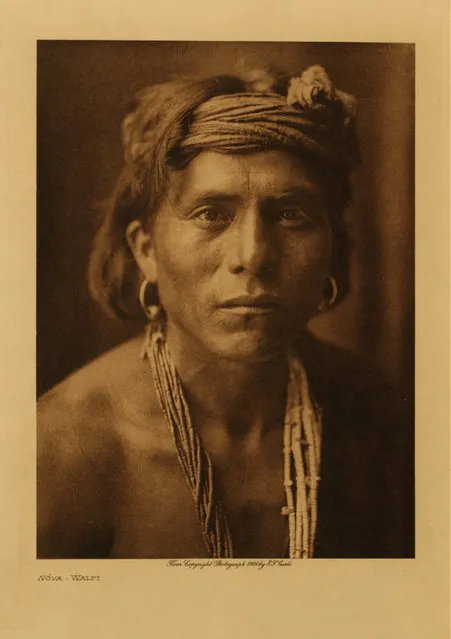
At the beginning of the 20th century, Edward S. Curtis set out to document what he saw as a disappearing race: the Native American. From 1907 to 1930, Curtis took more than 2,000 photos of 80 tribes stretching from the Great Plains to the Pacific Northwest and Alaska. He then published and sold these photos, along with narrative text, in 20 volumes of work known as “The North American Indian”. It is one of the most significant collections of its kind, “probably the most important photographic document of its age and its topic,” said Jeffrey Garrett, associate university librarian for Special Libraries at Northwestern University. (Photo by Edward S. Curtis)
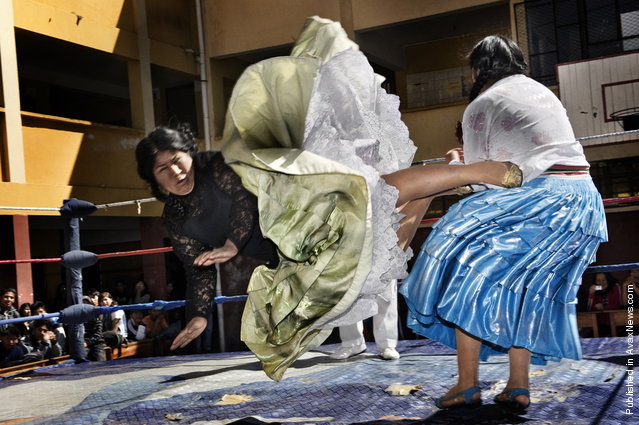
Women Wrestlers, Bolivia. Lucha libre (Bolivian wrestling) is one of the most popular sports in the country. Women wrestlers are known as cholitas and have in the last ten years become popular in the sport. Here, Carmen Rosa and Yulia la Pacena perform in a benefit show to raise money for the bathrooms of a school in La Paz, Bolivia, 26 June 2011. (Photo by Daniele Tamagni)