Loading...
Done
A fuzzy caterpillar on a basil plant in west Bengal, India on December 25, 2023. The caterpillar’s defence system is its hair, which has microscopic barbs that break off easily in the skin of would-be predators. (Photo by Soumyabrata Roy/NurPhoto/Rex Features/Shutterstock)

A fuzzy caterpillar on a basil plant in west Bengal, India on December 25, 2023. The caterpillar’s defence system is its hair, which has microscopic barbs that break off easily in the skin of would-be predators. (Photo by Soumyabrata Roy/NurPhoto/Rex Features/Shutterstock)
Details
09 Feb 2024 10:47:00


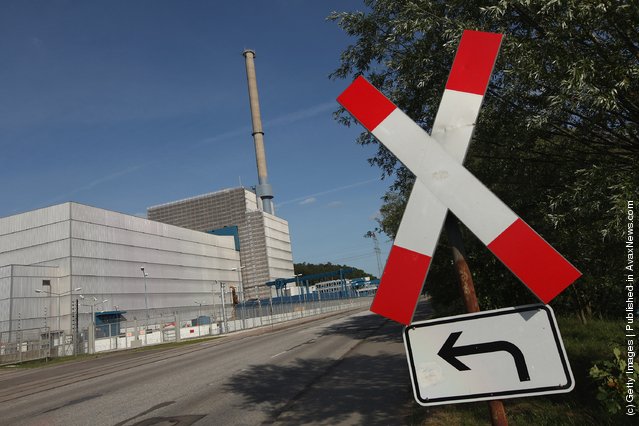
A sign marks a railway crossing next to the troubled Kruemmel nuclear power plant on June 2, 2011 in Geesthacht, Germany. The German government recently announced it will phase out the country's 17 remaining nuclear reactors by 2022 in a policy initiative that represents a radical reversal from its previous policy and was sparked by the disaster at Fukushima. Kruemmel went into operation in 1983 but was taken offline following a fire in 2007. (Photo by Sean Gallup/Getty Images)
Details
03 Jun 2011 09:12:00


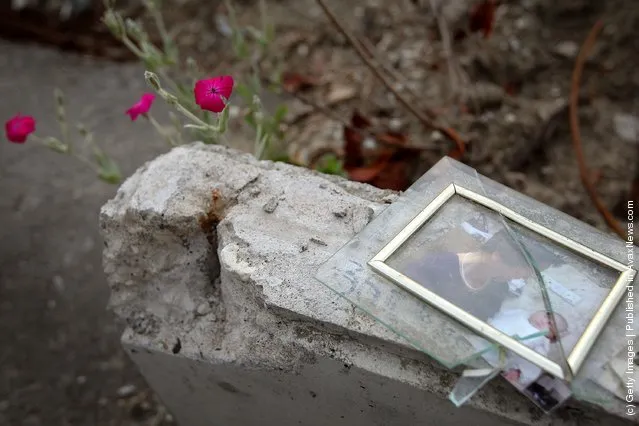
A broken picture frame is left in the tsunami-hit Arahama area, three months and two days after the magnitude 9.0 earthquake and subsequent tsunami on June 13, 2011 in Sendai, Miyagi, Japan. Japanese government has been struggling to deal with the earthquake and tsunami as well as the troubled Fukushima Daiichi Nuclear Power Plant. The fear on outbreak of virus infectious disease are mounting due to the humid rainy season on the corner and delay of the clearing the debris. (Photo by Kiyoshi Ota/Getty Images)
Details
14 Jun 2011 09:23:00
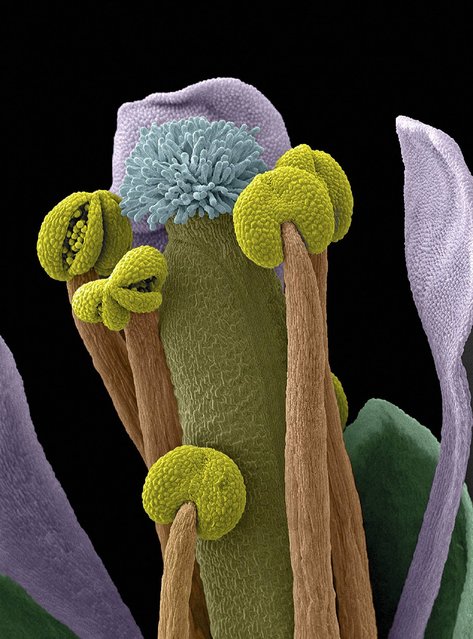
Scanning electron micrograph (SEM) of an Arabidopsis thaliana flower, also commonly known as thale cress. Some of the anthers are open, revealing pollen grains ready for dispersal. Arabidopsis was the first plant to have its entire genome sequenced and is widely used as a model organism in molecular and plant biology. Horizontal width of image is 1200 microns. Magnification 100x. (Photo by Stefan Eberhard/Wellcome Images)

Beautiful, strange and occasionally alarming pictures from the shortlist for this year’s Wellcome image awards – which celebrate the very best in science photography and imaging – from an x-ray of a bat to a micrograph of a kidney stone. The exhibition opens on 12 March at three science centres and the Museum of Science and Industry in Manchester. Photo: Scanning electron micrograph (SEM) of an Arabidopsis thaliana flower, also commonly known as thale cress. Some of the anthers are open, revealing pollen grains ready for dispersal. Arabidopsis was the first plant to have its entire genome sequenced and is widely used as a model organism in molecular and plant biology. Horizontal width of image is 1200 microns. Magnification 100x. (Photo by Stefan Eberhard/Wellcome Images)
Details
11 Mar 2014 05:58:00


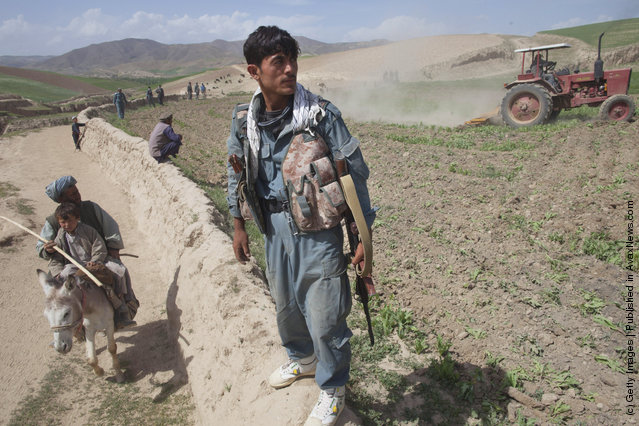
Afghan security stands guard as a tractor eradicates a field of young poppy plants May 25, 2011, in Argu District, Badakshan, Afghanistan. (Photo by Paula Bronstein/Getty Images)
Details
26 May 2011 10:51:00


A young girl navigates her way around Hampton Court maze in the spring sunshine on May 2, 2009 in London, England. The Hampton Court maze is one of the most famous hedge mazes in the world and was planted between 1689 and 1695 by George London and Henry Wise. (Photo by Dan Kitwood/Getty Images)
Details
12 Jun 2011 09:31:00
Anti-nuclear activists demonstrate during a Say to Goodbye to Nuclear Energy protest in Kobe, Japan

Anti-nuclear activists demonstrate during a “Say to Goodbye to Nuclear Energy” protest on September 11, 2011 in Kobe, Japan. Japan is marking sixth months since a magnitude 9.0 earthquake struck Japan offshore on March 11 at 2:46pm local time, triggering a tsunami wave of up to ten metres which engulfed large parts of north-eastern Japan and also damaged the Fukushima nuclear plant, causing the worst nuclear crisis in decades. The current number of dead and missing is reportedly estimated to be 22,900. (Photo by Buddhika Weerasinghe/Getty Images)
Details
12 Sep 2011 10:16:00
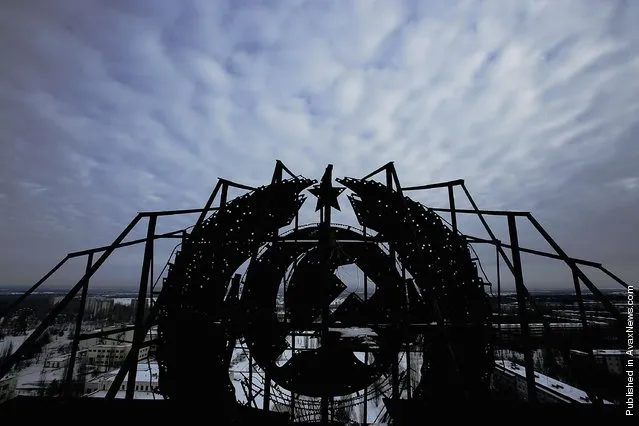
Chernobyl

Scaffolding holding a remnant of the Soviet Union, the hammer and sickle, is seen on a rooftop of an abandoned building in the town of Pripyat on January 25, 2006 near Chernobyl, Ukraine. The town of Pripyat, deserted since the 1986 catastrophe, once housed 30,000 people, the majority of being workers from the Chernobyl Nuclear Power Plant. Days after the catastrophe the inhabitants were relocated to other locations in the Soviet Union. The town of Pripyat has remained uninhabited since. Prypyat and the surrounding area will not be safe for human habitation for several centuries. Scientists estimate that the most dangerous radioactive elements will take up to 900 years to decay sufficiently to render the area safe.

Details
14 Mar 2011 10:20:00