Loading...
Done
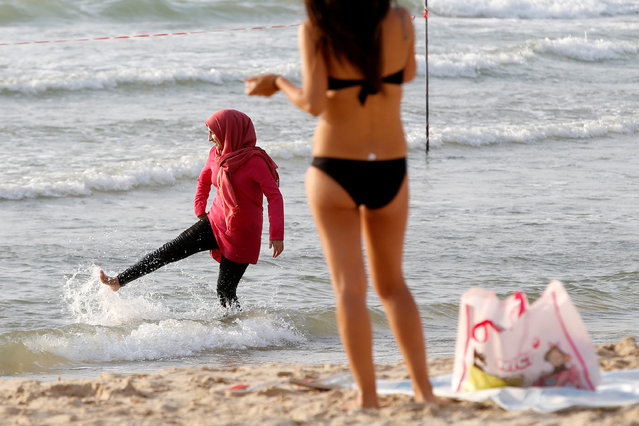
A Muslim woman wearing a Hijab kicks the water in the Mediterranean Sea as a woman wearing a bikini stands nearby at the beach in Tel Aviv, Israel August 30, 2016. (Photo by Baz Ratner/Reuters)

A Muslim woman wearing a Hijab kicks the water in the Mediterranean Sea as a woman wearing a bikini stands nearby at the beach in Tel Aviv, Israel August 30, 2016. (Photo by Baz Ratner/Reuters)
Details
01 Sep 2016 11:32:00
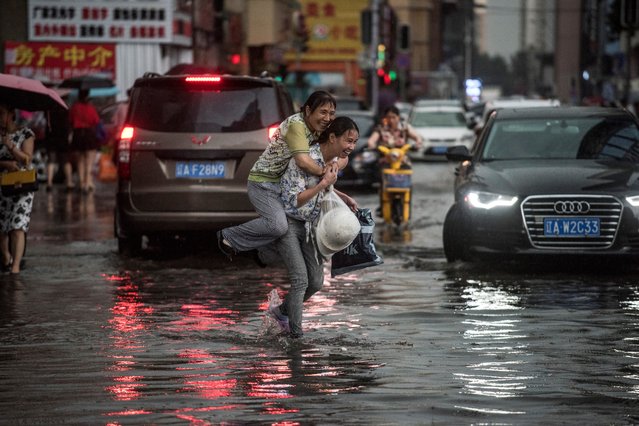
A woman holds an elderly woman on her back to cross a flooded street after a heavy rain in Shenyang, Liaoning province on July 14, 2017. (Photo by Fred Dufour/AFP Photo)

A woman holds an elderly woman on her back to cross a flooded street after a heavy rain in Shenyang, Liaoning province on July 14, 2017. (Photo by Fred Dufour/AFP Photo)
Details
16 Jul 2017 08:08:00
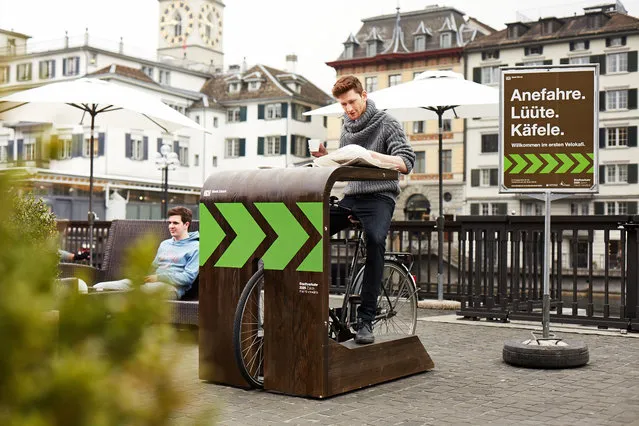
Bicycle Cafe In Zurich, Switzerland

In the past, having a car was synonymous to success. Now, however, having a bicycle in the new trend. Riding a bicycle is all pros and no cons. It makes you slimmer and healthier, it allows you to enjoy the fresh air, traffic jams are no longer a problem, and of course you don’t waste money on gas. However, there was always a problem of leaving your bike unattended. With thieves lurking behind every corner, there is always a risk of someone stealing your bicycle. Thus, the authorities of Zurich have decided to do something for cyclists. They’ve created the first café for cyclists where the person can sit on his bike while enjoying a cup of coffee. This is a great idea since the visitors will not have to worry about their bikes being stolen. Though to visit such a café, you might want to bring a cushion with you, since sitting on small, hard plastic seat is not very relaxing.
Details
22 Dec 2014 11:49:00
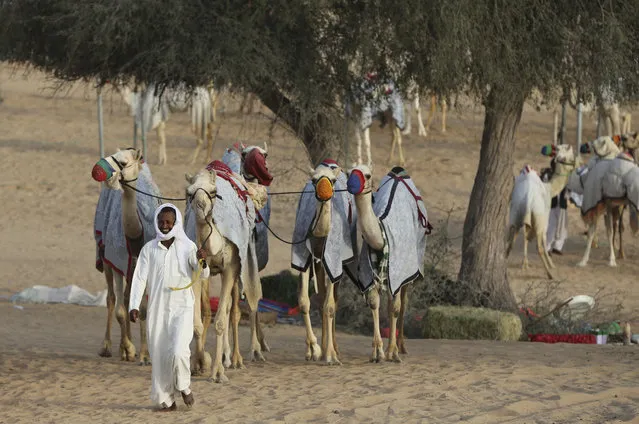
In this Saturday, April 8, 2017 photo, a keeper walks camels to the Al Marmoom Camel Racetrack, in al-Lisaili about 40 km (25  miles) southeast of Dubai, United Arab Emirates. (Photo by Kamran Jebreili/AP Photo)

In this Saturday, April 8, 2017 photo, a keeper walks camels to the Al Marmoom Camel Racetrack, in al-Lisaili about 40 km (25 miles) southeast of Dubai, United Arab Emirates. Camel racing is a big-money sport and fast thoroughbreds can fetch well over a million dollars. As rising temperatures across Gulf Arab countries signal the end of the winter camel racing season, Dubai is wrapping up its races with the annual Al Marmoom Heritage Festival that has drawn thousands of camels from across the oil-rich Gulf. (Photo by Kamran Jebreili/AP Photo)
Details
19 Apr 2017 08:44:00
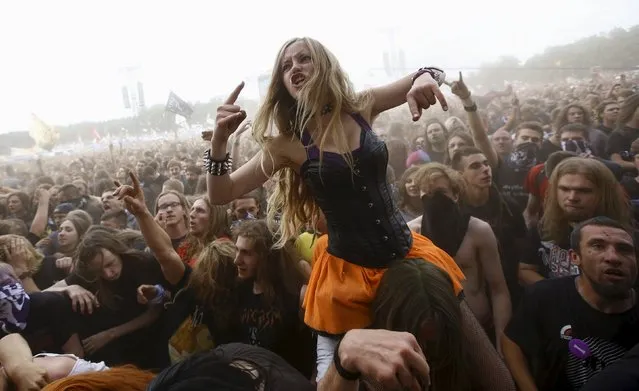
Revelers dance and shout as they listen to music, in front of the main stage, during the 21st Woodstock Festival in Kostrzyn-upon-Odra, Poland July 31, 2015. (Photo by Kacper Pempel/Reuters)

Revelers dance and shout as they listen to music, in front of the main stage, during the 21st Woodstock Festival in Kostrzyn-upon-Odra, Poland July 31, 2015. An estimated 200,000 people attended the ongoing festival, a brainchild of Polish journalist and social campaigner Jerzy Owsiak, on Friday. Owsiak initiated the event to say thank you to those who donated money to his GOCC charity organisation that delivers medical care for children. (Photo by Kacper Pempel/Reuters)
Details
01 Aug 2015 12:21:00
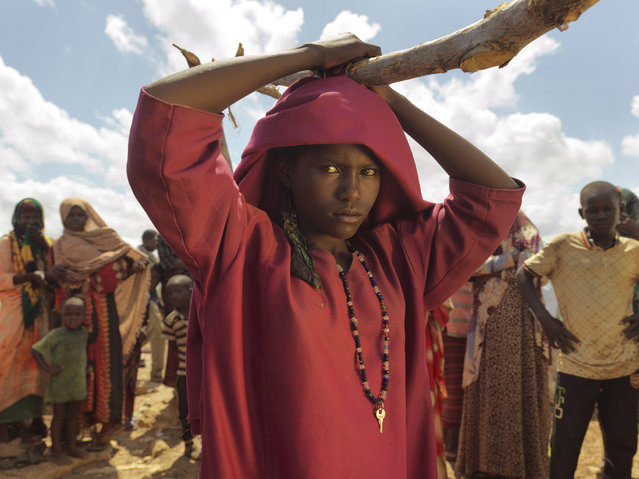
Fadumo Nunow Abdillow, 15, lives at Muuri camp. The UN has appealed for $1.5bn to address the crisis. Just 40% of the money ($611.m) has been received so far. (Photo by Peter Caton/Mercy Corps)

The worst drought in 40 years has a cruel grip on Somalia. A struggling young government and militant violence have compounded to bring crisis to 6.7 million lives. The town of Baidoa is facing some of the harshest conditions. Surrounded by territory controlled by al-Shabaab militants and amid ongoing attacks, 160,000 people have had to leave their farms and are surviving in camps where hunger, thirst and cholera await them. (Photo by Peter Caton/Mercy Corps)
Details
12 Aug 2017 05:47:00
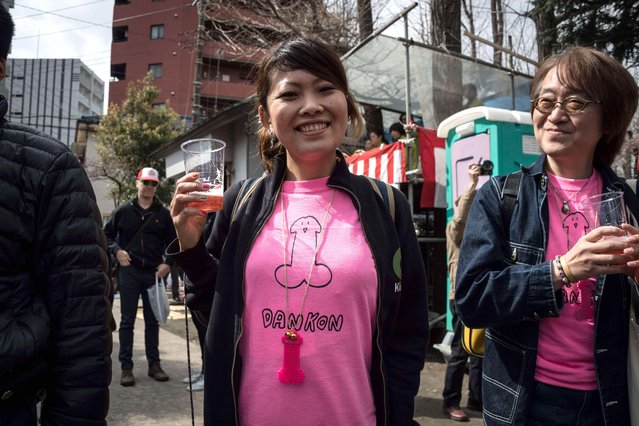
Festival goer with phallus logo t-shirt during the Kanamara Matsuri Steel Phallus Festival at Kawasaki, Japan on April 2, 2017. The Kanamara Matsuri or Festival of the Steel Phallus is held on the first Sunday of April at the Kanayama shrine. The shrine celebrates a legend of a steel pen*s and was frequented by prostitutes who wished to pray for protection from sexually transmitted diseases. Visitors now wish for easy delivery, marriage and matrimonial harmony. Because of the large steel phallus the unusual festival has become a tourist attraction attracting many overseas visitors and is used to raise money for HIV charities. Phallus shaped candy, carved vegetables, decorations, and a big parade are all part of the festival. (Photo by DELETREE/SIPA Press/Rex Features/Shutterstock)

Festival goer with phallus logo t-shirt during the Kanamara Matsuri Steel Phallus Festival at Kawasaki, Japan on April 2, 2017. The Kanamara Matsuri or Festival of the Steel Phallus is held on the first Sunday of April at the Kanayama shrine. The shrine celebrates a legend of a steel pen*s and was frequented by prostitutes who wished to pray for protection from sexually transmitted diseases. Visitors now wish for easy delivery, marriage and matrimonial harmony. Because of the large steel phallus the unusual festival has become a tourist attraction attracting many overseas visitors and is used to raise money for HIV charities. Phallus shaped candy, carved vegetables, decorations, and a big parade are all part of the festival. (Photo by DELETREE/SIPA Press/Rex Features/Shutterstock)
Details
04 Apr 2017 09:48:00
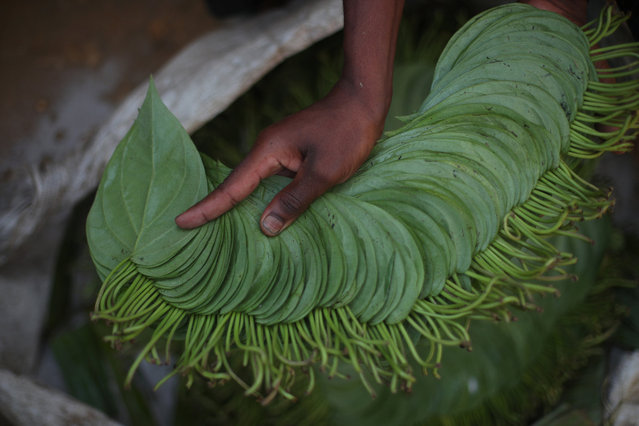
Faruk, 17, a Rohingya refugee trader holds betel leaves which are on sale at a stall in Palong Khali refugee camp near Cox's Bazar, Bangladesh, November 3, 2017. He left his village in Myanmar when the military opened fire towards the Rohingya. “I buy this betel leaf from Palong Khali market, in one bundle there are 160 pieces, I buy it for 80 taka and I sell it for 100 taka. Bangladeshi's and I sell for the same rate in the camp. Outside in the local market it is 80 taka per bundle. My problem is that I don't have money so I can't buy anything to eat, I can't buy fish to eat”, he said. (Photo by Hannah McKay/Reuters)

Faruk, 17, a Rohingya refugee trader holds betel leaves which are on sale at a stall in Palong Khali refugee camp near Cox's Bazar, Bangladesh, November 3, 2017. He left his village in Myanmar when the military opened fire towards the Rohingya. “I buy this betel leaf from Palong Khali market, in one bundle there are 160 pieces, I buy it for 80 taka and I sell it for 100 taka (1 Bangladeshi Taka = 0.012 US Dollar). Bangladeshi's and I sell for the same rate in the camp. Outside in the local market it is 80 taka per bundle. My problem is that I don't have money so I can't buy anything to eat, I can't buy fish to eat”, he said. (Photo by Hannah McKay/Reuters)
Details
27 Nov 2017 08:54:00