Loading...
Done


When The Dog And Cat Stays At Home Alone
Details
18 Mar 2014 13:26:00


Cat-Friend vs Dog-Friend, Two Humans Acting Like House Pets
Details
20 May 2013 07:56:00


LOL!! “Adorable hamster plays dead. No hamsters were hurt in the making of this film”.
Details
31 May 2012 08:52:00


Beat the egg under water
Details
06 Mar 2013 10:18:00


D=OUT (ダウト) – Koi no Bakansu (恋のバカンス) – Japanese
Details
15 Mar 2013 13:04:00


Luna Lee – Mary Had A Little Lamb Gayageum cover
Details
19 May 2013 12:57:00
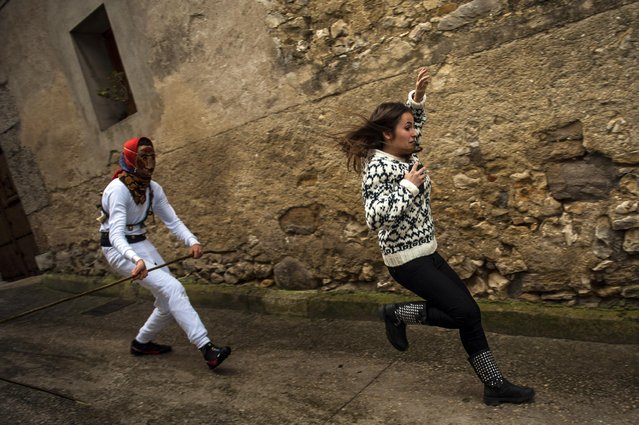
In this photo taken on Sunday, February 15, 2015 a girl runs away from a “Mamuxarro” during the carnival, in the small town of Unanu, northern Spain. While Rio de Janeiro may boast the world’s most famous carnival, the festive period of masquerades and wild and colorful costumes that precedes the Christian religious season of Lent is also a permanent and popular fixture for celebration in Spain and Portugal, with each country having its own strange and unique way of doing it. (Photo by Alvaro Barrientos/AP Photo)

In this photo taken on Sunday, February 15, 2015 a girl runs away from a “Mamuxarro” during the carnival, in the small town of Unanu, northern Spain. In the northern Spanish ancient village of Unamu, people dress up as “Mamuxarro”, folkloric figures in white with a red sash and a metal mask to cover their faces as they pursue townsfolk with sticks. According to custom, their “victims” (usually young women) must kneel and kiss the mamuxarro’s knee after he makes the sign of the cross on their forehead. (Photo by Alvaro Barrientos/AP Photo)
Details
22 Feb 2015 10:51:00
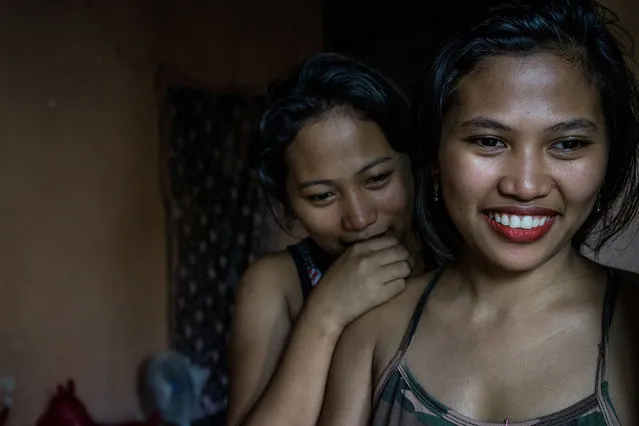
Gemma, right, and Joanne in their home in Angeles City. (Photo by Hannah Reyes Morales/The Washington Post)

Typhoon Yolanda – also known as Haiyan – struck the central part of the country November 8, 2013, leaving at least 6,300 people dead and over four million displaced. A month after Typhoon Haiyan, the United Nations Population Fund estimates that 5,000 women were subjected to sеxual violence. A study by the Health and Human Rights online publication shows the majority of young girls and women in Manila’s sеx industry come from poverty-stricken areas – such as Leyte, Samar, Cebu and southern Mindanao – and enter trafficking through force, deception, economic desperation and psychological manipulation. (Photo by Hannah Reyes Morales/The Washington Post)

Details
01 May 2017 09:59:00