Loading...
Done
Monks dressed as Tibetan Buddhism characters attend a religious ceremony, known as “Da Gui” or beating ghost, to celebrate the upcoming Tibetan New Year which starts on March 1 at Yonghegong Lama Temple, in Beijing February 28, 2014. This Tibetan ceremony is held annually at the end of the first lunar month with mask dancing to expel ghosts, according to a press release. (Photo by Jason Lee/Reuters)

Monks dressed as Tibetan Buddhism characters attend a religious ceremony, known as “Da Gui” or beating ghost, to celebrate the upcoming Tibetan New Year which starts on March 1 at Yonghegong Lama Temple, in Beijing February 28, 2014. This Tibetan ceremony is held annually at the end of the first lunar month with mask dancing to expel ghosts, according to a press release. (Photo by Jason Lee/Reuters)
Details
01 Mar 2014 13:07:00
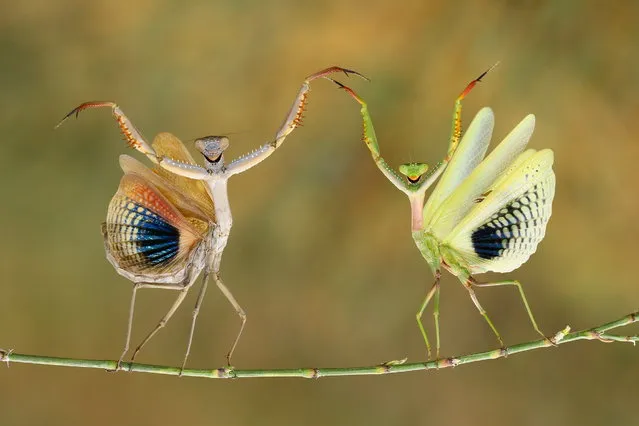
“Show Time”. It's a normal behavior of mantis. They're doing defence. When they're afraid of; raising their arms and spreading their wings. They looks like smiling dancer. Photo location: Nicosia, Cyprus. (Photo and caption by Hasan Baglar/National Geographic Photo Contest)

“Show Time”. It's a normal behavior of mantis. They're doing defence. When they're afraid of; raising their arms and spreading their wings. They looks like smiling dancer. Photo location: Nicosia, Cyprus. (Photo and caption by Hasan Baglar/National Geographic Photo Contest)
Details
28 Oct 2014 13:01:00
Indian Muslim devotees travel in an auto rickshaw during the Urs festival in Ajmer, India, Thursday, April 23, 2015. Thousands of devotees from different parts of India travel to the shrine of Sufi saint Khwaja Moinuddin Chisht for the annual festival marking the saint's death anniversary. (Photo by Deepak Sharma/AP Photo)

Indian Muslim devotees travel in an auto rickshaw during the Urs festival in Ajmer, India, Thursday, April 23, 2015. Thousands of devotees from different parts of India travel to the shrine of Sufi saint Khwaja Moinuddin Chisht for the annual festival marking the saint's death anniversary. (Photo by Deepak Sharma/AP Photo)
Details
26 Apr 2015 08:48:00
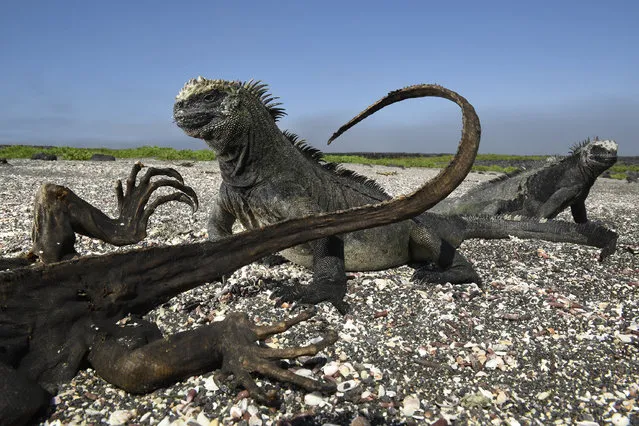
Galapagos – Rocking the Cradle: Four major ocean currents converge along the Galapagos archipelago, creating the conditions for an extraordinary diversity of animal life, April 25, 2016. The islands are home to at least 7,000 flora and fauna species, of which 97 percent of the reptiles, 80 percent of the land birds, 50 percent of the insects and 30 percent of the plants are endemic. The local ecosystem is highly sensitive to the changes in temperature, rainfall and ocean currents that characterize the climatic events known as El Niño and La Niña. These changes cause marked fluctuations in weather and food availability. Many scientists expect the frequency of El Niño and La Niña to increase as a result of climate change, making the Galapagos a possible early-warning location for its effects. (Photo by Thomas P. Peschak for National Geographic/World Press Photo)

Galapagos – Rocking the Cradle: Four major ocean currents converge along the Galapagos archipelago, creating the conditions for an extraordinary diversity of animal life, April 25, 2016. The islands are home to at least 7,000 flora and fauna species, of which 97 percent of the reptiles, 80 percent of the land birds, 50 percent of the insects and 30 percent of the plants are endemic. (Photo by Thomas P. Peschak for National Geographic/World Press Photo)
Details
16 Apr 2018 00:01:00
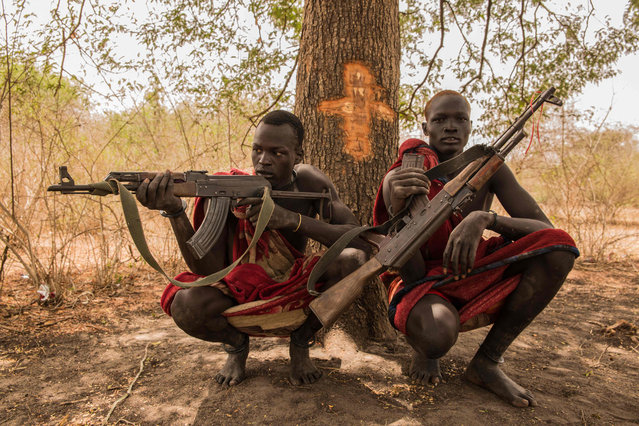
Sudanese cattle keepers from Dinka tribe Makal Maker (R) and Achiek Butich pose with the guns for their protection at their cattle camp in Mingkaman, Lakes State, South Sudan, on March 2, 2018. (Photo by  Stefanie Glinski/AFP Photo)

Sudanese cattle keepers from Dinka tribe Makal Maker (R) and Achiek Butich pose with the guns for their protection at their cattle camp in Mingkaman, Lakes State, South Sudan, on March 2, 2018. (Photo by Stefanie Glinski/AFP Photo)
Details
16 Mar 2018 00:05:00
Top 10 Pedigreed Cat Breeds in America. No. 10: Sphynx. A suede-like coat is the sphynx's most unmistakable feature, but he's also curious, smart and a clown who craves applause for his antics. In fact, he loves attention so much that you may want to consider getting him a fellow sphynx playmate. (Photo by Quentin Descotte)

No. 10: Sphynx. A suede-like coat is the sphynx's most unmistakable feature, but he's also curious, smart and a clown who craves applause for his antics. In fact, he loves attention so much that you may want to consider getting him a fellow sphynx playmate. (Photo by Quentin Descotte)
Details
06 Sep 2012 08:31:00
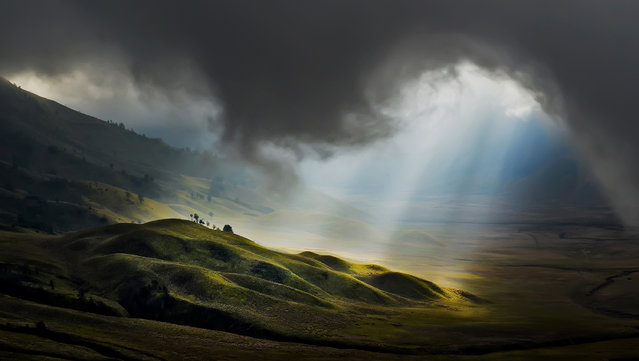
“Light From Heaven”. Taken around Mount Bromo, East Java, Indonesia in the morning. Photo location: East Java, Indonesia. (Photo and caption by Pimpin Nagawan/National Geographic Photo Contest)

“Light From Heaven”. Taken around Mount Bromo, East Java, Indonesia in the morning. Photo location: East Java, Indonesia. (Photo and caption by Pimpin Nagawan/National Geographic Photo Contest)

ATTENTION! All pictures are presented in high resolution. To see Hi-Res images – just TWICE click on any picture. In other words, click small picture – opens the BIG picture. Click BIG picture – opens VERY BIG picture.
Details
29 Nov 2013 12:36:00
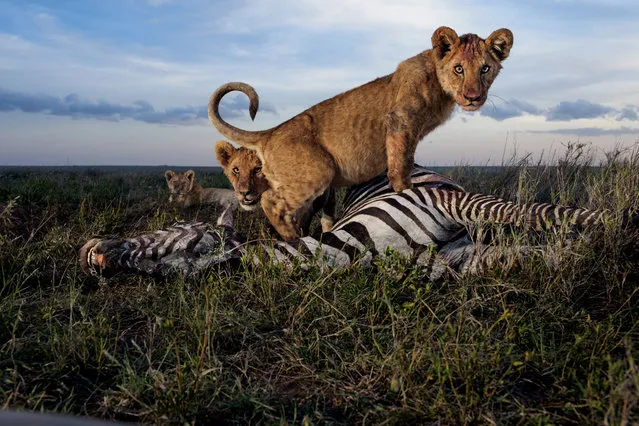
Cubs of the Simba East pride: too young to kill but old enough to crave meat. Adult females, and sometimes males, do the hunting. Zebras and wildebeests rank high as chosen prey in the rainy season. (Photo by Michael Nichols/National Geographic via The Atlantic)

“Serengeti National Park encompasses 5,700 square miles of grassy plains and woodlands near the northern border of Tanzania, and is home to more than 3,500 lions grouped into a couple dozen prides. Photographer Nick Nichols and videographer Nathan Williamson made several extended trips to the Serengeti between July 2011 and January 2013, determined to break new visual ground in their coverage of the Serengeti Lions”. Photo: Cubs of the Simba East pride: too young to kill but old enough to crave meat. Adult females, and sometimes males, do the hunting. Zebras and wildebeests rank high as chosen prey in the rainy season. (Photo by Michael Nichols/National Geographic via The Atlantic)
Details
09 Aug 2013 08:15:00