Loading...
Done
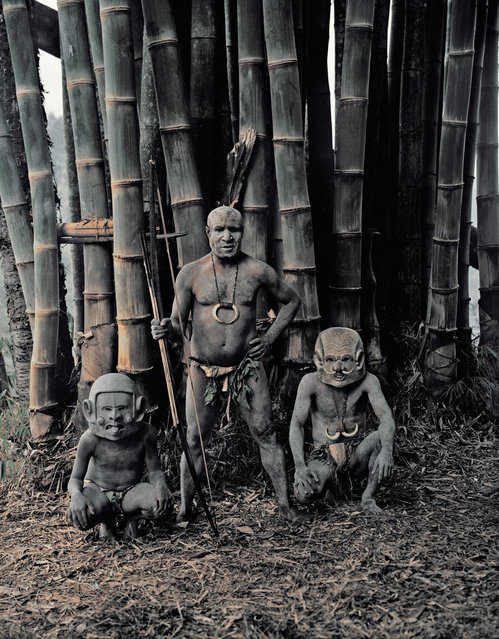
“Asaro from the Eastern Highlands”. The mudmen could not cover their faces with mud because the people of Papua New Guinea thought that the mud from the Asaro river was poisonous. So instead of covering their faces with this alleged poison, they made masks from pebbles that they heated and water from the waterfall, with unusual designs such as long or very short ears either going down to the chin or sticking up at the top, long joined eyebrows attached to the top of the ears, horns and sideways mouths. (Jimmy Nelson)

“Asaro from the Eastern Highlands”. The mudmen could not cover their faces with mud because the people of Papua New Guinea thought that the mud from the Asaro river was poisonous. So instead of covering their faces with this alleged poison, they made masks from pebbles that they heated and water from the waterfall, with unusual designs such as long or very short ears either going down to the chin or sticking up at the top, long joined eyebrows attached to the top of the ears, horns and sideways mouths. (Photo and caption by Jimmy Nelson)
Details
20 Oct 2013 08:54:00
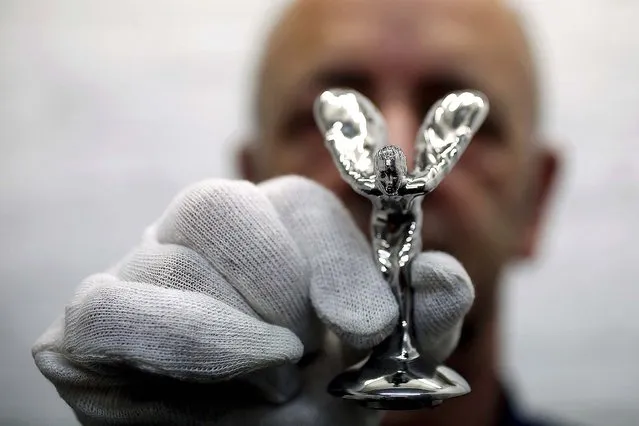
Worker Ronald Little displays a finished “Spirit of Ecstasy”. (Photo by Stefan Wermuth/Reuters)

The Spirit of Ecstasy, also called “Emily”, “Silver Lady” or “Flying Lady,” was designed by English sculptor Charles Robinson Sykes and carries with her a story about a secret passion between John Walter Edward Douglas-Scott-Montagu (second Lord Montagu of Beaulieu after 1905, a pioneer of the automobile movement, and editor of The Car Illustrated magazine) and his love and the model for the emblem, his secretary Eleanor Velasco Thornton. Photo: Worker Ronald Little displays a finished “Spirit of Ecstasy”. (Photo by Stefan Wermuth/Reuters)
Details
21 Oct 2013 11:30:00


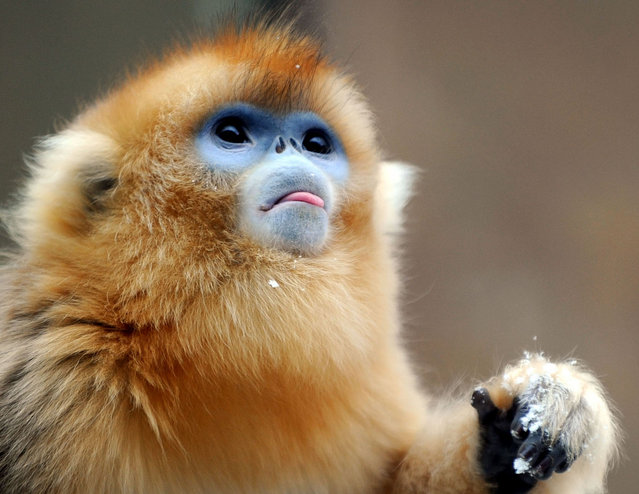
The golden monkey (Cercopithecus kandti) is a species of Old World monkey found in the Virunga volcanic mountains of Central Africa, including four national parks: Mgahinga, in south-west Uganda; Volcanoes, in north-west Rwanda; and Virunga and Kahuzi-Biéga, in the eastern Democratic Republic of Congo. It is restricted to highland forest, especially near bamboo.
Details
07 May 2012 04:39:00
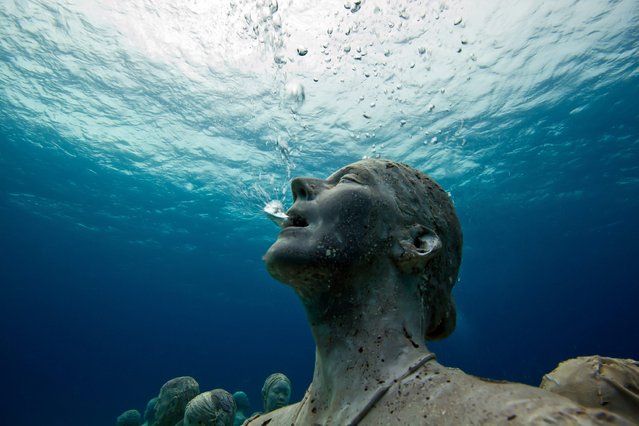
Monumental Underwater Museum MUSA; Jason deCaires Taylor; Silent Evolution

“In 2009 a monumental underwater museum called “MUSA” (Museo Subacuático de Arte) was formed in the waters surrounding Cancun, Isla Mujeres and Punta Nizuc. The project founded by Jaime Gonzalez Cano of The National Marine Park, Roberto Diaz of The Cancun Nautical Association and Jason deCaires Taylor consists of over 450 permanent life-size sculptures and is one of the largest and most ambitious underwater artificial art attractions in the world”. – UnderwaterSculpture (Photos by Jason deCaires Taylor/Intrepidacious/Kozy and Dan Kitchens)

Details
05 Oct 2012 07:26:00


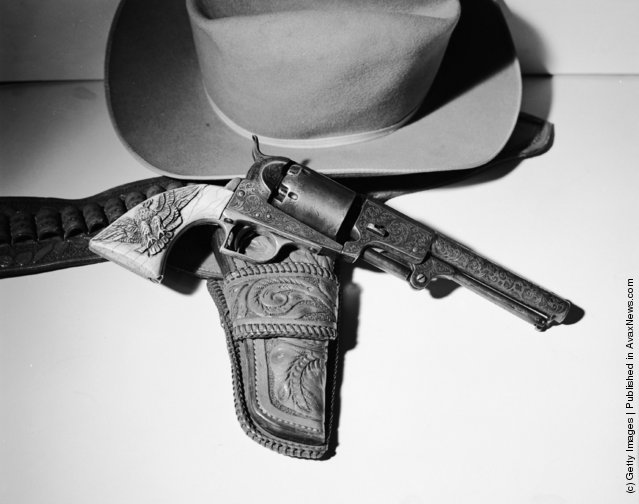
A .44 Colt Dragon with a traditional Cowboy's hat. This weapon was originally used in the Mexican War of 1846-8 and it is typical of the type used in the “Wild West” of America. (Photo by Orlando /Three Lions/Getty Images). Circa 1950
Details
02 Jun 2011 11:48:00


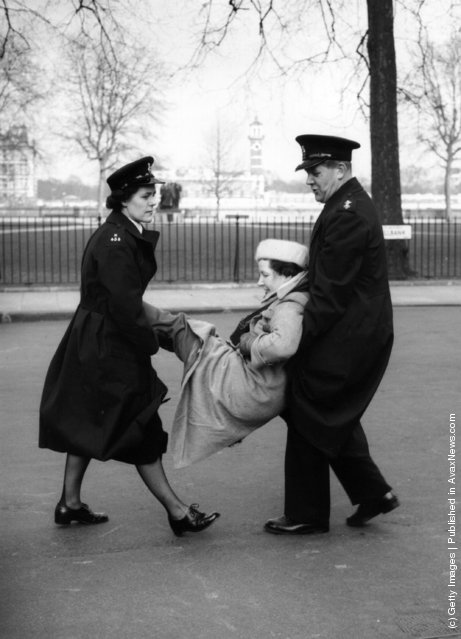
A British policewoman chasing after a group of naked street boys by the Serpentine in Hyde Park, London. (Photo by Reg Speller/Getty Images). 1926
Details
23 Jul 2011 12:43:00


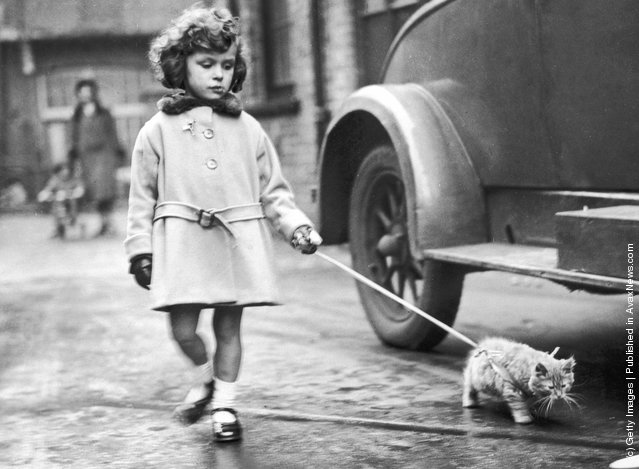
A young exhibitor arrives with her kitten on a lead at the National Cat Club show at Crystal Palace, London. (Photo by Fox Photos/Getty Images). 2nd December 1931
Details
28 Jul 2011 12:02:00
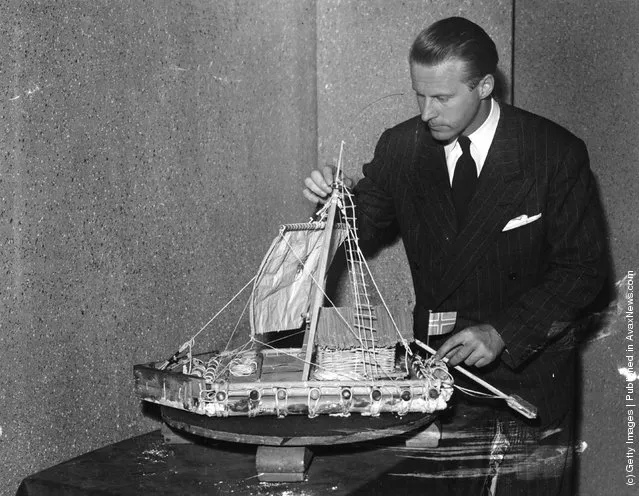
Thor Heyerdahl with a model of the balsa raft Kon Tiki

“Thor Heyerdahl (October 6, 1914, Larvik, Norway – April 18, 2002, Colla Micheri, Italy) was a Norwegian ethnographer and adventurer with a background in zoology and geography. He became notable for his Kon-Tiki expedition, in which he sailed 8,000 km (4,300 miles) by raft from South America to the Tuamotu Islands. All his expeditions are shown in the Kon-Tiki Museum, Oslo”. – Wikipedia

Photo: Norwegian anthropologist Thor Heyerdahl with a model of the balsa raft “Kon-Tiki” on which he drifted 4,300 miles from Peru to the Tuamotu Islands, proving his theory that Polynesia could originally have been populated by South Americans. (Photo by Express/Express/Getty Images). 1950
Details
09 Aug 2011 11:05:00