An Israeli girl in costume, celebrates the Jewish festival of Purim on March 5, 2004, in Tel Aviv, Israel. The Festival commemorates the rescue of Jews from genocide in ancient Persia.
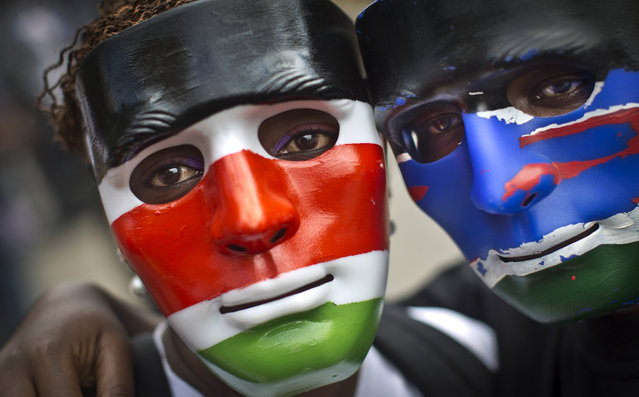
Protesters wear masks, the left in the colors of the Kenyan national flag, as they join others carrying mock coffins and red-painted crosses, symbolizing the blood of the 28 non-Muslims singled out and killed in the recent attack on a bus in Mandera by Somali militant group al-Shabab, outside government offices in downtown Nairobi, Kenya Tuesday, November 25, 2014. (Photo by Ben Curtis/AP Photo)
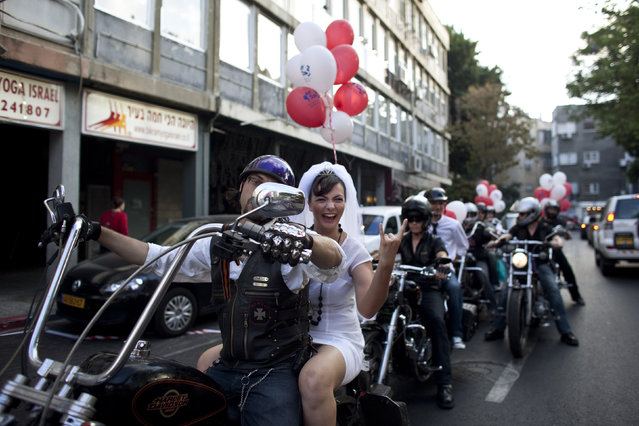
Bride Yulia Tagil sits on the backseat of a bike as she arrives for her alternative wedding ceremony on a square in Tel Aviv July 25, 2010. The alternative wedding ceremony was intended to demonstrate against the current situation in Israel, where the only way for Jews to get married by law is through the Chief Rabbinate. (Photo by Nir Elias/Reuters)
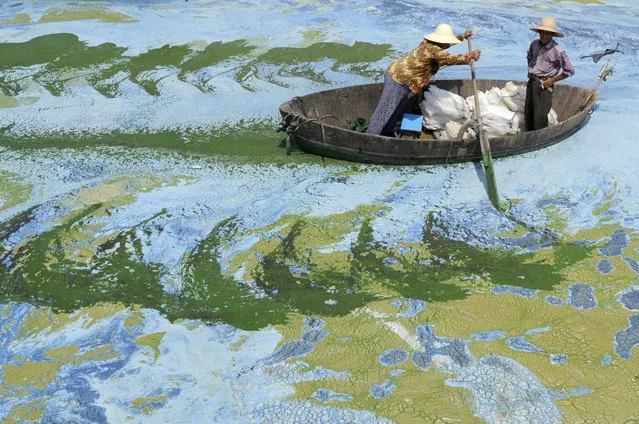
Growing cities, overuse of fertilizers and factory wastewater have degraded China's water supplies to the extent that half the nation's rivers and lakes are severely polluted. China aims to spend $850 billion to improve filthy water supplies over the next decade, but even such huge outlays may do little to reverse damage caused by decades of pollution and overuse in Beijing's push for rapid economic growth. Photo: Fishermen row a boat in the algae-filled Chaohu Lake in Hefei, Anhui province, June 19, 2009. (Photo by Jianan Yu/Reuters)
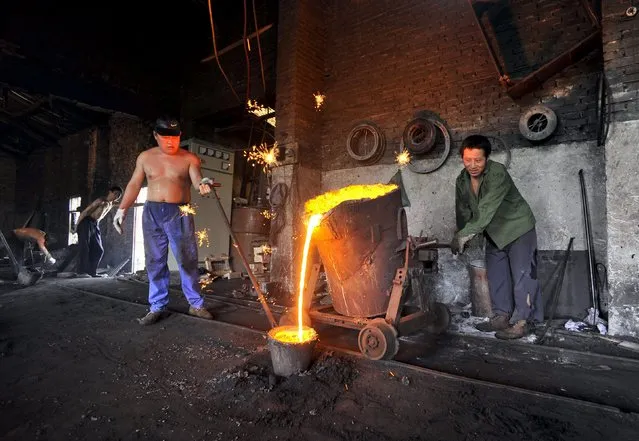
Labourers pour molten iron into a container at a foundry in Xiangfan, Hubei province in this July 2, 2010 file photo. Iron ore is enjoying its biggest rally in years, outpacing copper and oil so far in 2016, but still weak forward prices show it may be tough to stretch the bullish outlook. Improving steel prices in top market China are helping fuel iron ore's climb as producers gear up for a seasonal uptick in demand. Yet there is no shortage of doubters who see gains in the bulk commodity as fleeting given a large glut and challenges for China's economy. (Photo by Reuters/Stringer)
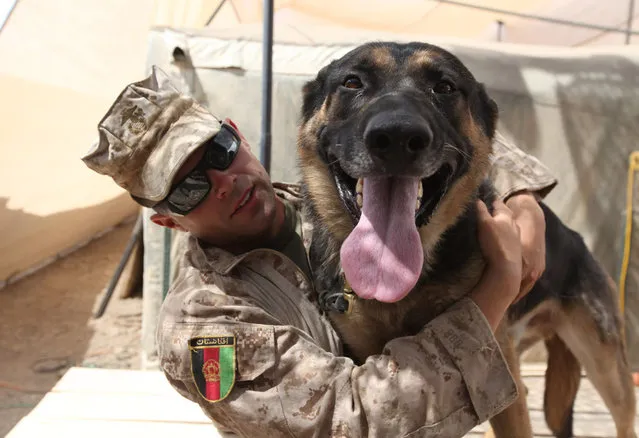
Throughout the course of the long war in Afghanistan, Coalition troops have relied on thousands of military working dogs to help keep them safe, and make their jobs easier. The dogs are trained to detect explosives, to find illegal drugs, to search for missing comrades, or target enemy combatants. Not only are they active on the front lines, but behind the lines they serve as therapy dogs, service dogs, and loyal companions. They also share the same risks as the ground troops, suffering injuries and sometimes death on the battlefields. Gathered here are images of these dogs and their handlers in Afghanistan and back home, from over the past several years, part of the ongoing series here on Afghanistan.
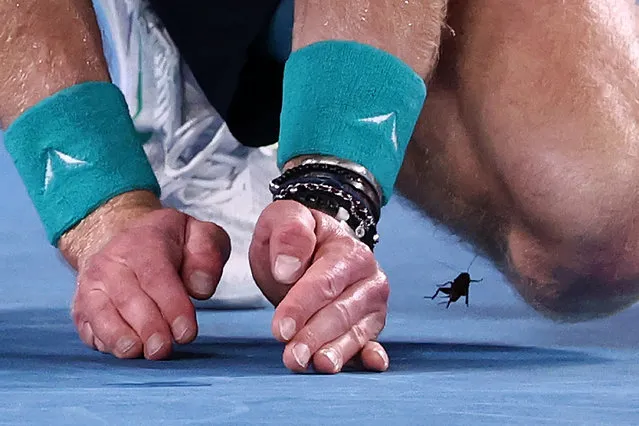
Russia's Andrey Rublev tries to remove a cricket from the court during the men's singles match against USA's Sebastian Korda on day six of the Australian Open tennis tournament in Melbourne on January 19, 2024. (Photo by David Gray/AFP Photo)