Loading...
Done


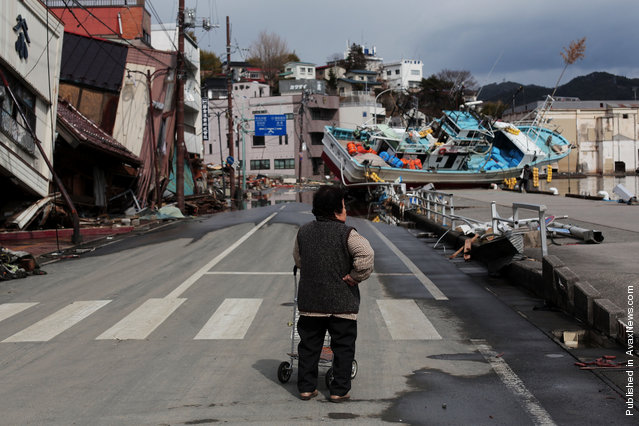
A woman surveys the damage after the earthquake on March 17, 2011 in Kensennuma, Japan. (Photo by Chris McGrath/Getty Images)
Details
21 Mar 2011 09:19:00
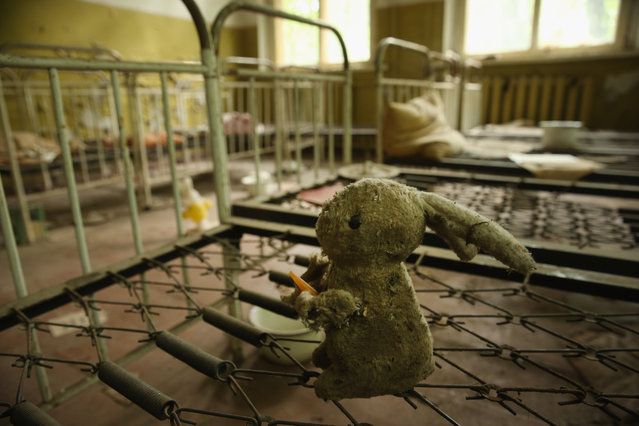
A stuffed rabbit doll sits among children's beds standing in the abandoned kindergarten of Kopachi village located inside the Chernobyl Exclusion Zone on September 29, 2015 near Chornobyl, Ukraine. Kopachi, a village that before 1986 had a population of 1,114, lies only a few kilometers south of the former Chernobyl nuclear power plant, where in 1986 workers inadvertantly caused reactor number four to explode, creating the worst nuclear accident in history. Radiation fallout was so high that authorities bulldozed and buried all of Kopachi's structures except for the kindergarten. (Photo by Sean Gallup/Getty Images)

A stuffed rabbit doll sits among children's beds standing in the abandoned kindergarten of Kopachi village located inside the Chernobyl Exclusion Zone on September 29, 2015 near Chornobyl, Ukraine. Kopachi, a village that before 1986 had a population of 1,114, lies only a few kilometers south of the former Chernobyl nuclear power plant, where in 1986 workers inadvertantly caused reactor number four to explode, creating the worst nuclear accident in history. (Photo by Sean Gallup/Getty Images)
Details
27 Apr 2016 09:28:00
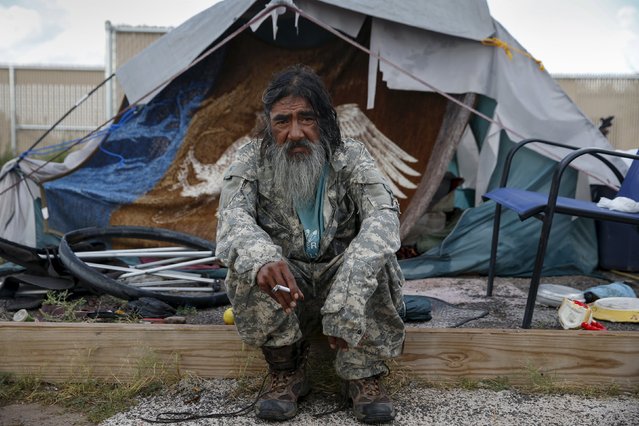
Daniel J. Wabsey, a 58-year-old war veteran, sits outside his tent at Camp Hope in Las Cruces, New Mexico October 6, 2015. “I've been traveling for 35 or 38 years. Getting inside would take a while to get used to. I just want to be able to eat, sleep and be safe. We all get along and understand in Camp Hope. We've all been there. With common sense you can survive out here”, Wabsey said. Camp Hope describe themselves as an “alternative transitional living project for the homeless”. Around 50 people live at the camp. (Photo by Shannon Stapleton/Reuters)

Daniel J. Wabsey, a 58-year-old war veteran, sits outside his tent at Camp Hope in Las Cruces, New Mexico October 6, 2015. “I've been traveling for 35 or 38 years. Getting inside would take a while to get used to. I just want to be able to eat, sleep and be safe. We all get along and understand in Camp Hope. We've all been there. With common sense you can survive out here”, Wabsey said. Camp Hope describe themselves as an “alternative transitional living project for the homeless”. Around 50 people live at the camp. (Photo by Shannon Stapleton/Reuters)
Details
19 Dec 2015 08:05:00
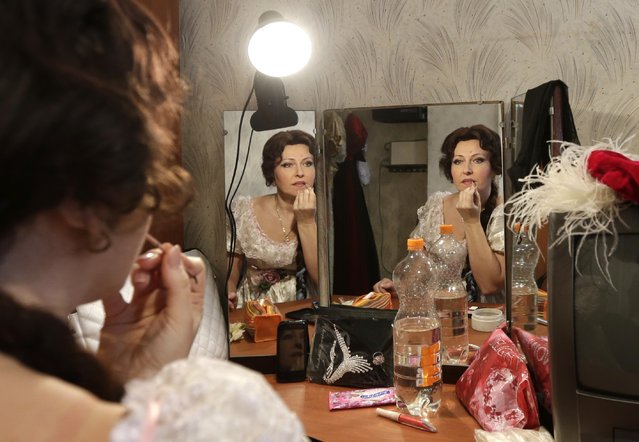
Actress with the Donbass Opera Theatre prepares to perform Eugene Onegin in Donetsk, Ukraine, Saturday, February 7, 2015. For the few dozen spectators that turn up, the weekly performances at the city's opera house serve as a respite from the war raging outside between Russian-backed separatists and Ukrainian government forces. (Photo by Petr David Josek/AP Photo)

Actress with the Donbass Opera Theatre prepares to perform Eugene Onegin in Donetsk, Ukraine, Saturday, February 7, 2015. For the few dozen spectators that turn up, the weekly performances at the city's opera house serve as a respite from the war raging outside between Russian-backed separatists and Ukrainian government forces. (Photo by Petr David Josek/AP Photo)
Details
10 Feb 2015 12:15:00
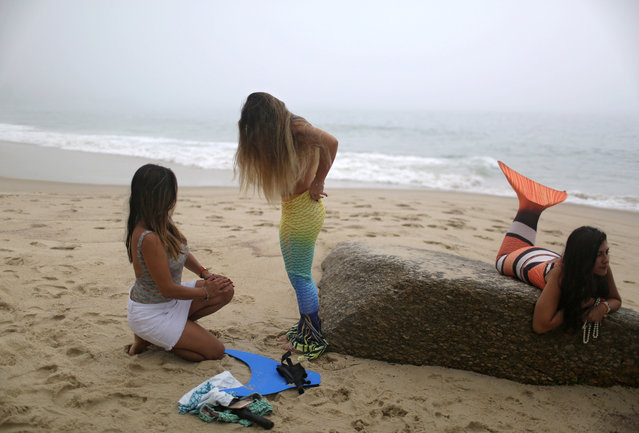
Girls prepare to take part in a mermaid lesson in Rio de Janeiro, Brazil May 28, 2017. (Photo by Pilar Olivares/Reuters)

Girls prepare to take part in a mermaid lesson in Rio de Janeiro, Brazil May 28, 2017. Women in Brazil are not unique in their affinity for mermaiding. Classes are held as far away as Texas and some folks wonder if mermaiding will be the next fitness craze. (Photo by Pilar Olivares/Reuters)
Details
14 Aug 2017 07:11:00
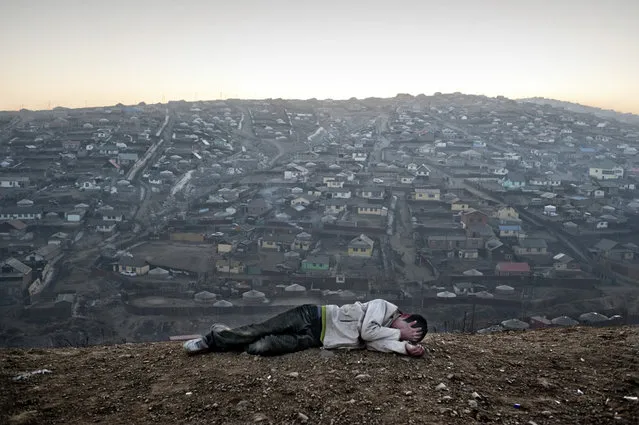
Asia, Mongolia, March 27, 2011. A view of Ulaan Baator over the shoulder of a slumbering drunk. Alcoholism is a huge problem in the city, home to almost half of Mongolia's people. The capital's population has doubled in the past two years, expanding outward in a haphazard sprawl, and many inhabitants live in slums known as the “Gher District”. (Photo by Alessandro Grassani)

“Environmental Migrants: The Last Illusion” by photographer Alessandro Grassani, documents the life of people in Kenya, Mongolia and Bangladesh who migrate to escape environmental stresses to the city of their own countries in hopes for a better life. Here: Asia, Mongolia, March 27, 2011. A view of Ulaan Baator over the shoulder of a slumbering drunk. Alcoholism is a huge problem in the city, home to almost half of Mongolia's people. The capital's population has doubled in the past two years. High levels of unemployment and poverty await herders who abandon rural areas and arrive in the city, illiterate and untrained in any skills necessary for urban jobs. (Photo by Alessandro Grassani)
Details
21 Jul 2015 10:10:00
Yu Jietao, 26-year-old wood carver, sits in his homemade wooden car along a street in Guangfeng county of Shangrao, Jiangxi province, China February 9, 2015. The car can travel as fast as 30 km (18.6 miles) per hour, local media reported. (Photo by Reuters/Stringer)

Yu Jietao, 26-year-old wood carver, sits in his homemade wooden car along a street in Guangfeng county of Shangrao, Jiangxi province, China February 9, 2015. The car can travel as fast as 30 km (18.6 miles) per hour, local media reported. (Photo by Reuters/Stringer)
Details
13 May 2015 10:51:00
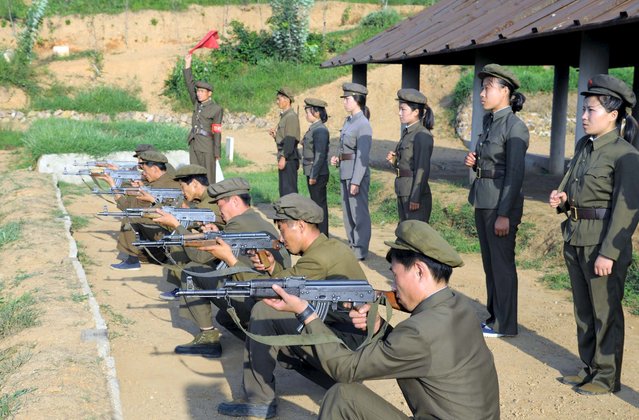
North Koreans who signed up to join the army train in the midst of political tension with South Korea, in this undated photo released by North Korea's Korean Central News Agency (KCNA) in Pyongyang August 23, 2015. (Photo by Reuters/KCNA)

North Koreans who signed up to join the army train in the midst of political tension with South Korea, in this undated photo released by North Korea's Korean Central News Agency (KCNA) in Pyongyang August 23, 2015. Top aides to the leaders of North and South Korea resumed talks on Sunday after negotiating through the night in a bid to ease tensions involving an exchange of artillery fire that brought the peninsula to the brink of armed conflict. (Photo by Reuters/KCNA)
Details
25 Aug 2015 10:08:00