Loading...
Done
Native American Prints By Kirby Sattler

The work of Kirby Sattler is fueled by an inherent interest in the Indigenous Peoples of the Earth. His current images evolve from the history, ceremony, mythology, and spirituality of the Native American
Details
18 May 2013 08:17:00
Krubera Cave Gerogia

Krubera Cave is the deepest known cave on Earth. It is located in the Arabika Massif of the Gagrinsky Range of the Western Caucasus, in the Gagra district of Abkhazia, a breakaway region of Georgia.
Details
06 Jul 2014 20:33:00
Dongchuan Red Lands, China

Dongchuan is a rural place located in the area of Wumeng Mountains. This place became one of the most favored destination spots for Chinese photographers all because of its red soil. The Wumeng’s scenery was first discovered in mid-90s. The first photographers who came here shot some award-winning photos, which made them keep the location of this place a secret. With time, however, more people found out about this place, making them want to visit these arid mountains. The contrasting red soil, yellow buckwheat, and brilliant blue skies make this place a paradise for photographers.
Details
29 Jan 2015 10:59:00
Second placed Kalex Moto2 Tito Rabat (rear R) of Spain and third placed Kalex Moto2 Alex Rins of Spain spray with champagne during the award ceremony for the Czech Grand Prix in Brno, Czech Republic, August 16, 2015. (Photo by David W. Cerny/Reuters)

Second placed Kalex Moto2 Tito Rabat (rear R) of Spain and third placed Kalex Moto2 Alex Rins of Spain spray with champagne during the award ceremony for the Czech Grand Prix in Brno, Czech Republic, August 16, 2015. (Photo by David W. Cerny/Reuters)
Details
17 Aug 2015 11:56:00
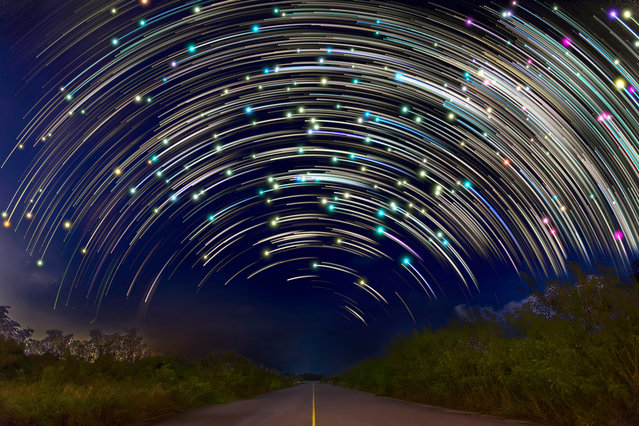
A meteorite of the swarm of meteorites Perseida flies above the Ujudvar TV Tower as seen from Ujudvar, Hungary, late Friday, August 13, 2021. Perseidas, one of the brightest meteorite swarms, consist of a multitude of stellar particles which due to their high speed glow up and burn by entering Earth's atmosphere. (Photo by Gyorgy Varga/MTI via AP Photo)

A meteorite of the swarm of meteorites Perseida flies above the Ujudvar TV Tower as seen from Ujudvar, Hungary, late Friday, August 13, 2021. Perseidas, one of the brightest meteorite swarms, consist of a multitude of stellar particles which due to their high speed glow up and burn by entering Earth's atmosphere. (Photo by Gyorgy Varga/MTI via AP Photo)
Details
21 Oct 2021 08:48:00
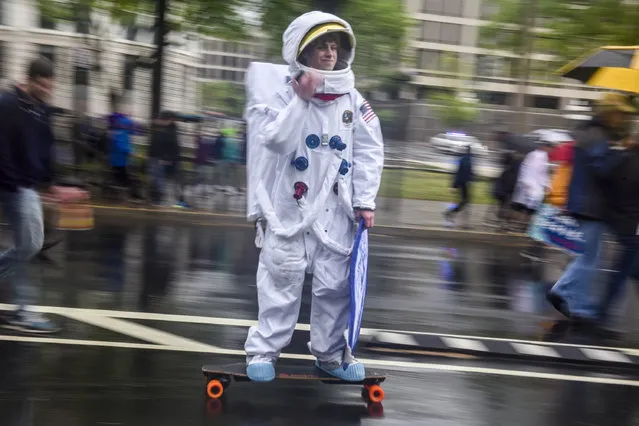
Max Gold, 20, of NYC, cruises on his skateboard as thousands gather on the National Mall for the March for Science on Saturday, April 22, 2017, in Washington, DC.  Activists and scientists descend on the nation's capital to rally for environmental causes and government policies rooted in scientific research as part of the Earth Day and March for Science rallies. (Photo by Jahi Chikwendiu/The Washington Post)

Max Gold, 20, of NYC, cruises on his skateboard as thousands gather on the National Mall for the March for Science on Saturday, April 22, 2017, in Washington, DC. Activists and scientists descend on the nation's capital to rally for environmental causes and government policies rooted in scientific research as part of the Earth Day and March for Science rallies. (Photo by Jahi Chikwendiu/The Washington Post)
Details
22 May 2017 07:38:00
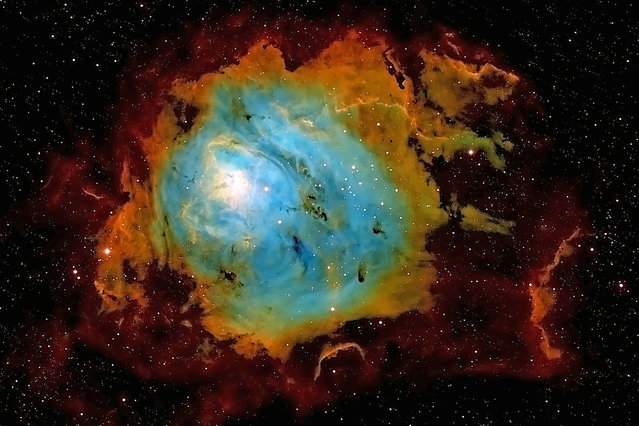
Lagoon Master. These amazing pictures of nebula thousands of light years from Earth have been captured by an amateur astronomer Dr. Dennis Roscoe snapped the beautiful celestial formations from his own personal observatory. His telescope looks into deep space at the nebula, which show both the birth and death of stars, like our very own Sun. (Photo by Dennis Roscoe/Caters News)

Lagoon Master. These amazing pictures of nebula thousands of light years from Earth have been captured by an amateur astronomer Dr. Dennis Roscoe snapped the beautiful celestial formations from his own personal observatory. His telescope looks into deep space at the nebula, which show both the birth and death of stars, like our very own Sun. (Photo by Dennis Roscoe/Caters News)
Details
23 Sep 2014 13:12:00
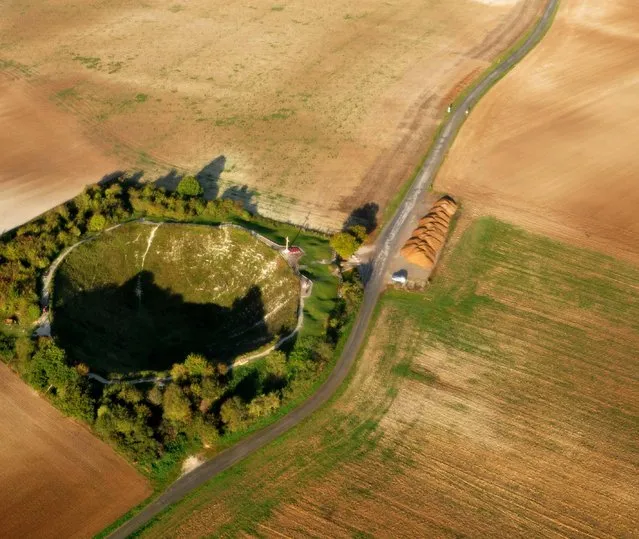
Lochnagar Crater Somme In France

It is amazing how much the humanity can change the face of the earth. Not only can it create huge craters, which look a lot like craters from meteors, they leave a big enough impact that it can be seen from space. Though this crater, caused by a massive explosion on 1 July 1916, looks large, being 90 feet deep and 300 feet across; it is nowhere big enough to be viewed for space. A common misconception is that the Great Wall of China can be seen from space. In reality, however, it is impossible. Not only is it of the same color as the earth near it, it is also not that wide. Deforestation, on the other hand, can be clearly seen from space. Also, at night, all the lights that the large cities produce are also very visible.

Details
17 Nov 2014 12:48:00