Loading...
Done
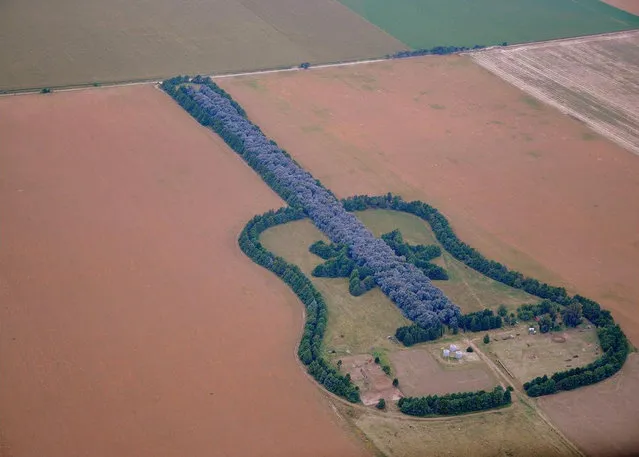
Guitar-Shaped Forest In Argentina By Pedro Martin Ureta

In the remote Argentine Pampas you can find an incredible forest formed in the shape of a guitar. More than 35 years ago, Pedro Ureta unexpectedly lost his wife to a brain aneurysm. Devastated by the loss of his love, he decided to create a shrine to her memory in their field that could only be seen above-head from an airplane. Ureta chose a guitar because it was his late wife’s most loved instrument.

Details
16 Oct 2014 20:32:00
The Adventures of BeetleCam

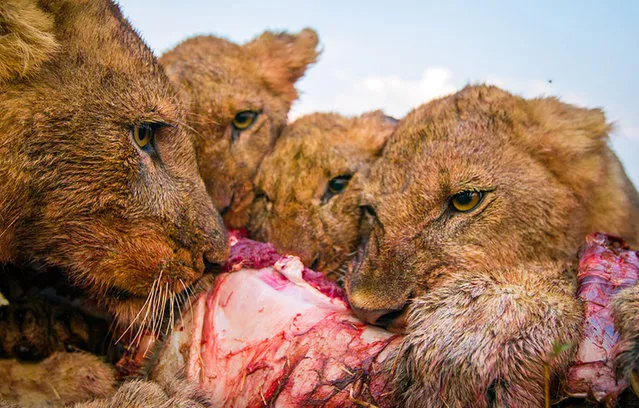
In 2009 we embarked on a project to get unique close-up, ground level photographs of African wildlife. To achieve this I built BeetleCam; a remote controlled buggy with a DSLR camera mounted on top. Matt and I travelled to Tanzania and used the buggy to get groundbreaking photographs of elephants and buffalo. However, we lost a camera and BeetleCam was almost destroyed in our only encounter with a lion.

We returned home and published “The Adventures of BeetleCam”. The story quickly went viral, appearing all over the web, in print and on television networks worldwide. However, we weren’t entirely satisfied… just imagine what we could get with a lion-proof BeetleCam!
Details
09 Nov 2012 10:01:00
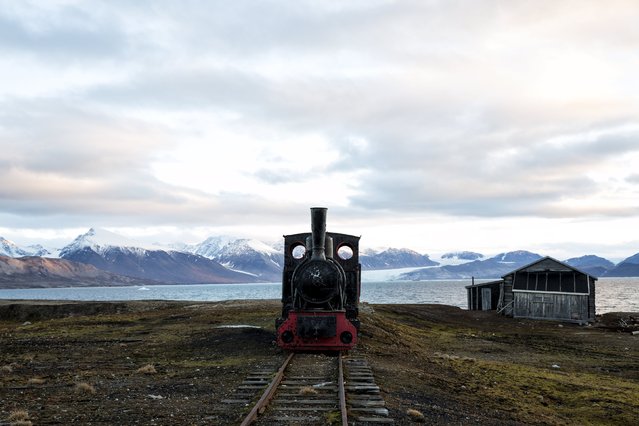
An old locomotive train that was used for transporting coal is preserved as a monument at Ny-Alesund, in Svalbard, Norway, October 11, 2015. (Photo by Anna Filipova/Reuters)

An old locomotive train that was used for transporting coal is preserved as a monument at Ny-Alesund, in Svalbard, Norway, October 11, 2015. A Norwegian chain of islands just 1,200 km (750 miles) from the North Pole is trying to promote new technologies, tourism and scientific research in a shift from high-polluting coal mining that has been a backbone of the remote economy for decades. (Photo by Anna Filipova/Reuters)
Details
29 Jan 2016 13:19:00
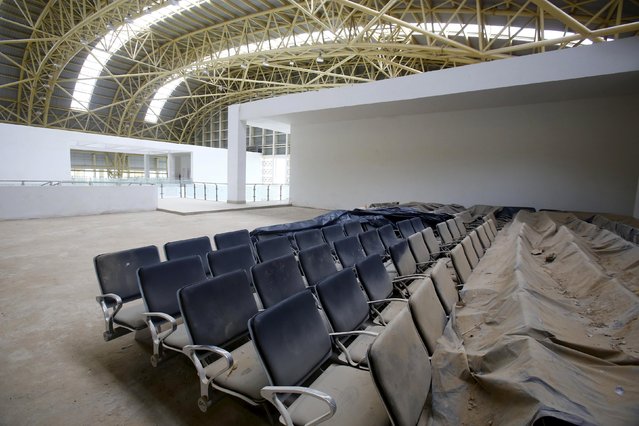
Dust covered seats are pictured inside the lounge of the Jaisalmer Airport in desert state of Rajasthan, India, August 13, 2015. (Photo by Anindito Mukherjee/Reuters)

Dust covered seats are pictured inside the lounge of the Jaisalmer Airport in desert state of Rajasthan, India, August 13, 2015. Two-and-a-half years after the completion of a new $17 million terminal building, the airport in Jaisalmer, a small and remote desert city in India's western Rajasthan state, stands empty. (Photo by Anindito Mukherjee/Reuters)
Details
20 Aug 2015 13:26:00
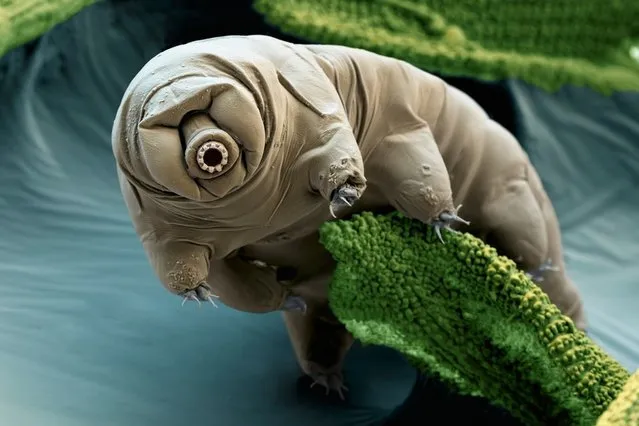
Tardigrades (commonly known as waterbears or moss piglets). (Photo by SPL/East News)

“Tardigrades (commonly known as waterbears or moss piglets) are small, water-dwelling, segmented animals with eight legs. Tardigrades were first discovered in 1773 by Johann August Ephraim Goeze, who called them kleiner Wasserbär, meaning “little water bear” in German. The name Tardigrada means “slow walker” and was given by Lazzaro Spallanzani in 1777. The name water bear comes from the way they walk, reminiscent of a bear's gait. The biggest adults may reach a body length of 1.5 millimetres (0.059 in), the smallest below 0.1 mm. Freshly hatched tardigrades may be smaller than 0.05 mm”. – Wikipedia. Photo: Tardigrades. (Photo by SPL/East News)
Details
26 Sep 2012 09:55:00
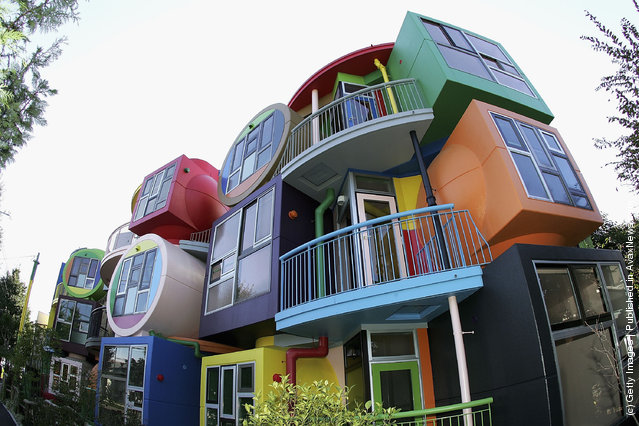
Concept Design Home Reversible Destiny Lofts MITAKA: In Memory Of Helen Keller By Reversible Destiny Foundation and Shusaku Arakawa

“The Reversible Destiny Lofts – Mitaka (In Memory of Helen Keller) is a nine-unit multiple dwelling. It was first completed example of procedural architecture put to residential use. These lofts reflexively articulate the residents’ operative tendencies and coordinating skills essential to and determinative of human thought and behavior; which means to say, the lofts manage, by virtue of how they are constructed, to reveal to their residents the ins and outs of what makes a person, in this case the resident. This is the same set of tendencies and skills to which Arakawa and Madeline Gins gave diagrammatic form in their decades-long research project The Mechanism of Meaning”. – Wikipedia

Photo: The exterior of the concept design home “Reversible Destiny Lofts MITAKA: In Memory of Helen Keller” is seen on October 27, 2005 in Tokyo, Japan. (Photo by Koichi Kamoshida/Getty Images)
Details
30 Nov 2011 11:58:00
A talented body painter has created a series of mind-bending illusions that cover entire torsos. Natalie Fletcher’s work are enough to make people double-take, the spiraling patterns of some appearing to fade into the abyss. In other works, the artists designs look as though they are never ending, while some show body parts appearing to protrude from models chests. The idea behind the ongoing series came to Natalie, 30, as a means of keeping entertained during the winter months. Here: Optical illusion bodypaint. (Photo by Natalie Fletcher/Cater News)

A talented body painter has created a series of mind-bending illusions that cover entire torsos. Natalie Fletcher’s work are enough to make people double-take, the spiraling patterns of some appearing to fade into the abyss. In other works, the artists designs look as though they are never ending, while some show body parts appearing to protrude from models chests. The idea behind the ongoing series came to Natalie, 30, as a means of keeping entertained during the winter months. Here: Optical illusion bodypaint. (Photo by Natalie Fletcher/Cater News)
Details
13 Apr 2016 09:17:00
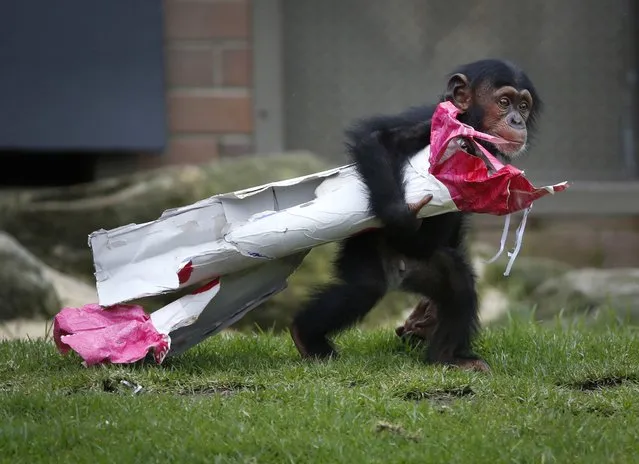
A 13-month-old chimp named Fumo carries a “Christmas present” of food treats in wrapping paper under his arm during a Christmas-themed feeding time at Sydney's Taronga Park Zoo, December 9, 2014. Fumo, meaning “chief” or “spear” in Swahili, is one of the latest additions to the zoo's successful primate breeding program. (Photo by Jason Reed/Reuters)

A 13-month-old chimp named Fumo carries a “Christmas present” of food treats in wrapping paper under his arm during a Christmas-themed feeding time at Sydney's Taronga Park Zoo, December 9, 2014. Fumo, meaning “chief” or “spear” in Swahili, is one of the latest additions to the zoo's successful primate breeding program. (Photo by Jason Reed/Reuters)
Details
09 Dec 2014 09:32:00