Loading...
Done
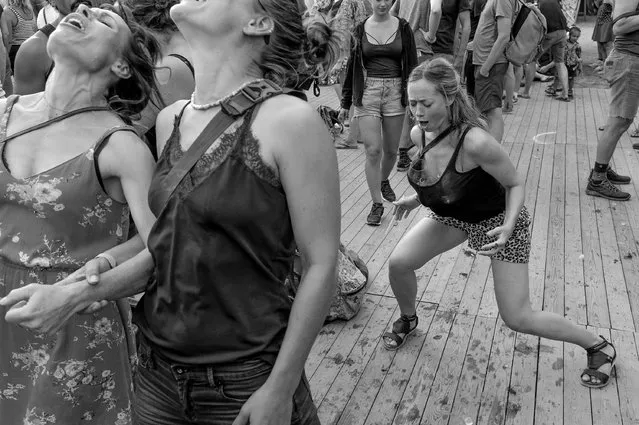
Bouwe Brouwer: Postcards from Fryslân (series finalist). “People from Fryslân are looked upon by the rest of the Netherlands as stubborn people. Going back as far as the Spanish occupation, they have a history of resisting authority. Postcards from Fryslân is still an ongoing project – hopefully a lifelong one. When it started, it represented only a collection of places that seemed interesting. Currently, the hope is to cover most of the province, as you never know in advance where the best narratives are. But still, it is all candid, unposed and in the public realm”. (Photo by Bouwe Brouwer/Street Photographers Awards 2021)

Bouwe Brouwer: Postcards from Fryslân (series finalist). “People from Fryslân are looked upon by the rest of the Netherlands as stubborn people. Going back as far as the Spanish occupation, they have a history of resisting authority. Postcards from Fryslân is still an ongoing project – hopefully a lifelong one. When it started, it represented only a collection of places that seemed interesting. Currently, the hope is to cover most of the province, as you never know in advance where the best narratives are. But still, it is all candid, unposed and in the public realm”. (Photo by Bouwe Brouwer/Street Photographers Awards 2021)
Details
17 Oct 2021 07:54:00
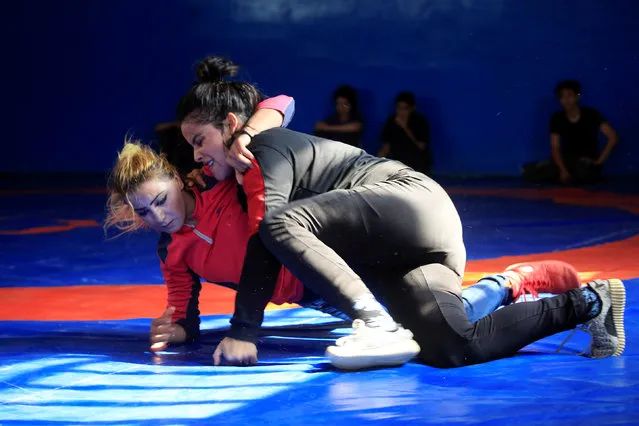
Iraqi women practice at the sports club in Diwaniya, Iraq on November 10, 2018. (Photo by Alaa Al-Marjani/Reuters)

Iraqi women practice at the sports club in Diwaniya, Iraq on November 10, 2018. On the blue mats of the al-Rafideen Club in the conservative city of Diwaniya, some 180 km (110 miles) south of Baghdad, some 30 female wrestlers, some still wearing headscarves, train three times a week. When a big competition comes up, they train every day. (Photo by Alaa Al-Marjani/Reuters)
Details
19 Nov 2018 00:03:00
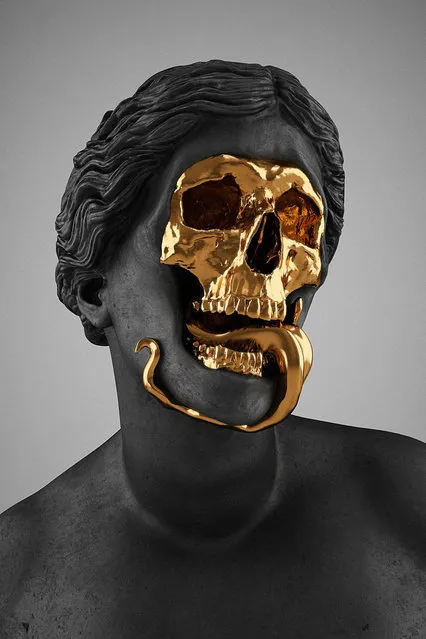
Skullptures by Hedi Xandt

Hedi Xandt imagines impressive sculptures. Mixing styles and materials with talent, the artist invites us to discover his dark and intense universe.
Details
15 Oct 2013 11:32:00
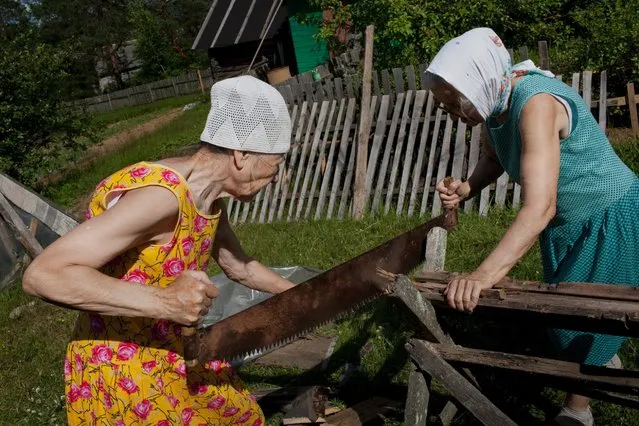
“Two-Handed Saw, 2014”. “Most of the neighbors have switched to power tools to run their households, the buzz of chain saws and weed-whackers overpowering the quieter sounds of country life, but my aunts hold on to the two-handed saw that's decades old, the sickle and scythe that need to be sharpened and polished after each use, the old axe that's becoming heavier each year. Each of these objects is familiar, holding memories of their brother, who succumbed to cancer a few years ago, of days before my grandfather lost his vision in the 50's, of busier days and longer futures”, Sablin told. (Photo by Nadia Sablin)

In northwest Russia, in a small village called Alekhovshchina, Nadia Sablin's aunts spend the warmer months together in the family home and live as the family has always lived, chopping wood to heat the house and making their own clothes. Sablin's book of photographs, “Aunties: The Seven Summers of Alevtina and Ludmila”, is published by Duke University Press. Here: “Two-Handed Saw, 2014”. (Photo by Nadia Sablin)
Details
25 Feb 2016 12:12:00
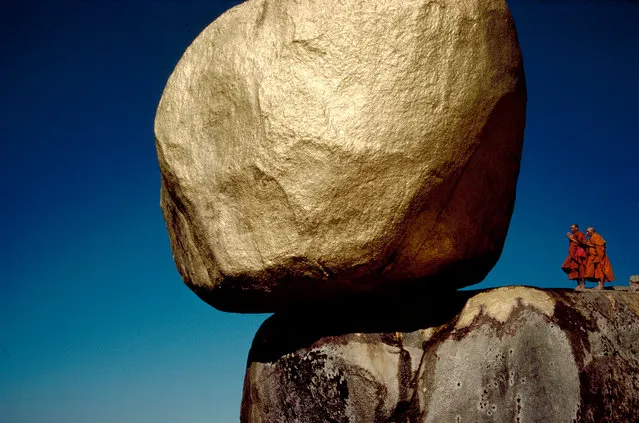
Kyaiktiyo, Burma, 1978. The Golden Rock at Shwe Pyi Daw (the Golden Country), the Buddhist holy place. Hiroji Kubota writes: “I was desperate to keep a distance from America for a while; luckily, I found Burma and its gentle and compassionate people. In the spring of 1978, on the top of the hill where I took this photo, I had two Leica bodies: the one with Tri-X and the other with Kodachrome 64. Soon after, I realised that the colour one looked very colourful and was more powerful. That was my decisive moment, to become a colour photographer”. (Photo by Hiroji Kubota/Magnum Photos)

Kyaiktiyo, Burma, 1978. The Golden Rock at Shwe Pyi Daw (the Golden Country), the Buddhist holy place. Hiroji Kubota writes: “I was desperate to keep a distance from America for a while; luckily, I found Burma and its gentle and compassionate people. In the spring of 1978, on the top of the hill where I took this photo, I had two Leica bodies: the one with Tri-X and the other with Kodachrome 64. Soon after, I realised that the colour one looked very colourful and was more powerful. That was my decisive moment, to become a colour photographer”. (Photo by Hiroji Kubota/Magnum Photos)
Details
10 Jun 2016 13:30:00
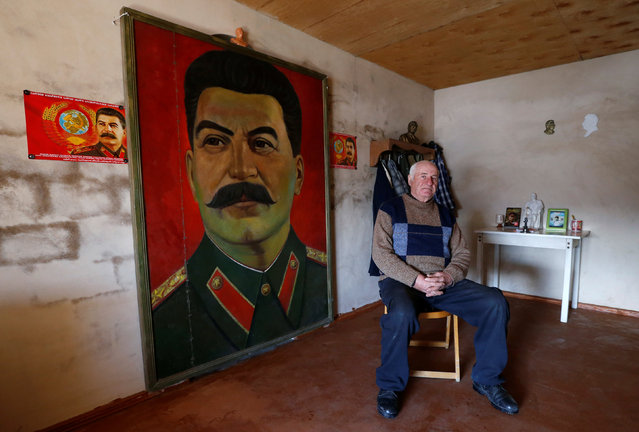
Retired builder Vasili Sidamonidze, 70, poses for a portrait at his home in Gori, Georgia, December 6, 2016. “Unfortunately, Stalin is not popular nowadays. Our people don't respect him. Only we, members of the (Communist) Party, respect him”, Sidamonidze said. “I always try to attend Stalin's birthday anniversaries in Gori. Unfortunately many people don't want to join us even if they live nearby. They look at us from their windows”. Stalin, who was born in Gori in 1878 and died in 1953, is largely reviled today in Georgia, which regained its independence during the 1991 collapse of the Soviet Union. Over the years, his memorials have been dismantled, most recently in 2010 when authorities removed a statue of the dictator from Gori's central square. But Stalin is still revered by a small group of mainly elderly supporters who stress his role in the industrialisation of the Soviet Union and in defeating Nazi Germany in World War Two. Each Dec. 21, a few dozen people mark his birthday by gathering outside a Gori museum dedicated to Stalin, where they make speeches and walk to the square where a 6-meter-high bronze statue of him once stood, calling for it to be reinstated. Opponents say it was a symbol of Moscow's still lingering shadow. In 2008, Russia fought a brief war with Georgia and recognised its breakaway regions of Abkhazia and South Ossetia as independent states. (Photo by David Mdzinarishvili/Reuters)

Retired builder Vasili Sidamonidze, 70, poses for a portrait at his home in Gori, Georgia, December 6, 2016. “Unfortunately, Stalin is not popular nowadays. Our people don't respect him. Only we, members of the (Communist) Party, respect him”, Sidamonidze said. “I always try to attend Stalin's birthday anniversaries in Gori. Unfortunately many people don't want to join us even if they live nearby. They look at us from their windows”. (Photo by David Mdzinarishvili/Reuters)
Details
17 Dec 2016 07:59:00
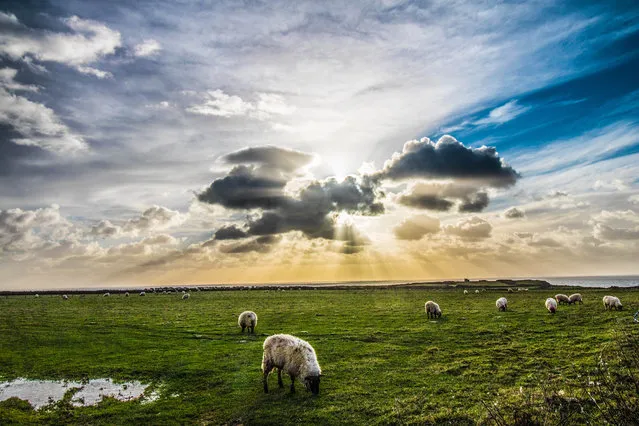
“After an afternoon of hiking and exploring the caves of Rhossili Bay, West Glamorgan, we caught the sun breaking through the clouds”. (Photo by Megan Warren-Davis/The Guardian)

“After an afternoon of hiking and exploring the caves of Rhossili Bay, West Glamorgan, we caught the sun breaking through the clouds”. (Photo by Megan Warren-Davis/The Guardian)
Details
05 Feb 2017 01:05:00
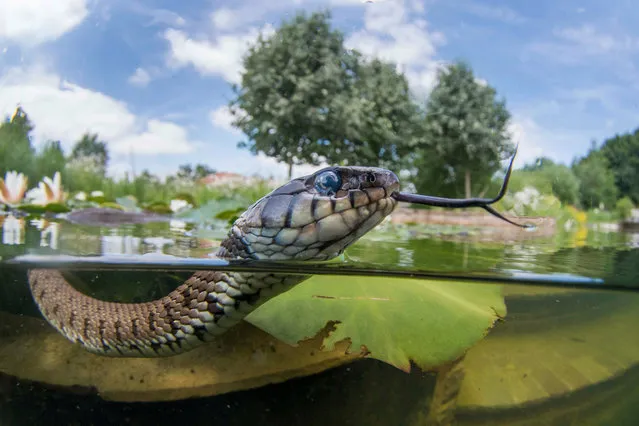
British Waters Wide Angle category runner-up. Grass snake swimming along a garden pond by Jack Perks (UK)in Nottinghamshire, UK. “I’m always on the lookout for unusual freshwater subjects and grass snakes are a species I’ve been after for years. I was told about a pond where the odd grass snake hangs around the lilly pads for frogs. I put my drysuit on and got into the water and could see one slithering along the surface. Slowly making my way towards it with my head only just poking above I got the spilt shot”. (Photo by Jack Perks/Underwater Photographer of the Year 2019)

British Waters Wide Angle category runner-up. Grass snake swimming along a garden pond by Jack Perks (UK)in Nottinghamshire, UK. “I’m always on the lookout for unusual freshwater subjects and grass snakes are a species I’ve been after for years. I was told about a pond where the odd grass snake hangs around the lilly pads for frogs. I put my drysuit on and got into the water and could see one slithering along the surface. Slowly making my way towards it with my head only just poking above I got the spilt shot”. (Photo by Jack Perks/Underwater Photographer of the Year 2019)
Details
28 Feb 2019 00:03:00