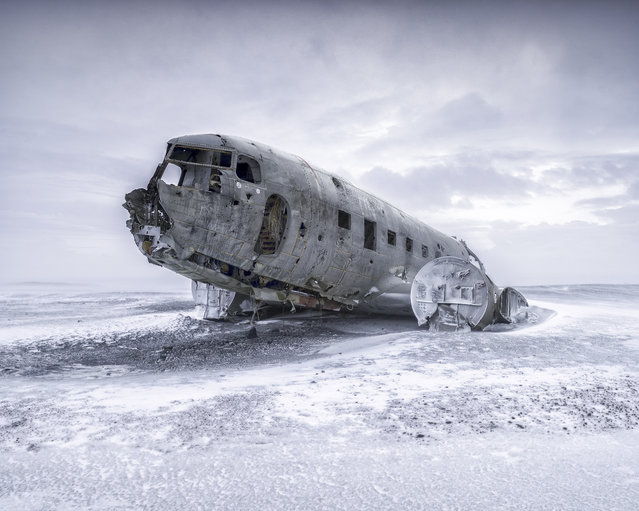
“DC3 Wreck”. A capture of a US military DC3 plane wreck at the southern black beach in Iceland. Photo location: Iceland. (Photo and caption by Naian Feng/National Geographic Photo Contest)
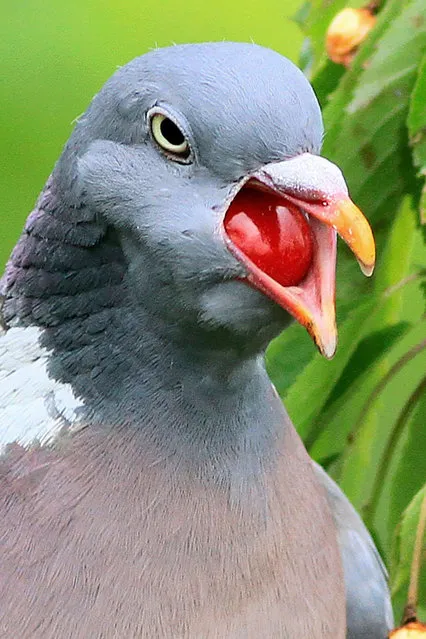
A pigeon eating cherries in Bydgoszcz, Poland on September 14, 2018. The pigeon was captured at dinnertime, as he was caught on camera with its mouth full of a cherry. (Photo by Piotr Grny/Caters News Agency)
Masooma Alizada (L) and Frozan Rasooli (R), members of Afghanistan's Women's National Cycling Team prepare a bicycle before training on the outskirts of Kabul February 20, 2015. Afghanistan's Women's National Cycling Team has been breaking new ground for women's sports and pushing the boundaries of what is – and is not – acceptable for young women in the conservative Muslim country. (Photo by Mohammad Ismail/Reuters)
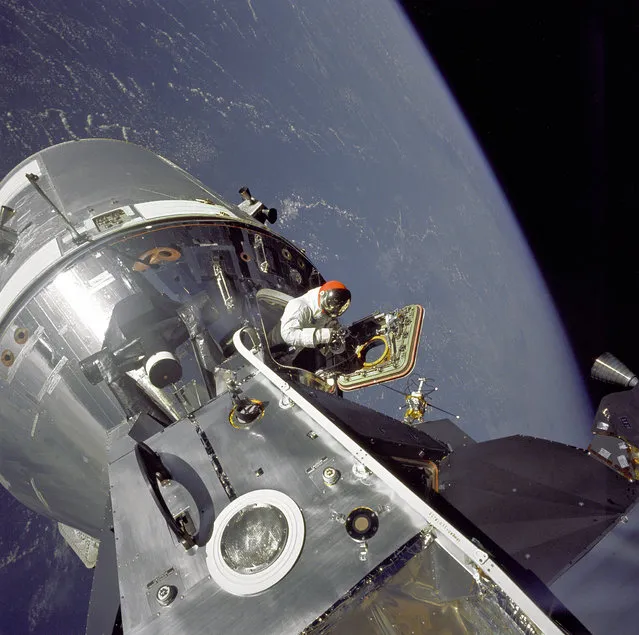
Apollo 9 Command/Service Modules (CSM) nicknamed “Gumdrop” and Lunar Module (LM), nicknamed “Spider” are shown docked together as Command Module pilot David R. Scott stands in the open hatch. Astronaut Russell L. Schweickart, Lunar Module pilot, took this photograph of Scott during his EVA as he stood on the porch outside the Lunar Module. Apollo 9 was an Earth orbital mission designed to test docking procedures between the CSM and LM as well as test fly the Lunar Module in the relative safe confines of Earth orbit. (Photo by NASA)
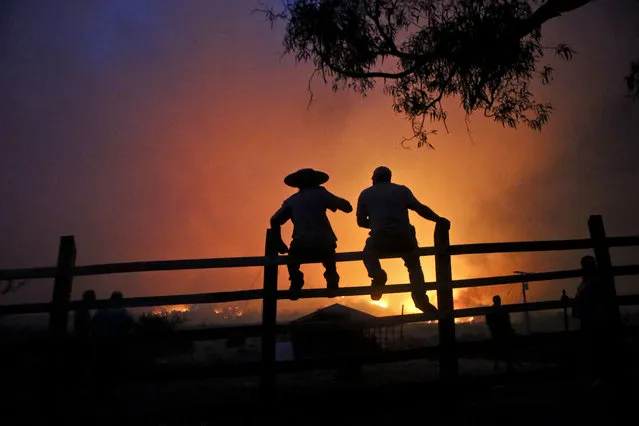
Residents watch the forest burn in Portezuelo, Chile, Sunday, January 29, 2017. Chilean President Michelle Bachelet has announced that the country will continue with its various measures to deal with wild fires, one of the biggest natural disasters in the country for decades, according to a government report released on Sunday. (Photo by Esteban Felix/AP Photo)
Ai (R) and Hamuka dressed in “Lolita fashion”, influenced by Victorian style, pose for a photographs at Harajuku shopping district in Tokyo, Japan March 15, 2018. (Photo by Kim Kyung-Hoon/Reuters)
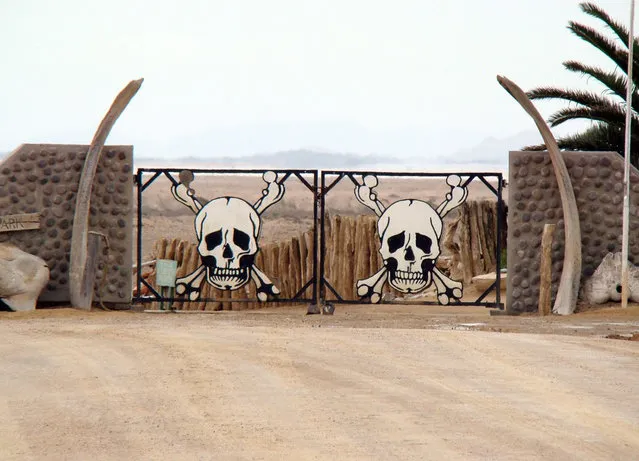
The Skeleton Coast is the northern part of the Atlantic Ocean coast of Namibia and south of Angola from the Kunene River south to the Swakop River, although the name is sometimes used to describe the entire Namib Desert coast. The Bushmen of the Namibian interior called the region "The Land God Made in Anger", while Portuguese sailors once referred to it as "The Gates of Hell".