Loading...
Done
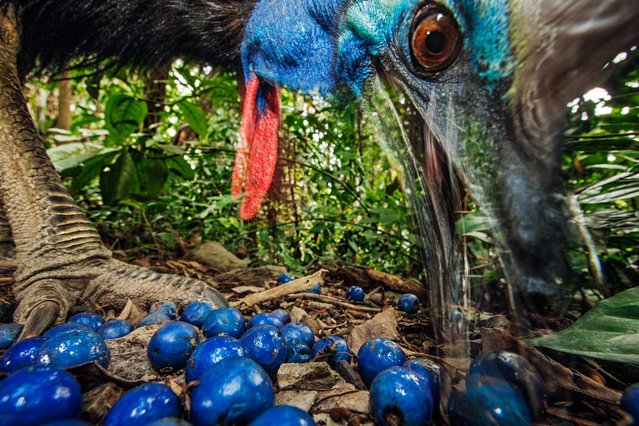
“Cassowaries are large, flightless birds related to emus and (more distantly) to ostriches, rheas, and kiwis”, writes Olivia Judson in the September issue of National Geographic magazine. (Photo by Christian Ziegler/National Geographic)

“Cassowaries are large, flightless birds related to emus and (more distantly) to ostriches, rheas, and kiwis”, writes Olivia Judson in the September issue of National Geographic magazine. How large? People-size: Adult males stand well over five foot five and top 110 pounds. Females are even taller, and can weigh more than 160 pounds. Dangerous when roused, they’re shy and peaceable when left alone. But even birds this big and tough are prey to habitat loss. The dense New Guinea and Australia rain forests where they live have dwindled. Today cassowaries might number 1,500 to 2,000. And because they help shape those same forests – by moving seeds from one place to another – “if they vanish”, Judson writes, “the structure of the forest would gradually change” too. (Photo by Christian Ziegler/National Geographic)
Details
06 Jan 2014 12:21:00
Rapper Nicki Minaj attends TIDAL X: 1015 on October 15, 2016 in New York City. (Photo by Brad Barket/Getty Images for TIDAL)

Rapper Nicki Minaj attends TIDAL X: 1015 on October 15, 2016 in New York City. (Photo by Brad Barket/Getty Images for TIDAL)
Details
23 Oct 2016 11:42:00
German police officers take pictures as fireworks explode next to the Quadriga sculpture atop the Brandenburg gate during New Year celebrations in Berlin, Germany, January 1, 2017. (Photo by Fabrizio Bensch/Reuters)

German police officers take pictures as fireworks explode next to the Quadriga sculpture atop the Brandenburg gate during New Year celebrations in Berlin, Germany, January 1, 2017. (Photo by Fabrizio Bensch/Reuters)
Details
02 Jan 2017 12:25:00
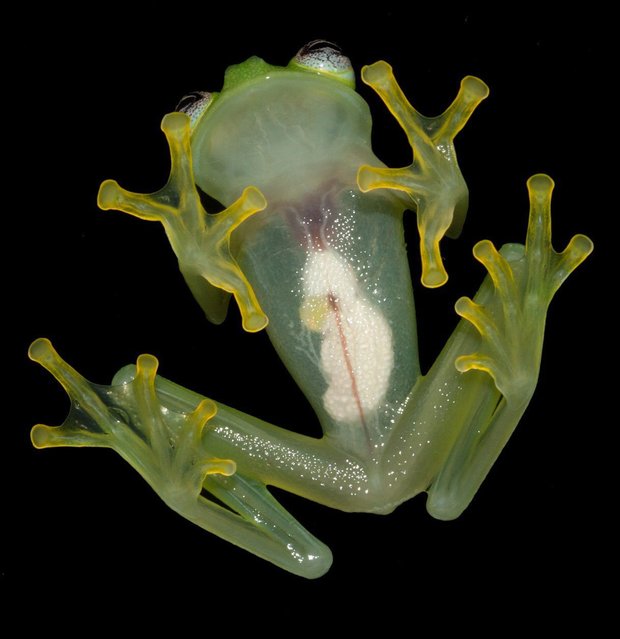
A handout photograph provided by Brian Kubicki of Costa Rican Amphibian Research Center on 26 April 2016 shows a “Crystal frog”, Hyalinobatrachium dianae (H. diane). This frog was discovered by US biologist Brian Kubicki and Costa Ricans Stanley Salazar and Robert Puschendorf in a rainy forest of Costa Rican caribbean after 40 years without notice of any new example of this kind. (Photo by Brian Kubicki/EPA/Costa Rican Amphibian Research Center)

A handout photograph provided by Brian Kubicki of Costa Rican Amphibian Research Center on 26 April 2016 shows a “Crystal frog”, Hyalinobatrachium dianae (H. diane). This frog was discovered by US biologist Brian Kubicki and Costa Ricans Stanley Salazar and Robert Puschendorf in a rainy forest of Costa Rican caribbean after 40 years without notice of any new example of this kind. (Photo by Brian Kubicki/EPA/Costa Rican Amphibian Research Center)
Details
02 May 2015 15:23:00
World War Two veteran Abla Begaliyev, 91, is seen in an undated handout picture (L), poses for a picture in Arashan (Top R) and at home in Kyrgyzstan April 14, 2015. Begaliyev served in the border guard cavalry from February 1942 until April 1947. Originally from Kyrgyzstan, he fought on the Ukrainian front and relocated to the border with Afghanistan at the end of World War Two. (Photo by Vladimir Pirogov/Reuters/Family handout (L))

World War Two veteran Abla Begaliyev, 91, is seen in an undated handout picture (L), poses for a picture in Arashan (Top R) and at home in Kyrgyzstan April 14, 2015. Begaliyev served in the border guard cavalry from February 1942 until April 1947. Originally from Kyrgyzstan, he fought on the Ukrainian front and relocated to the border with Afghanistan at the end of World War Two. As the world marks the 70th anniversary of the end of World War Two, Reuters photographers the length and breadth of the former Soviet republics (CCCP) captured portraits of Red Army veterans, mostly now in their 80s and 90s, today and through archive pictures at the time. More than 20 million Soviet citizens were killed in the war. (Photo by Vladimir Pirogov/Reuters/Family handout (L))
Details
08 May 2015 14:22:00
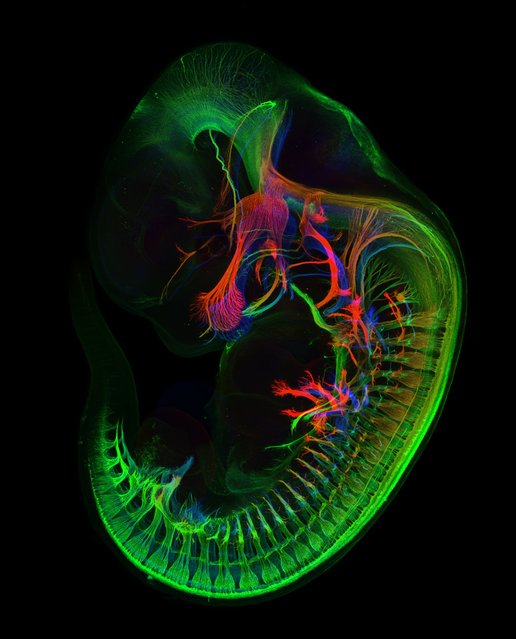
Mr. Zhong Hua, of Johns Hopkins University School of Medicine, took this image of the peripheral nerves (those outside of the brain) in an 11.5-day-old mouse embryo, magnified five times. (Photo by Zhong Hua)

Mr. Zhong Hua, of Johns Hopkins University School of Medicine, took this image of the peripheral nerves (those outside of the brain) in an 11.5-day-old mouse embryo, magnified five times. (Photo by Zhong Hua)
Details
31 Oct 2013 09:39:00
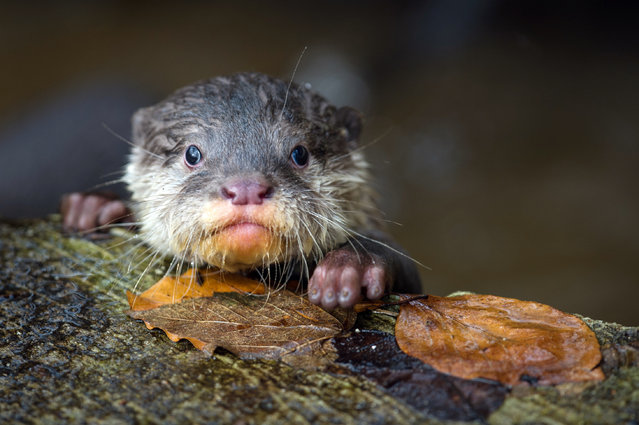
A young oriental small-clawed otter at the zoo in Neumuenster, Germany, March 5, 2014. The six young otters (one male, five female) were born on December 7, 2013. (Photo by Maja Hitij/EPA)

A young oriental small-clawed otter at the zoo in Neumuenster, Germany, March 5, 2014. The six young otters (one male, five female) were born on December 7, 2013. (Photo by Maja Hitij/EPA)
Details
08 Mar 2014 11:28:00
A family pose for a picture as thousands of redheads fill a Dutch city Breda to celebrate International Redhead Day event in Breda, The Netherlands on Sunday, 4 September 2016. Every year natural redheads from more than 80 countries come together at “Roodharigendag” annual weekend long festival to celebrate their ginger genes. The event also holds the world record for the largest number of natural redheads being in one place. (Photo by Akmen/London News Pictures)

A family pose for a picture as thousands of redheads fill a Dutch city Breda to celebrate International Redhead Day event in Breda, The Netherlands on Sunday, 4 September 2016. Every year natural redheads from more than 80 countries come together at “Roodharigendag” annual weekend long festival to celebrate their ginger genes. The event also holds the world record for the largest number of natural redheads being in one place. (Photo by Akmen/London News Pictures)
Details
05 Sep 2016 11:28:00