Loading...
Done
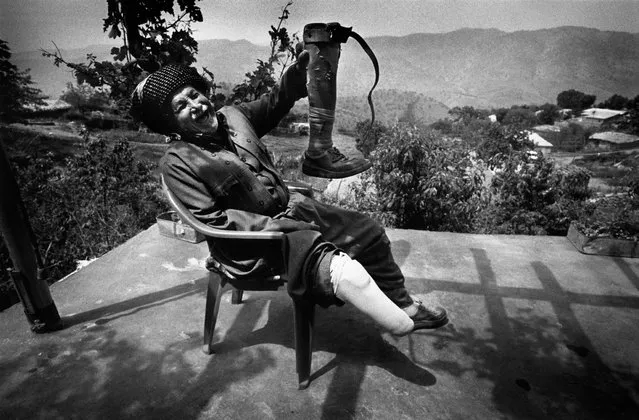
Ismail Mustafa, seen in 2007. “I was collecting mushrooms on the hill near here. I didn’t see the mine. There was a huge explosion. When I woke up I saw that both my legs were gone; I thought my life was over. My brother and another guy were with me. They made a stretcher from sticks and tied it together with clothing. It took two hours to get off the mountain. ‘My daughter has also been injured. She found a shell and brought it into the house and put it on the fire. She didn’t know what she was doing at the time – she was only three. She is blind and has lost an arm”. (Photo by Sean Sutton for the Mines Advisory Group/The Guardian)

Ismail Mustafa, seen in 2007. “I was collecting mushrooms on the hill near here. I didn’t see the mine. There was a huge explosion. When I woke up I saw that both my legs were gone; I thought my life was over. My brother and another guy were with me. They made a stretcher from sticks and tied it together with clothing. It took two hours to get off the mountain. ‘My daughter has also been injured. She found a shell and brought it into the house and put it on the fire. She didn’t know what she was doing at the time – she was only three. She is blind and has lost an arm”. (Photo by Sean Sutton for the Mines Advisory Group/The Guardian)
Details
08 Sep 2017 09:33:00
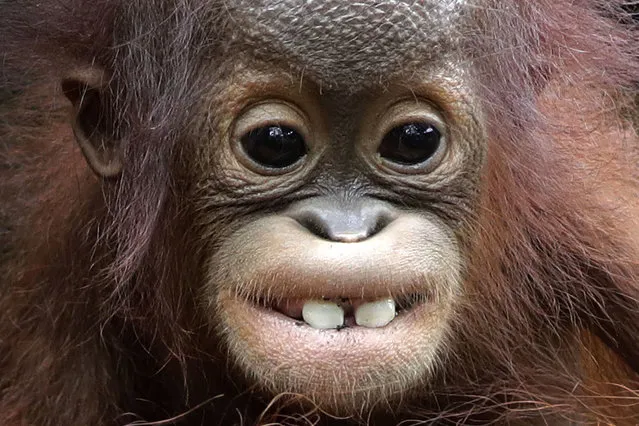
Khansa, an eight month old critically endangered Bornean orangutan shows off it's two front-teeth, at the Singapore Zoo on Thursday, January 11, 2018 in Singapore. The Singapore Zoo is active with its breeding programs as part of its wildlife preservation efforts. This is the Zoo's 46th successful orangutan birth. (Photo by Wong Maye-E/AP Photo)

Khansa, an eight month old critically endangered Bornean orangutan shows off it's two front-teeth, at the Singapore Zoo on Thursday, January 11, 2018 in Singapore. The Singapore Zoo is active with its breeding programs as part of its wildlife preservation efforts. This is the Zoo's 46th successful orangutan birth. (Photo by Wong Maye-E/AP Photo)
Details
14 Jan 2018 08:17:00
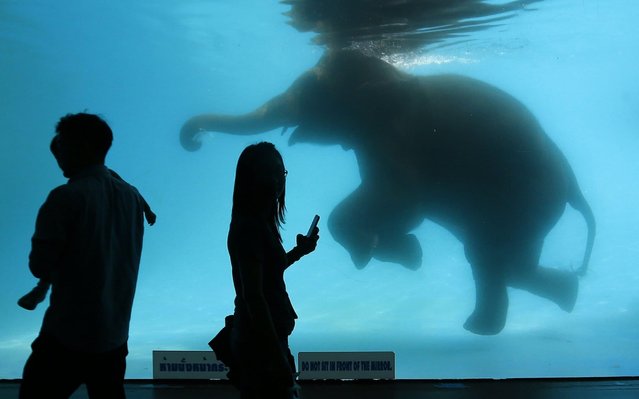
Visitors look at an elephant swimming in a pool at Khao Kheow Zoo in Chonburi, east of Bangkok, Thailand on February 4, 2020. (Photo by Chaiwat Subprasom/SOPA Images/LightRocket via Getty Images)

Visitors look at an elephant swimming in a pool at Khao Kheow Zoo in Chonburi, east of Bangkok, Thailand on February 4, 2020. (Photo by Chaiwat Subprasom/SOPA Images/LightRocket via Getty Images)
Details
06 Feb 2020 00:05:00
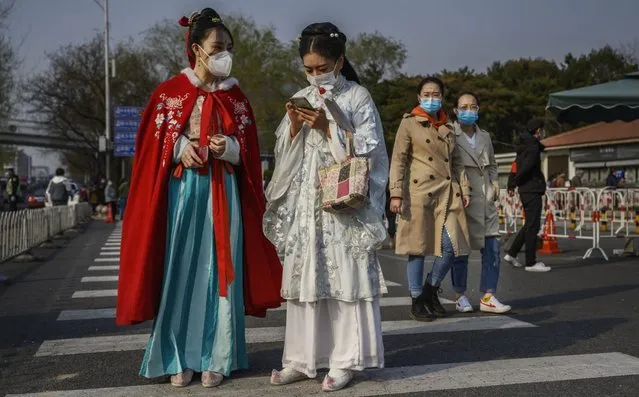
Chinese women wear protective masks as they are dressed in traditional clothing from the Qing Dynasty era outside a park on March 29, 2020 in Beijing, China. A limited section of the iconic tourist site was re-opened to the public this week allowing a smaller number of visitors to reserve tickets online in advance and to enter after passing health screening. With the pandemic hitting hard across the world, China recorded its first day with no new domestic cases of the coronavirus last week, since the government imposed sweeping measures to keep the disease from spreading. For two months, millions of people across China have been restricted in how they move from their homes, while other cities have been locked down in ways that appeared severe at the time but are now being replicated in other countries trying to contain the virus. Officials believe the worst appears to be over in China, though there are concerns of another wave of infections as the government attempts to reboot the worlds second largest economy. In Beijing, it is mandatory to wear masks outdoors, retail stores operate on reduced hours, restaurants employ social distancing among patrons, and tourist attractions at risk of drawing large crowds remain closed. Monitoring and enforcement of virus-related measures and the quarantine of anyone arriving to Beijing is carried out by neighborhood committees and a network of Communist Party volunteers who wear red arm bands. A primary concern for Chinese authorities remains the arrival of flights from Europe and elsewhere, given the exposure of passengers in regions now regarded as hotbeds for transmission. Since January, China has recorded more than 81,000 cases of COVID-19 and at least 3200 deaths, mostly in and around the city of Wuhan, in central Hubei province, where the outbreak first started. (Photo by Kevin Frayer/Getty Images)

Chinese women wear protective masks as they are dressed in traditional clothing from the Qing Dynasty era outside a park on March 29, 2020 in Beijing, China. A limited section of the iconic tourist site was re-opened to the public this week allowing a smaller number of visitors to reserve tickets online in advance and to enter after passing health screening. (Photo by Kevin Frayer/Getty Images)
Details
01 Apr 2020 00:05:00
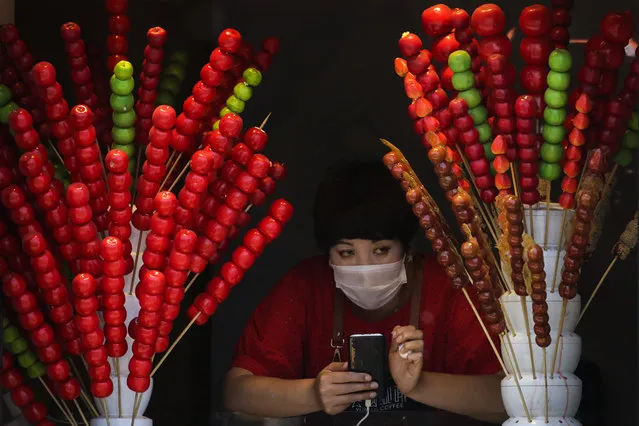
A vendor wearing a protective face mask looks out of her store selling sugar-coated haws on a stick in Beijing, Sunday, April 12, 2020. (Photo by Andy Wong/AP Photo)

A vendor wearing a protective face mask looks out of her store selling sugar-coated haws on a stick in Beijing, Sunday, April 12, 2020. (Photo by Andy Wong/AP Photo)
Details
01 May 2020 00:05:00
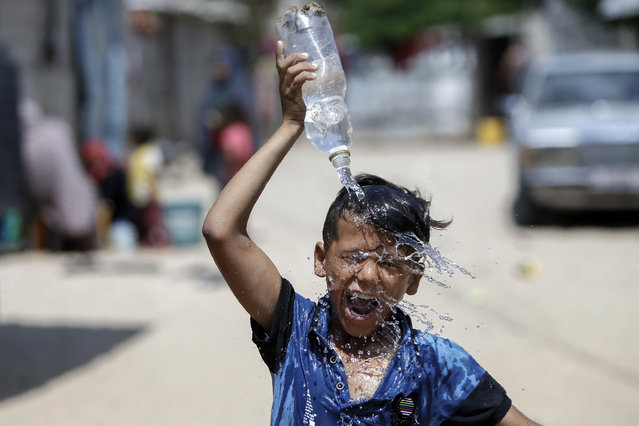
A Palestinian boy pours water over his head in Khan Yunis in the southern Gaza Strip, on July 22, 2020. (Photo by Mohammed Abed/AFP Photo)

A Palestinian boy pours water over his head in Khan Yunis in the southern Gaza Strip, on July 22, 2020. (Photo by Mohammed Abed/AFP Photo)
Details
28 Jul 2020 00:01:00
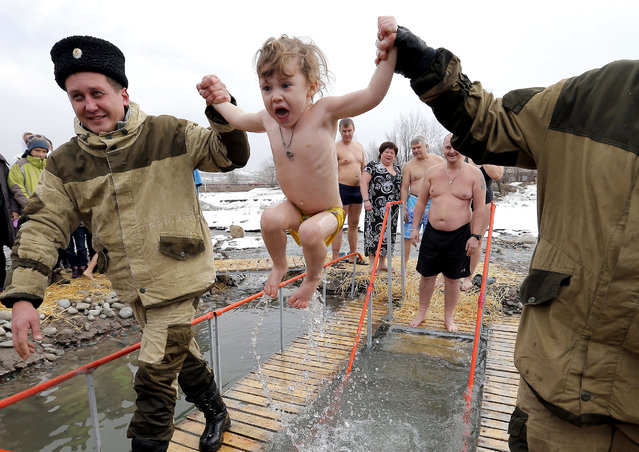
An Orthodox child is given an icy dip in a lake in celebration of Epiphan, near the village of Vorontsovka, some 20 km from the Kyrgyz capital of Bishkek, Kyrgyzstan, 19 January 2019. People believe that bathing in blessed waters during the holiday of Epiphany strengthens their spirit and body. (Photo by Igor Kovalenko/EPA/EFE)

An Orthodox child is given an icy dip in a lake in celebration of Epiphan, near the village of Vorontsovka, some 20 km from the Kyrgyz capital of Bishkek, Kyrgyzstan, 19 January 2019. People believe that bathing in blessed waters during the holiday of Epiphany strengthens their spirit and body. (Photo by Igor Kovalenko/EPA/EFE)
Details
21 Feb 2019 00:05:00
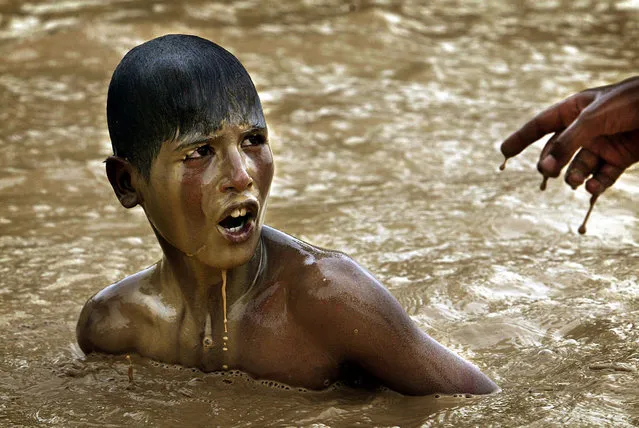
Iraqi teenagers swim in waste water from the nearby Tuweitha nuclear facility near Baghdad, Iraq on May 28, 2003. Iraqis are consuming contaminated water unaware of the dangerous pollutants that can cause severe ill health. (Photo by Damir Sagolj/Reuters)

Iraqi teenagers swim in waste water from the nearby Tuweitha nuclear facility near Baghdad, Iraq on May 28, 2003. Iraqis are consuming contaminated water unaware of the dangerous pollutants that can cause severe ill health. (Photo by Damir Sagolj/Reuters)
Details
24 Jun 2019 00:05:00