Loading...
Done


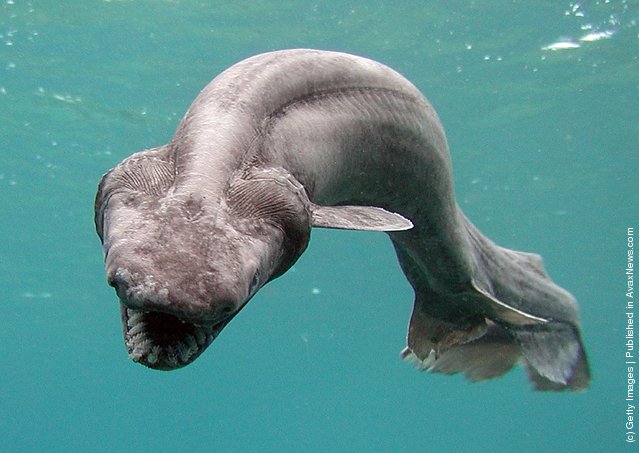
“The frilled shark (Chlamydoselachus anguineus) is one of two extant species of shark in the family Chlamydoselachidae, with a wide but patchy distribution in the Atlantic and Pacific Oceans. This uncommon species is found over the outer continental shelf and upper continental slope, generally near the bottom though there is evidence of substantial upward movements. It has been caught as deep as 1,570 m (5,150 ft), whereas in Suruga Bay, Japan it is most common at depths of 50–200 m (160–660 ft). Exhibiting several “primitive” features, the frilled shark has often been termed a «living fossil»”. – Wikipedia

Photo: A 1.6 meter long Frill shark swims in a tank after being found by a fisherman at a bay in Numazu, on January 21, 2007 in Numazu, Japan. The frill shark, also known as a Frilled shark usually lives in waters of a depth of 600 meters and so it is very rare that this shark is found alive at sea-level. It's body shape and the number of gill are similar to fossils of sharks which lived 350,000,000 years ago. (Photo by Awashima Marine Park/Getty Images)
Details
05 May 2011 10:01:00
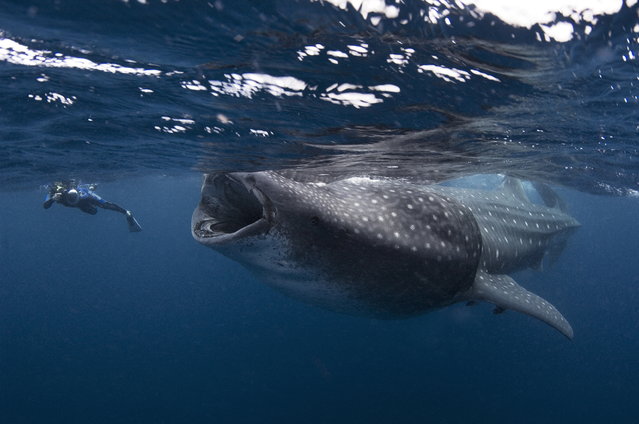
This diver almost got sucked into the mouth of a massive whale shark as it feeds on plankton. But far from staring into the jaws of death – the shark, which are the  sea's largest fish, is actually vegetarian. The relieved diver escaped from the encounter unscathed and continued to  enjoy the presence of the incredibly docile animals. The stunning photograph, by Mauricio Handler, was taken during a feeding session where more than 600 of the huge creatures  gathered to feed on tuna spawn. (Photo by Mauricio Handler/Daily Mail/Solent)

This diver almost got sucked into the mouth of a massive whale shark as it feeds on plankton. But far from staring into the jaws of death – the shark, which are the sea's largest fish, is actually vegetarian. The relieved diver escaped from the encounter unscathed and continued to enjoy the presence of the incredibly docile animals. The stunning photograph, by Mauricio Handler, was taken during a feeding session where more than 600 of the huge creatures gathered to feed on tuna spawn. (Photo by Mauricio Handler/Daily Mail/Solent)
Details
16 Feb 2014 12:23:00
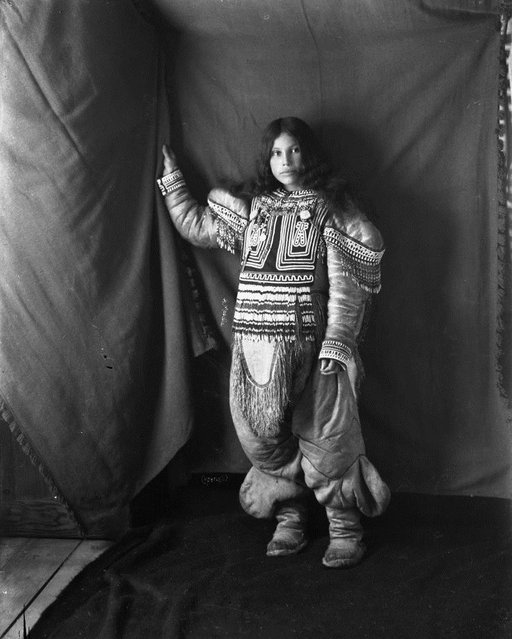
Moodie was born in 1854 in Toronto, and after a move to England she met and married John Douglas Moodie in 1878, and had six children. Here: Inuit woman, Kootucktuck, in her beaded attigi. Fullerton Harbour, Nunavut, February 1905. (Photo by Geraldine Moodie/The Guardian)

Geraldine Moodie overcame harsh conditions to become western Canada’s first professional female photographer, capturing beautiful images in the country’s most remote regions. An exhibition, “North of Ordinary: The Arctic Photographs of Geraldine and Douglas Moodie”, is at Glenbow, Calgary, 18 February – 10 September. Here: Inuit woman, Kootucktuck, in her beaded attigi. Fullerton Harbour, Nunavut, February 1905. (Photo by Geraldine Moodie/The Guardian)
Details
17 Feb 2017 00:04:00
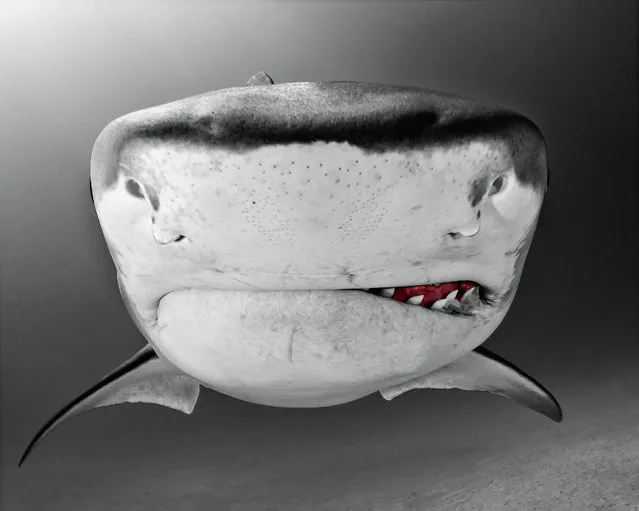
Todd Bretl specializes in underwater photography, and is able to capture striking photos of aquatic life big and small. His photos of sharks are particularly striking; though he rarely faces hostility from the animals, he tries not to spend too much time looking through his viewfinder and many shots are framed by educated guesses and impeccable timing. (Photo by Todd Bretl)

Todd Bretl specializes in underwater photography, and is able to capture striking photos of aquatic life big and small. His photos of sharks are particularly striking; though he rarely faces hostility from the animals, he tries not to spend too much time looking through his viewfinder and many shots are framed by educated guesses and impeccable timing. What follows are photographs taken over the past several years on trips to the Bahamas and Isla Guadalupe, an island off the coast of the Baja California peninsula in Mexico. (Photo by Todd Bretl)
Details
01 Aug 2014 12:35:00
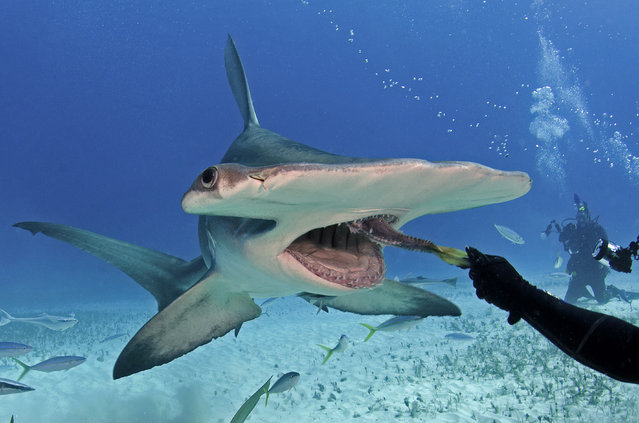
Eli Martinez with hammerhead shark. (Photo by J. P. Zegarra/Caters News)

“This is the terrifying moment a diver came head to head with a shark as it swims inches away snatching a bite for dinner. The close encounter, captured off Bimini Island in the Bahamas, shows the hammerhead approaching diver Eli Martinez who bravely stands his ground as the giant beast approaches. Eli, free diving outside of a protective cage, carefully handled the sea creature despite its menacing razor-sharp teeth – but admitted they are extremely shy and need a lot of work to allow divers close to them. After multiple trips and hours of diving nearby they finally got used to Eli in January this year – hammerheads regularly visit these waters during the winter season”. – Caters News. Photo: Eli Martinez with hammerhead shark. (Photo by J. P. Zegarra/Caters News)
Details
11 Mar 2014 09:24:00


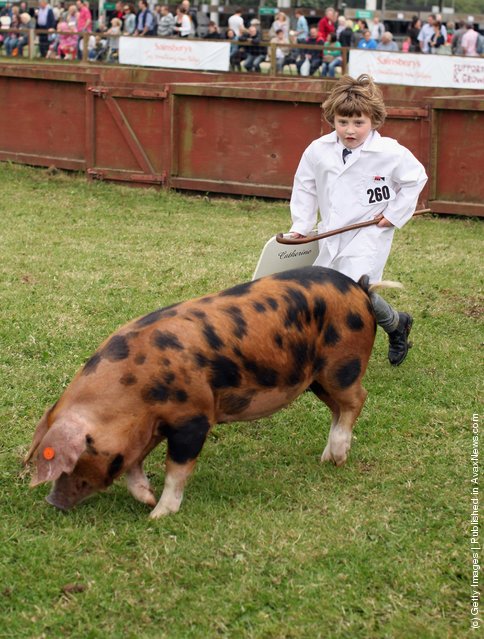
An young exhibitor chases his wayward pig during the Great Yorkshire Show on July 12, 2011 in Harrogate, England. The annual Great Yorkshire Show has attracted a record number of 12,700 livestock entries over the three day event. The show now in its 153rd year is Britain's leading agricultural gathering, where over 125,000 visitors come to celebrate the farming community and their way of life. (Photo by Christopher Furlong/Getty Images)
Details
13 Jul 2011 09:52:00
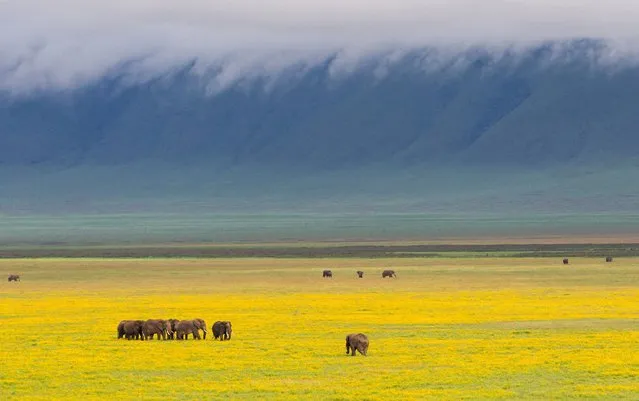
Ngorongoro Crater (Tanzania). At 610m deep and 260 sq km, this is the largest unflooded caldera in the world. A blue-green vision from above it's a haven for engangered wildlife and Maasai livestock. The crater was formed three million years ago when a giant volcano, which could have been as high as Kilimanjaro, exploded and collapsed. The caldera formed the concentric fractures in the crust cracked down to a magma reservoir deep underground. (Photo by John Bryant/Getty Images)

Ngorongoro Crater (Tanzania). At 610m deep and 260 sq km, this is the largest unflooded caldera in the world. A blue-green vision from above it's a haven for engangered wildlife and Maasai livestock. The crater was formed three million years ago when a giant volcano, which could have been as high as Kilimanjaro, exploded and collapsed. The caldera formed the concentric fractures in the crust cracked down to a magma reservoir deep underground. (Photo by John Bryant/Getty Images)
Details
28 Mar 2014 08:08:00


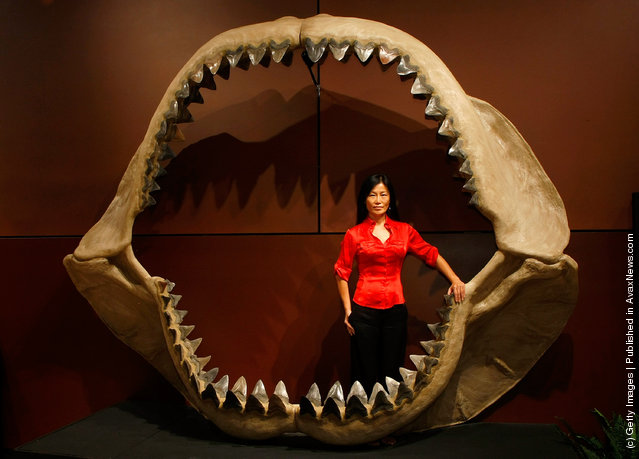
Enya Kim from the Natural History department at auctioneers Bonhams & Butterfields stands in front of one of the world's largest set of shark jaws comprised of about 180 fossil teeth from the prehistoric species, Carcharocles megalodon, which grew to the size of a school bus, at the Venetian Resort Hotel Casino September 30, 2009 in Las Vegas, Nevada. (Photo by Ethan Miller/Getty Images)
Details
19 Apr 2011 10:05:00