Loading...
Done
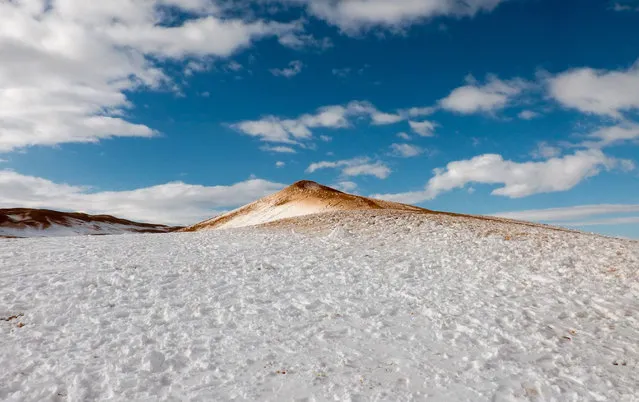
Record snowfall in the Sahara Desert near the town of Ain Sefra in Algeria on January 21, 2017. (Photo by Geoff Robinson/Rex Features/Shutterstock)

Record snowfall in the Sahara Desert near the town of Ain Sefra in Algeria on January 21, 2017. (Photo by Geoff Robinson/Rex Features/Shutterstock)
Details
24 Jan 2017 11:46:00
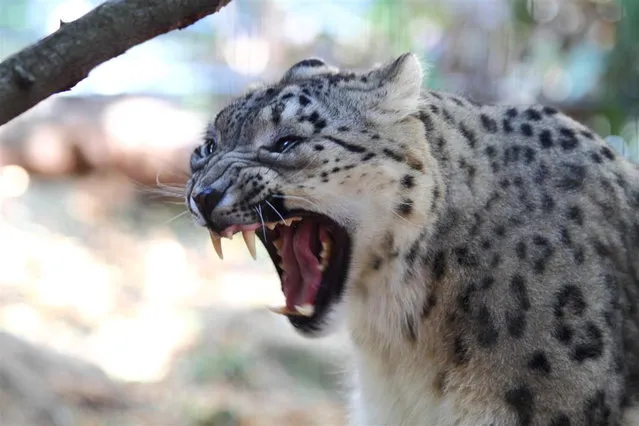
Snow Leopard

The snow leopard (Panthera uncia syn. Uncia uncia) is a large cat native to the mountain ranges of Central and South Asia. It is listed as endangered on the IUCN Red List of Threatened Species because as of 2003, the size of the global population was estimated at 4,080-6,590 adults, of which fewer than 2,500 individuals may reproduce in the wild.
Details
12 May 2014 10:14:00
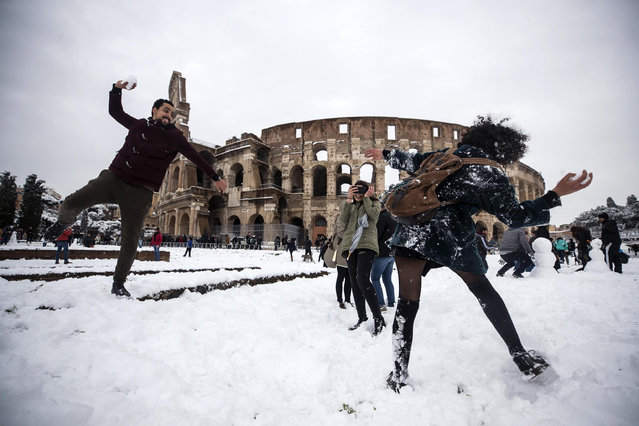
People take part in a snowball fight in front of the Colosseum covered by snow during a snowfall in Rome, Italy, 26 February 2018. Media reports on 26 February state that extreme cold weather is forecast to hit many parts of Europe with temperatures plummeting to a possible ten year low. (Photo by Angelo Carconi/EPA/EFE)

People take part in a snowball fight in front of the Colosseum covered by snow during a snowfall in Rome, Italy, 26 February 2018. Media reports on 26 February state that extreme cold weather is forecast to hit many parts of Europe with temperatures plummeting to a possible ten year low. (Photo by Angelo Carconi/EPA/EFE)
Details
28 Feb 2018 00:03:00
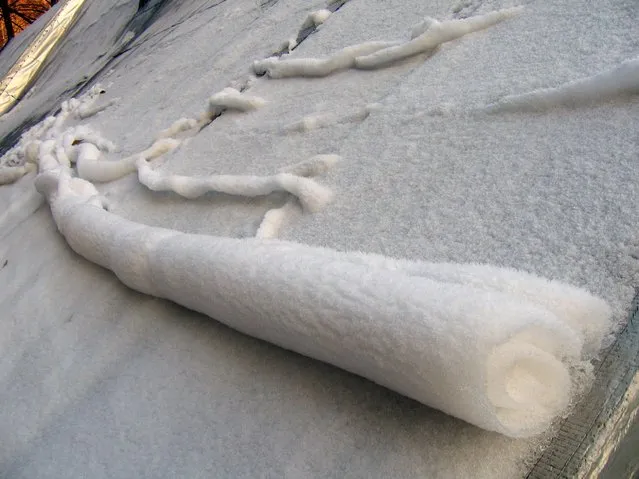
Snow Roller. (Photo by The Daily Omnivore)

“A snow roller is a rare meteorological phenomenon in which large snowballs are formed naturally as chunks of snow are blown along the ground by wind, picking up material along the way, in much the same way that the large snowballs used in snowmen are made”. – Wikipedia. Photo: Snow Roller. (Photo by The Daily Omnivore)
Details
31 Dec 2012 13:04:00
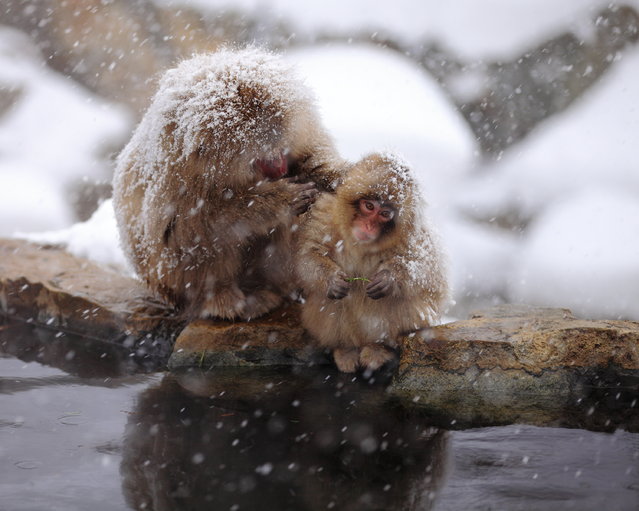
Mother and Child. Snow monkey at “Jigokudani hot-spring” in Nagano, Japan. (Kiyoshi Ookawa)

“Mother and Child”. Snow monkey at “Jigokudani hot-spring” in Nagano, Japan. (Photo by Kiyoshi Ookawa)
Details
10 Jan 2013 14:39:00
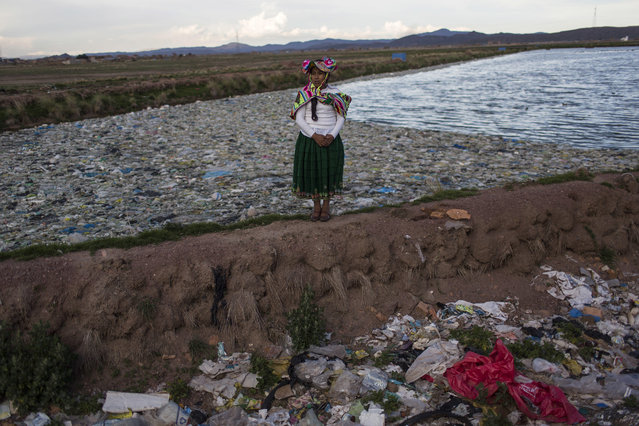
In this February 1, 2017 photo, environmental activist Maruja Inquilla poses for a photo next to a Municipal waste treatment plant with water that flows into Lake Titicaca, in Juliaca, in the Puno region of Peru. “If the frogs could talk they would say, This is killing me”," said Inquilla, who recently showed up at the Puno governor's house carrying plastic bags filled with hundreds of dead frogs in protest. (Photo by Rodrigo Abd/AP Photo)

In this February 1, 2017 photo, environmental activist Maruja Inquilla poses for a photo next to a Municipal waste treatment plant with water that flows into Lake Titicaca, in Juliaca, in the Puno region of Peru. “If the frogs could talk they would say, This is killing me”," said Inquilla, who recently showed up at the Puno governor's house carrying plastic bags filled with hundreds of dead frogs in protest. (Photo by Rodrigo Abd/AP Photo)
Details
04 Mar 2017 00:02:00
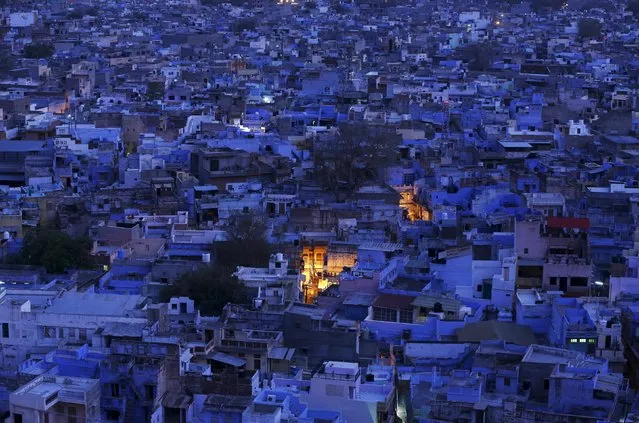
A general view of the residential area is pictured during dusk at Jodhpur in Rajasthan, April 5, 2015. Jodhpur, also known as the blue city in the desert Indian state of Rajasthan, which residents say originally, was used to show where the highest caste of priestly Hindus live, who wanted to set them apart from the rest of the population. Later the rest of the population followed suit. Another reason for the city to be blue is to keep the buildings cool during the summers, local residents said. (Photo by Adnan Abidi/Reuters)

A general view of the residential area is pictured during dusk at Jodhpur in Rajasthan, April 5, 2015. Jodhpur, also known as the blue city in the desert Indian state of Rajasthan, which residents say originally, was used to show where the highest caste of priestly Hindus live, who wanted to set them apart from the rest of the population. Later the rest of the population followed suit. Another reason for the city to be blue is to keep the buildings cool during the summers, local residents said. (Photo by Adnan Abidi/Reuters)
Details
12 Apr 2015 08:27:00
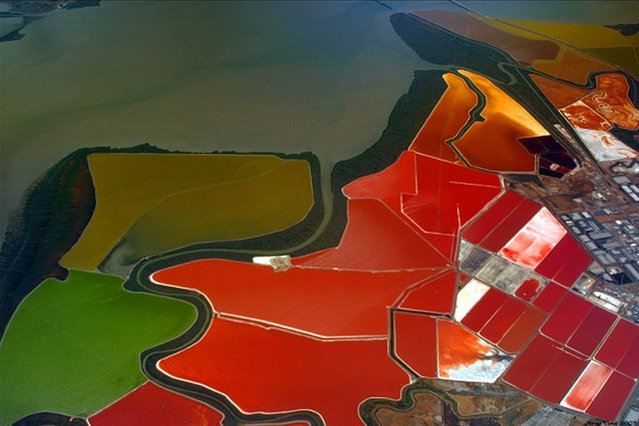
Salt ponds in San Francisco Bay

Salt evaporation ponds, also called salterns or salt pans, are shallow artificial ponds designed to produce salts from sea water or other brines. The seawater or brine is fed into large ponds and water is drawn out through natural evaporation which allows the salt to be subsequently harvested. The ponds also provide a productive resting and feeding ground for many species of waterbirds, which may include endangered species. The ponds are commonly separated by levees.
Details
11 Oct 2012 12:49:00