Loading...
Done
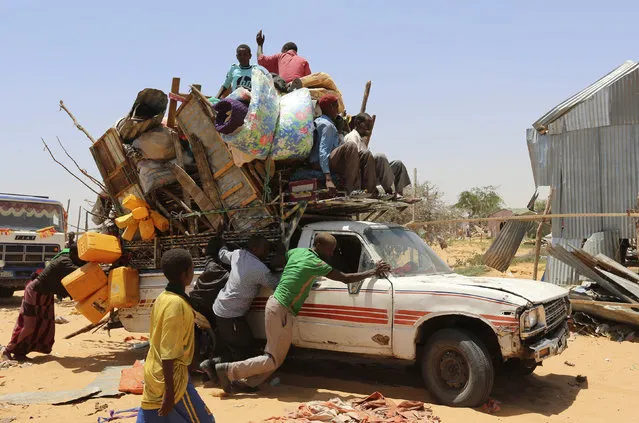
More than 6 billion people live in countries where serious levels of public sector corruption are fueling inequality and exploitation, according to Transparency International's 2015 index of perceived public sector corruption. The group's annual report measures perceptions of corruption due to the secrecy surrounding most corrupt dealings. Two thirds of the 168 countries assessed were identified as having a serious corruption problem. Somalia, which has been mired in conflict since civil war broke out in 1991, ranks bottom of the list. (Photo by Feisal Omar/Reuters)

More than 6 billion people live in countries where serious levels of public sector corruption are fueling inequality and exploitation, according to Transparency International's 2015 index of perceived public sector corruption. The group's annual report measures perceptions of corruption due to the secrecy surrounding most corrupt dealings. Two thirds of the 168 countries assessed were identified as having a serious corruption problem. Somalia, which has been mired in conflict since civil war broke out in 1991, ranks bottom of the list. (Photo by Feisal Omar/Reuters)
Details
13 May 2016 12:10:00
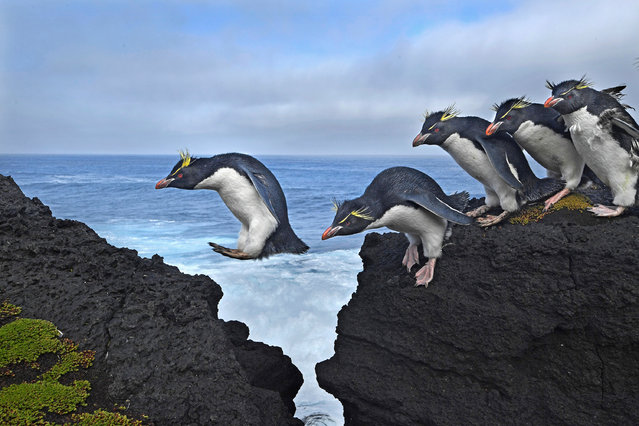
Rockhopper penguins live up to their name as they navigate the rugged coastline of Marion Island in the southern Indian Ocean. (Photo by Thomas P. Peschak)

Rockhopper penguins live up to their name as they navigate the rugged coastline of Marion Island in the southern Indian Ocean. (Photo by Thomas P. Peschak)
Details
18 Mar 2018 00:03:00
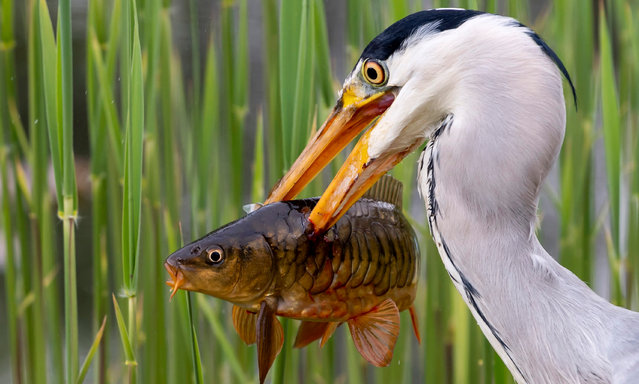
A gray heron (Ardea cinerea) that fished a common carp (Cyprinus carpio) in Geneva, Switzerland, 21 April 2019. (Photo by Martial Trezzini/EPA/EFE/Rex Features/Shutterstock)

A gray heron (Ardea cinerea) that fished a common carp (Cyprinus carpio) in Geneva, Switzerland, 21 April 2019. (Photo by Martial Trezzini/EPA/EFE/Rex Features/Shutterstock)
Details
06 Sep 2020 00:01:00
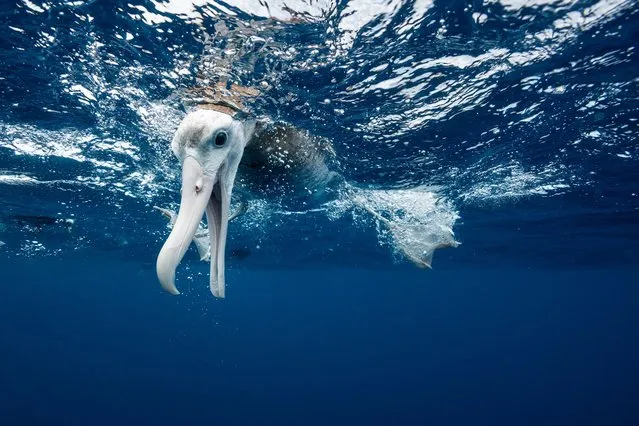
The endangered antipodean albatross, which is often caught in fishing nets, won most first-choice votes out of the more than 55,000 votes cast during the 2020 New Zealand’s bird of the year competition. (Photo by Wildestanimal/Getty Images)

The endangered antipodean albatross, which is often caught in fishing nets, won most first-choice votes out of the more than 55,000 votes cast during the 2020 New Zealand’s bird of the year competition. (Photo by Wildestanimal/Getty Images)
Details
20 Dec 2020 00:05:00
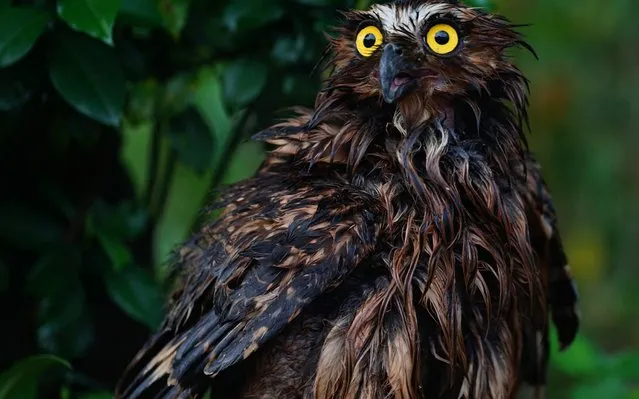
A Sumatran Owl is seen in Palembang City, Indonesia on March 5, 2020. (Photo by Sigit Prasetya/Opn Images/Barcroft Media via Getty Images)

A Sumatran Owl is seen in Palembang City, Indonesia on March 5, 2020. (Photo by Sigit Prasetya/Opn Images/Barcroft Media via Getty Images)
Details
08 Mar 2020 00:03:00
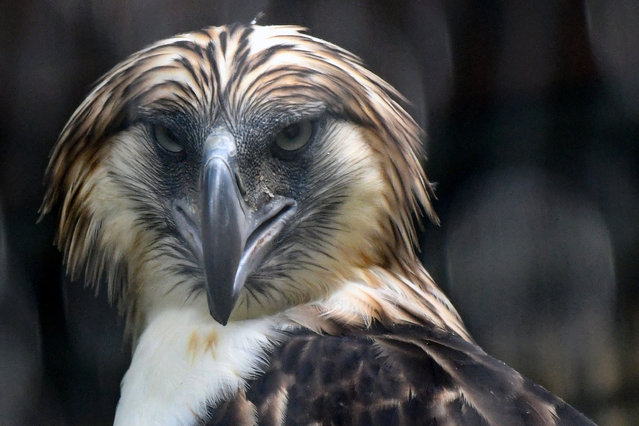
A male Philippine eagle named Geothermica is seen in an exclosure at Jurong Bird Park in Singapore on November 27, 2019. Singapore unveiled two Philippine eagles at its main aviary November 27, the first breeding pair of the critically endangered raptors to be brought outside their native country as part of a conservation plan. (Photo by Roslan Rahman/AFP Photo)

A male Philippine eagle named Geothermica is seen in an exclosure at Jurong Bird Park in Singapore on November 27, 2019. Singapore unveiled two Philippine eagles at its main aviary November 27, the first breeding pair of the critically endangered raptors to be brought outside their native country as part of a conservation plan. (Photo by Roslan Rahman/AFP Photo)
Details
01 Dec 2019 00:03:00
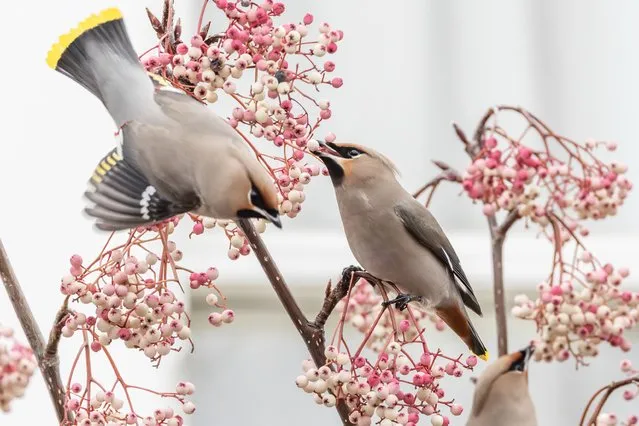
Waxwings in Balham south London on December 31, 2023. There has been a huge influx of this erruptive species this year. This probably due to severe storms and a shortage of food in their native Scandinavia in the Autumn. (Photo by Jack Hill/The Times)

Waxwings in Balham south London on December 31, 2023. There has been a huge influx of this erruptive species this year. This probably due to severe storms and a shortage of food in their native Scandinavia in the Autumn. (Photo by Jack Hill/The Times)
Details
25 Jan 2024 10:02:00
Kawakanih Yawalapiti, 9, Upper Xingu region of Mato Grosso, Brazil, 2018: Kawakanih lives with her tribe, the Yawalapiti, in Xingu national park, a preserve in the Amazon basin of Brazil. The Yawalapiti collect seeds to preserve species unique to their ecosystem, which lies between the rain forest and savannah. Kawakanih’s diet is simple, consisting mainly of fish, cassava, porridge, fruit and nuts. “It takes five minutes to catch dinner”, says Kawakanih. “When you’re hungry, you just go to the river with your net”. (Photo by Gregg Segal/The Guardian)

Photographer Gregg Segal travelled the world to document children and the food they eat in a week. Partly inspired by the increasing problems of childhood obesity, he tracked traditional regional diets as yet unaffected by globalisation, and ironically, found that the healthiest diets were often eaten by the least well off. (Photo by Gregg Segal/The Guardian)
Details
03 Jul 2019 00:03:00