Loading...
Done
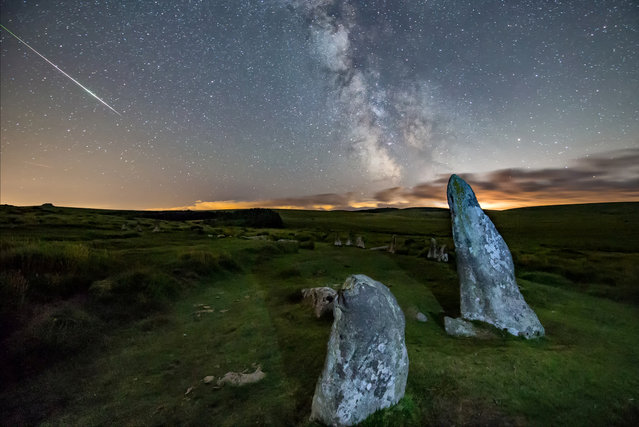
The Perseid Meteor Shower seen over The Scorhill Stone Circle in Dartmoor, Devon on August 2, 2016. (Photo by John Baker/SWNS.com)

The Perseid Meteor Shower seen over The Scorhill Stone Circle in Dartmoor, Devon on August 2, 2016. (Photo by John Baker/SWNS.com)
Details
08 Dec 2016 13:00:00
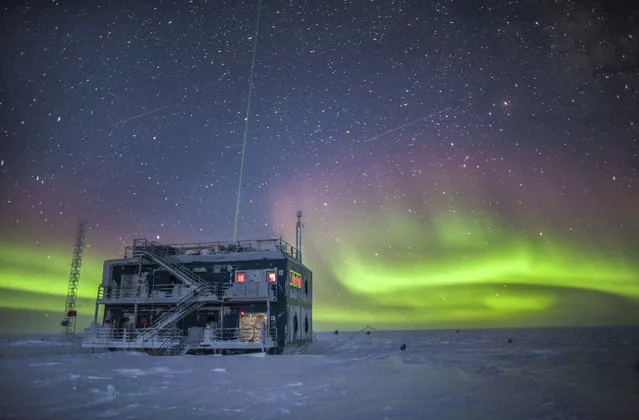
This undated photo provided by NOAA in May 2018 shows aurora australis near the South Pole Atmospheric Research Observatory in Antarctica. When a hole in the ozone formed over Antarctica, countries around the world in 1987 agreed to phase out several types of ozone-depleting chemicals called chlorofluorocarbons (CFCs). Production was banned, emissions fell and the hole shriveled. But according to a study released on Wednesday, May 16, 2018, scientists say since 2013, there’s more of a banned CFC going into the atmosphere. (Photo by Patrick Cullis/NOAA via AP Photo)

This undated photo provided by NOAA in May 2018 shows aurora australis near the South Pole Atmospheric Research Observatory in Antarctica. When a hole in the ozone formed over Antarctica, countries around the world in 1987 agreed to phase out several types of ozone-depleting chemicals called chlorofluorocarbons (CFCs). Production was banned, emissions fell and the hole shriveled. But according to a study released on Wednesday, May 16, 2018, scientists say since 2013, there’s more of a banned CFC going into the atmosphere. (Photo by Patrick Cullis/NOAA via AP Photo)
Details
15 Aug 2018 00:05:00
A dead fish lies on the bank of Oder River on the German-Polish border, in Brieskow-Finkenheerd, Frankfurt (Oder), Germany, August 11, 2022. Authorities are looking into the cause of the mysterious fish deaths. (Photo by Annegret Hilse/Reuters)

A dead fish lies on the bank of Oder River on the German-Polish border, in Brieskow-Finkenheerd, Frankfurt (Oder), Germany, August 11, 2022. Authorities are looking into the cause of the mysterious fish deaths. (Photo by Annegret Hilse/Reuters)
Details
07 Oct 2022 04:22:00
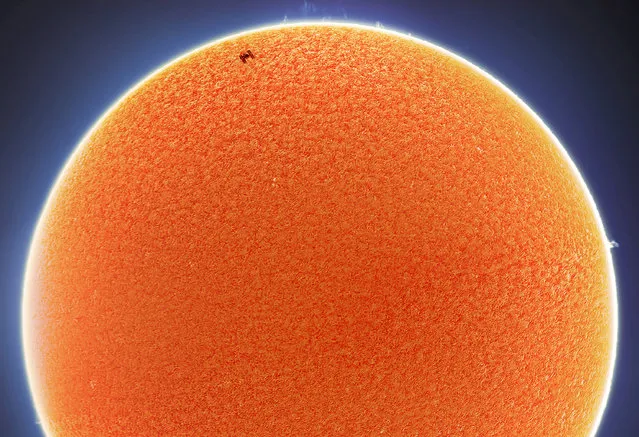
The International Space Station (ISS) moving in front of the sun in November 2020 by astrophotographer Andrew McCarthy. These incredible photos capture the clearest images ever taken of the International Space Station (ISS) moving in front of both the moon and the sun. The photos, taken within days of one another, were captured in the space of less than a second, as the space station could be clearly seen zooming across against the bright backdrops of both moon and sun. Photographer Andrew McCarthy, from California, USA, said the photo of the ISS in front of the sun, in broad daylight, was “one of my trickiest shots ever”. (Photo by Andrew McCarthy/South West News Service)

The International Space Station (ISS) moving in front of the sun in November 2020 by astrophotographer Andrew McCarthy. These incredible photos capture the clearest images ever taken of the International Space Station (ISS) moving in front of both the moon and the sun. The photos, taken within days of one another, were captured in the space of less than a second, as the space station could be clearly seen zooming across against the bright backdrops of both moon and sun. Photographer Andrew McCarthy, from California, USA, said the photo of the ISS in front of the sun, in broad daylight, was “one of my trickiest shots ever”. (Photo by Andrew McCarthy/South West News Service)
Details
28 Nov 2020 00:05:00
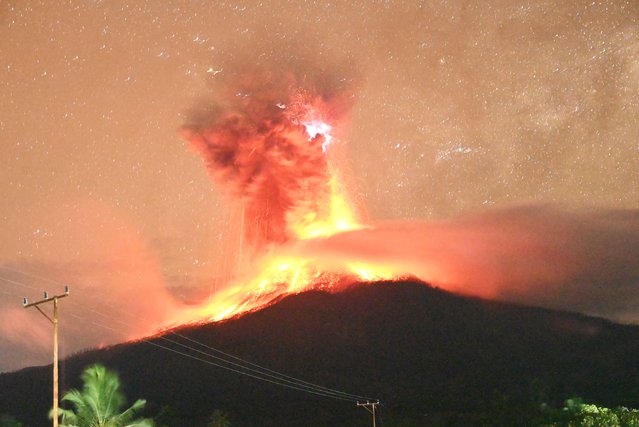
Mount Lewotobi Laki-laki volcano spews vulcanic materials during an eruption as seen from Pululera village in East Flores Regency, East Nusa Tenggara province, Indonesia, on April 27, 2025. (Photo by The Centre for Volcanology and Geological Hazard Mitigation (PVMBG)/Handout via Reuters)

Mount Lewotobi Laki-laki volcano spews vulcanic materials during an eruption as seen from Pululera village in East Flores Regency, East Nusa Tenggara province, Indonesia, on April 27, 2025. (Photo by The Centre for Volcanology and Geological Hazard Mitigation (PVMBG)/Handout via Reuters)
Details
17 May 2025 02:43:00
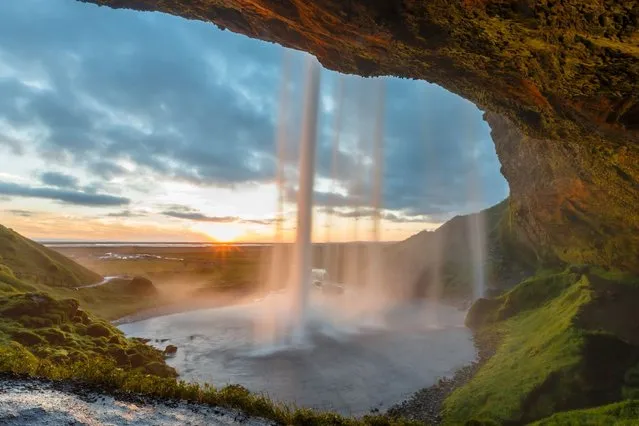
Seljalandsfoss waterfall, located in Iceland. (Photo by HotSpot Media)

Seljalandsfoss waterfall, located in Iceland. Seljalandsfoss is one of the most famous waterfalls of Iceland. This waterfall of the river Seljalandsá drops 60 metres (200 ft) over the cliffs of the former coastline. It's possible to go behind the waterfall. (Photo by HotSpot Media)
Details
16 Apr 2014 12:54:00
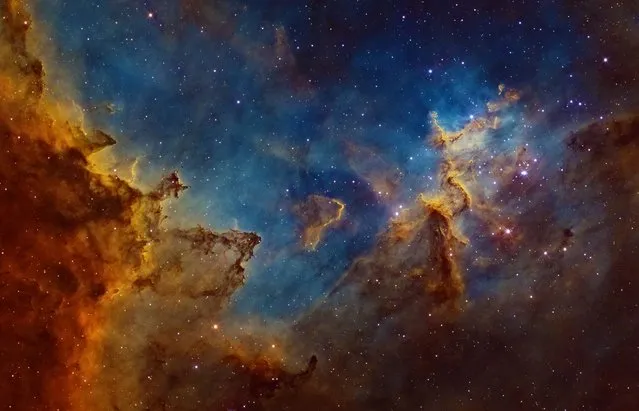
Centre of the Heart Nebula by Ivan Eder (Hungary). Situated 7500 light years away in the ‘W’-shaped constellation of Cassiopeia, the Heart Nebula is a vast region of glowing gas, energized by a cluster of young stars at its centre. The image depicts the central region, where dust clouds are being eroded and moulded into rugged shapes by the searing cosmic radiation. (Photo by Ivan Eder)

The competition, which is run by the Royal Observatory Greenwich in association with BBC Sky at Night Magazine, is now in its sixth year and has received over 2,500 entries. Photo: Centre of the Heart Nebula by Ivan Eder (Hungary). Situated 7500 light years away in the “W”-shaped constellation of Cassiopeia, the Heart Nebula is a vast region of glowing gas, energized by a cluster of young stars at its centre. The image depicts the central region, where dust clouds are being eroded and moulded into rugged shapes by the searing cosmic radiation. (Photo by Ivan Eder)
Details
03 Jul 2014 11:59:00
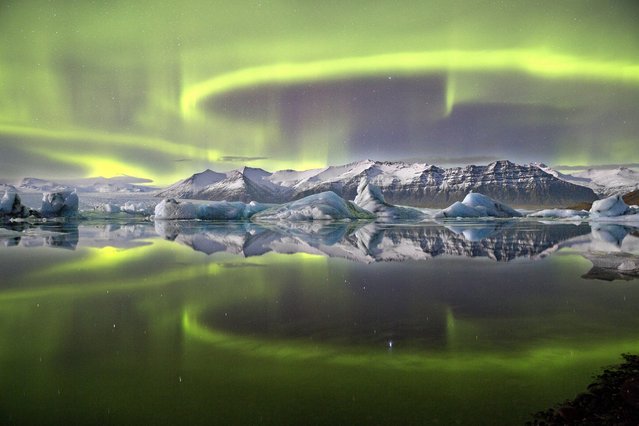
“Aurora over a glacier lagoon”. A vivid green overheaded aurrora pictured in Iceland's Vatnajokull National Park reflected almost symetrically in Jokulsrlon Glacier lagoon. A complete lack of wind and currrent combin in this sheltred lagoon scene to crete an arresting mirror effect giving the image a sensation of utter stillness. Despite theis there is motion on a suprising scale, as the loops and arcs of the aurora are shaped by the shifting forces of the Earth's magnetic field. (Photo by  James Woodend/The Astronomy Photographer of the Year 2014 Contest)

“Aurora over a glacier lagoon”. A vivid green overheaded aurrora pictured in Iceland's Vatnajokull National Park reflected almost symetrically in Jokulsrlon Glacier lagoon. A complete lack of wind and currrent combin in this sheltred lagoon scene to crete an arresting mirror effect giving the image a sensation of utter stillness. Despite theis there is motion on a suprising scale, as the loops and arcs of the aurora are shaped by the shifting forces of the Earth's magnetic field. James Woodend of Great Britain won the grand prize with the image, beating out more than 2,500 other entries. The Astronomy Photographer of the Year 2014 contest is judged by the Royal Observatory Greenwich and BBC Sky at Night magazine. (Photo by James Woodend/The Astronomy Photographer of the Year 2014 Contest)
Details
26 Sep 2014 13:39:00