Loading...
Done
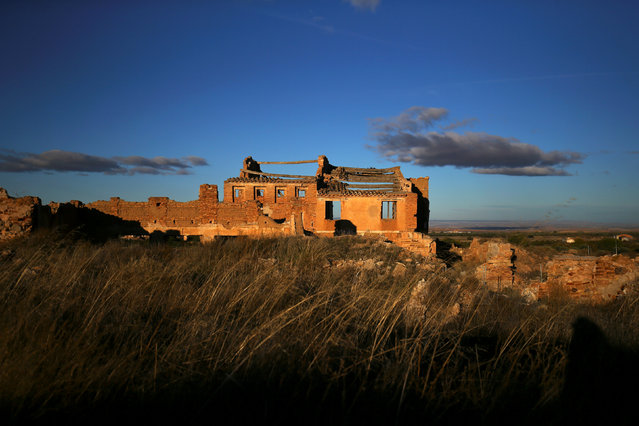
Ruins of a building are seen in the old village of Belchite, in northern Spain, November 13, 2016. (Photo by Andrea Comas/Reuters)

Ruins of a building are seen in the old village of Belchite, in northern Spain, November 13, 2016. Almost 80 years ago Tomas Ortin fled under the cover of night from his home in the small town of Belchite on Spain's northern plains to escape with hundreds of others from one of the bloodiest battles of the country's civil war. At 94 years old, Ortin now lives just across the road from Belchite, which has lain in ruins since Republican forces attacked it, a symbol of the destruction caused by the 1936-1939 war in which an estimated 500,000 people died. (Photo by Andrea Comas/Reuters)
Details
30 Nov 2016 12:31:00
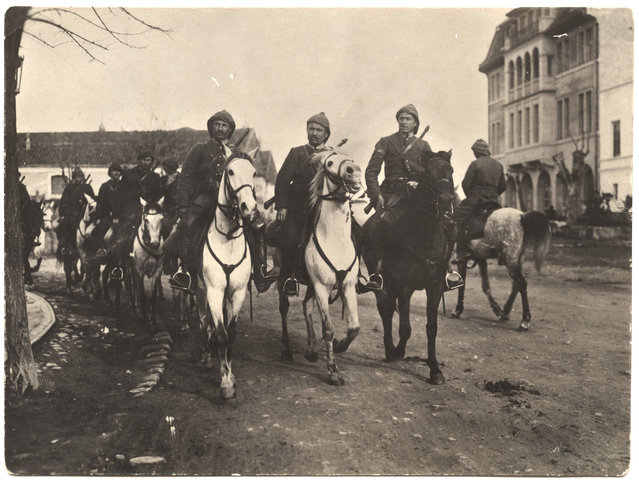
Turkish army, including cavalry, infantry and artillery. (Photo by Dr. P.A. Smithe/National World War I Museum, Kansas City, Mo.)

Dr. P.A. Smithe was sent by the American Red Cross as a doctor and surgeon to work at a hospital in Vienna. He sailed to Europe in December 1915 and returned home in August 1916, according to his daughter, who donated his images to the National World War I Museum. Photo: Turkish army, including cavalry, infantry and artillery. (Photo by Dr. P.A. Smithe/National World War I Museum, Kansas City, Mo.)
Details
29 Jul 2014 11:53:00
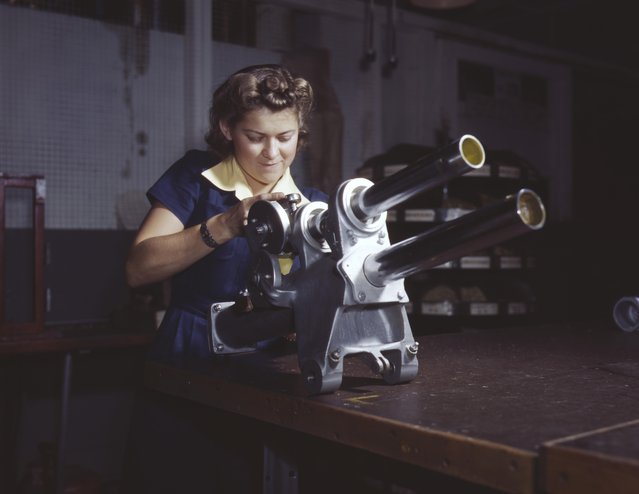
A young woman employee of North American Aviation Incorporated, working over the landing gear mechanism of a P-51 fighter plane, Inglewood, California, 1942. (Photo by Alfred T. Palmer/Buyenlarge/Getty Images)

A young woman employee of North American Aviation Incorporated, working over the landing gear mechanism of a P-51 fighter plane, Inglewood, California, 1942. (Photo by Alfred T. Palmer/Buyenlarge/Getty Images)
Details
09 Mar 2017 00:02:00
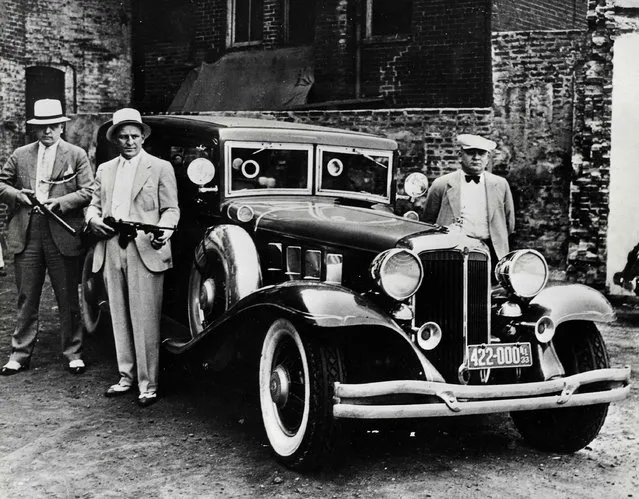
An armoured vehicle surrounded by Chicago cops at the time of the American depression, 1933. (Photo by Rolls Press/Popperfoto/Getty Images)

An armoured vehicle surrounded by Chicago cops at the time of the American depression, 1933. (Photo by Rolls Press/Popperfoto/Getty Images)
Details
10 Feb 2017 00:02:00
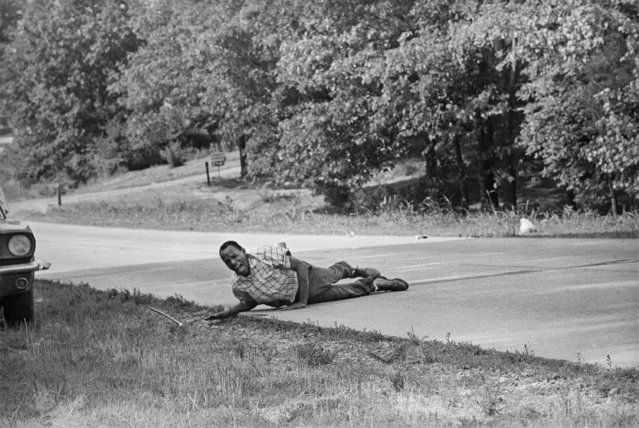
In this  June 6, 1966 file photo, civil rights activist James Meredith pulls himself across Highway 51 after being shot in Hernando, Miss. Meredith, who defied segregation to enroll at the University of Mississippi in 1962, completed the march from Memphis, Tenn., to Jackson, Miss., after being treated for his wounds. (Photo by Jack Thornell/AP Photo)

In this June 6, 1966 file photo, civil rights activist James Meredith pulls himself across Highway 51 after being shot in Hernando, Miss. Meredith, who defied segregation to enroll at the University of Mississippi in 1962, completed the march from Memphis, Tenn., to Jackson, Miss., after being treated for his wounds. (Photo by Jack Thornell/AP Photo)
Details
25 Jul 2016 11:18:00
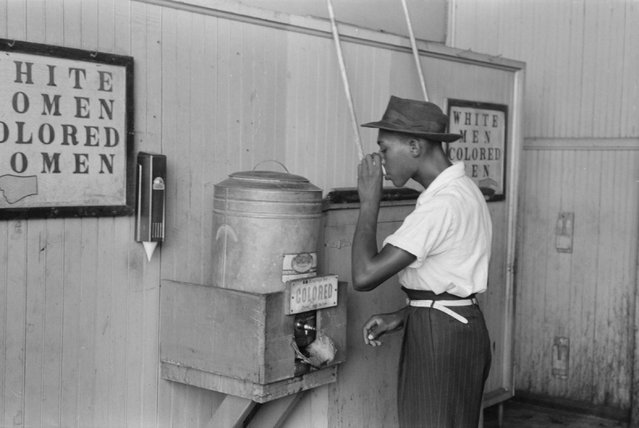
A man drinks at a "colored" water cooler in a streetcar terminal in Oklahoma City, July 1939. (Photo by Reuters/Library of Congress)

A man drinks at a "colored" water cooler in a streetcar terminal in Oklahoma City, July 1939. (Photo by Reuters/Library of Congress)
Details
03 Dec 2015 08:03:00
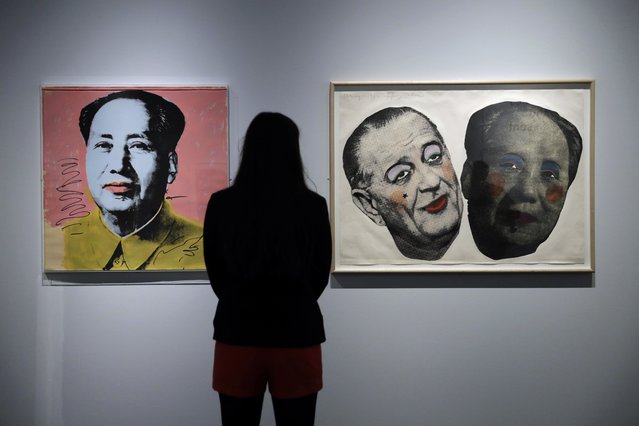
A British Museum representative poses for photographs next to Andy Warhol's “Mao”, left, and Jim Dine's “Drag: Johnson and Mao” which feature in “The American Dream: pop to the present” exhibition during a media photocall at the British Museum in London, Monday, March 6, 2017. (Photo by Matt Dunham/AP Photo)

A British Museum representative poses for photographs next to Andy Warhol's “Mao”, left, and Jim Dine's “Drag: Johnson and Mao” which feature in “The American Dream: pop to the present” exhibition during a media photocall at the British Museum in London, Monday, March 6, 2017. The exhibition, which opens to the public from March 9 and runs until June 18, charts modern and contemporary print making. (Photo by Matt Dunham/AP Photo)
Details
09 Mar 2017 00:00:00
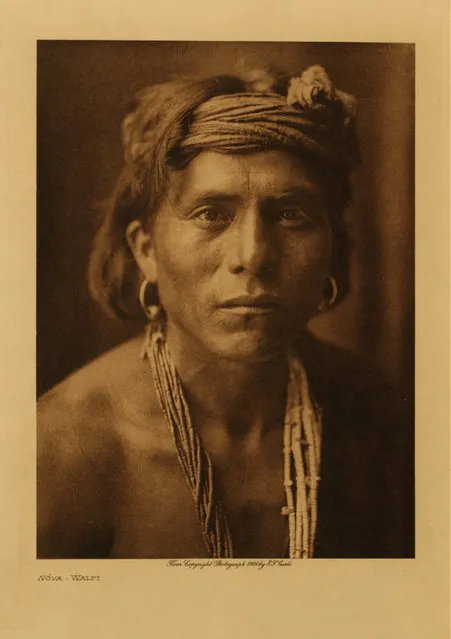
Nova, a Walpi, in 1906. (Photo by Edward S. Curtis)

At the beginning of the 20th century, Edward S. Curtis set out to document what he saw as a disappearing race: the Native American. From 1907 to 1930, Curtis took more than 2,000 photos of 80 tribes stretching from the Great Plains to the Pacific Northwest and Alaska. He then published and sold these photos, along with narrative text, in 20 volumes of work known as “The North American Indian”. It is one of the most significant collections of its kind, “probably the most important photographic document of its age and its topic,” said Jeffrey Garrett, associate university librarian for Special Libraries at Northwestern University. (Photo by Edward S. Curtis)
Details
07 Sep 2014 12:57:00