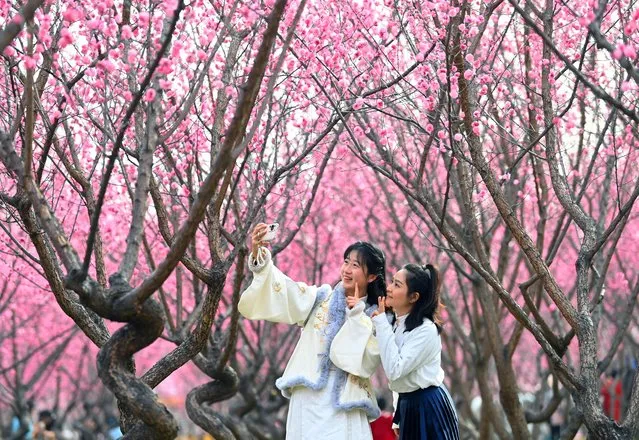
Pausing for a selfie as plum blossoms burst into bloom in Dujiangyan City, in southwest China’s Sichuan province on February 20, 2024. (Photo by Splash News and Pictures)
A smiling gecko bursts through a gap in the bark to surprise photographer in West Java, Indonesia in the last decade of March 2025. (Photo by Dzul Duzulfikri/Animal News Agency)
American actress Megan Fox attends CELSIUS Cosmic Desert Event at Coachella on April 12, 2024 in Indio, California. (Photo by Tommaso Boddi/Getty Images for CELSIUS Energy)
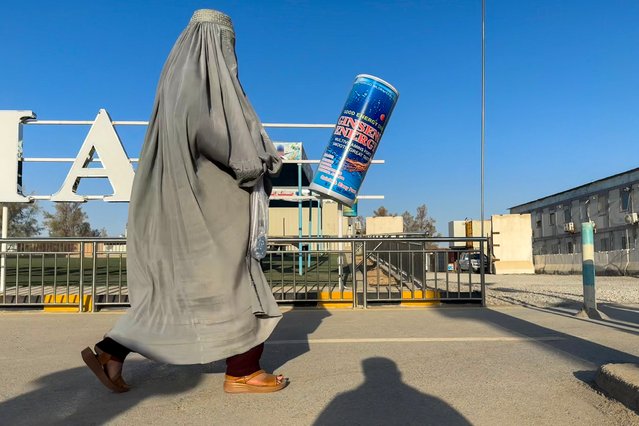
In this photo taken on August 29, 2024, an Afghan burqa-clad woman walks past an energy drink advertisement at Kandahar airport in Kandahar. The Taliban government has purged many signs of Western influence but a stimulant drink craze that arrived with US soldiers remains, and has even sprouted a thriving domestic industry. Alcohol is outlawed in Afghanistan but caffeine-rich energy drinks are guzzled by secret police, fed by mothers to suckling children and advertised on billboards more than even Taliban state propaganda. (Photo by Wakil Kohsar/AFP Photo)
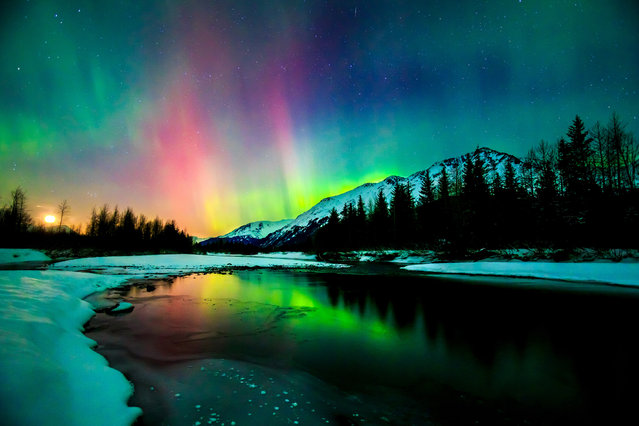
“A Hawaiian photographer braved freezing temperatures for this cold SNAP – of what appears to be a firebird bursting from an aurora. Keen snapper CJ Kale, more used to sun, sea and sand while at work than snow, captured the incredible moment while on a trip to Alaska. It was his first time seeing the spectacular sight and lucked out – capturing some of the rarest colors of aurora on his first night”. – Caters News
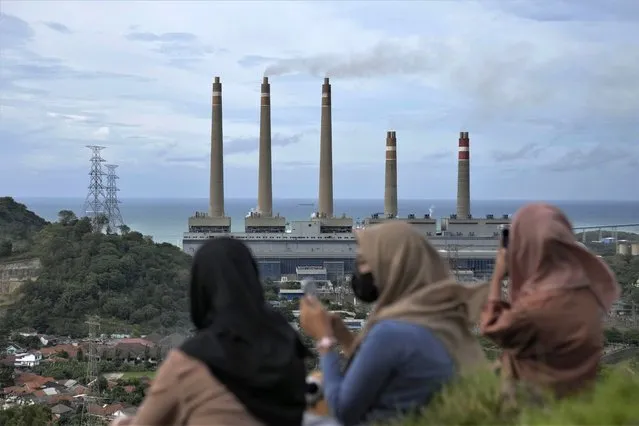
Indonesian women sit on a hill as the Suralaya coal power plant looms in the background in Cilegon, Indonesia, on January 8, 2023. A plan for how Indonesia will spend $20 billion to transition to cleaner energy was submitted Wednesday, Aug. 16, to the government and its financing partners, the planners said. (Photo by Dita Alangkara/AP Photo)
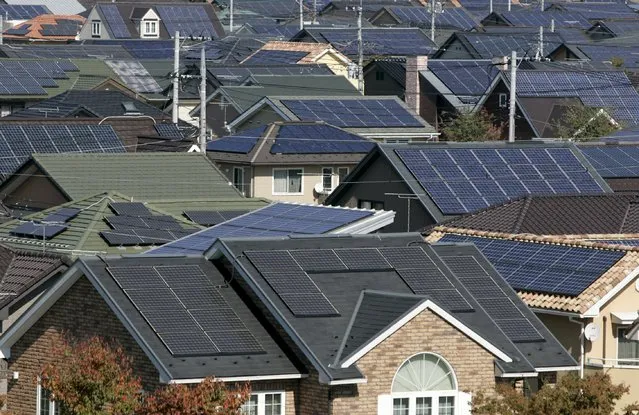
Rooftops of solar powered houses are pictured in Ota, 80 km northwest of Tokyo in this October 28, 2008 file photo. One by one, Japan is turning off the lights at the giant oil-fired power plants that propelled it to the ranks of the world's top industrialised nations. With nuclear power in the doldrums after the Fukushima disaster, it's solar energy that is becoming the alternative. Solar power is set to become profitable in Japan as early as this quarter, according to the Japan Renewable Energy Foundation (JREF), freeing it from the need for government subsidies and making it the last of the G7 economies where the technology has become economically viable. (Photo by Yuriko Nakao/Reuters)
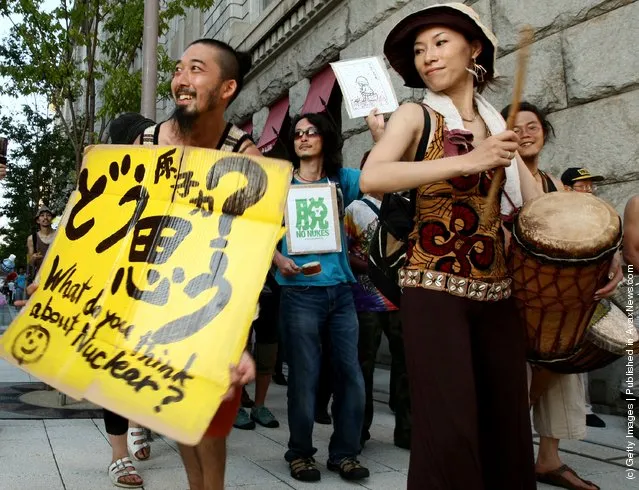
Anti-nuclear activists demonstrate during a “Say to Goodbye to Nuclear Energy” protest on September 11, 2011 in Kobe, Japan. Japan is marking sixth months since a magnitude 9.0 earthquake struck Japan offshore on March 11 at 2:46pm local time, triggering a tsunami wave of up to ten metres which engulfed large parts of north-eastern Japan and also damaged the Fukushima nuclear plant, causing the worst nuclear crisis in decades. The current number of dead and missing is reportedly estimated to be 22,900. (Photo by Buddhika Weerasinghe/Getty Images)