Loading...
Done
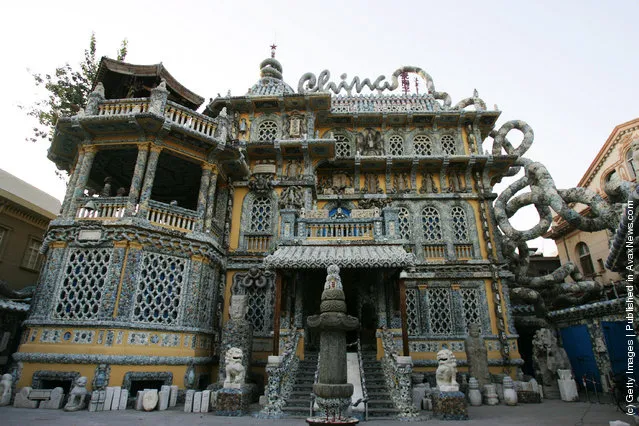
Porcelain House

Facade of the “Porcelain House”, built by Chinese collector Zhang Lianzhi, on November 1, 2008 in the Heping district of Tianjin, China. Over 400 million porcelain fragments, 5,000 ancient vases, 4,000 antique china dishes and bowls, over 20 tons of crystalline rocks and agate, 400 white marble stone carvings were incorporated in the five year refurbishment of the unique French styled house. (Photo by China Photos/Getty Images)
Details
08 Sep 2011 14:23:00
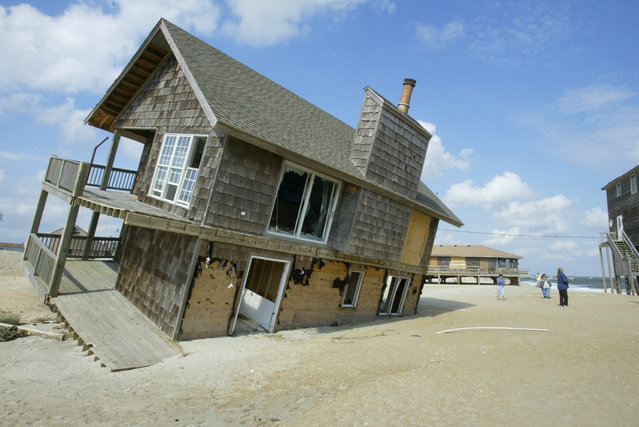
A house that was slammed off its foundation by Hurricane Isabel sits precariously on the beach one month after it hit Rodanthe, North Carolina October 18, 2003. (Photo by Rick Wilking/Reuters)

A house that was slammed off its foundation by Hurricane Isabel sits precariously on the beach one month after it hit Rodanthe, North Carolina October 18, 2003. (Photo by Rick Wilking/Reuters)
Details
17 Sep 2015 10:55:00
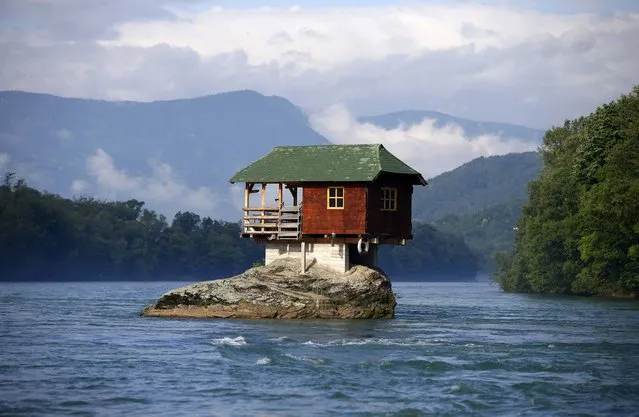
A house built on a rock on the river Drina is seen near the western Serbian town of Bajina Basta, about 160km (99 miles) from the capital Belgrade May 22, 2013. (Photo by Marko Djurica/Reuters)

A house built on a rock on the river Drina is seen near the western Serbian town of Bajina Basta, about 160km (99 miles) from the capital Belgrade May 22, 2013. The house was built in 1968 by a group of young men who decided that the rock on the river was an ideal place for a tiny shelter, according to the house's co-owner, who was among those involved in its construction. (Photo by Marko Djurica/Reuters)
Details
23 May 2013 11:53:00
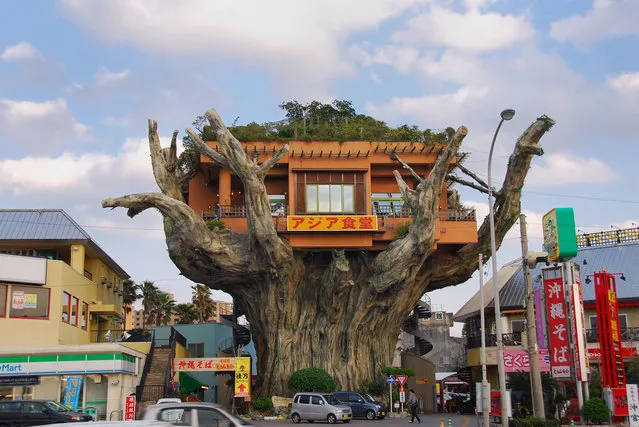
Tree House

Tree houses, treehouses, or tree forts, are platforms or buildings constructed around, next to or among the trunk or branches of one or more mature trees while above ground level. Tree houses can be used for recreation, work space, habitation, observation or as temporary retreats.
Details
08 Jun 2015 11:01:00
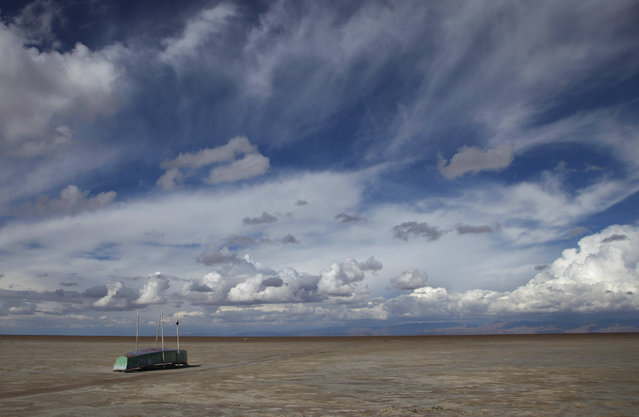
In this January 12, 2016 photo, an abandoned boat lies on the dried up lake bed of Lake Poopo, on the outskirts of Untavi, Bolivia. Drought caused by the recurrent El Nino meteorological phenomenon is considered the main driver of the lake's demise. Along with glacial melting, authorities say another factor is the diversion of water from Poopo's tributaries, mostly for mining but also for agriculture. (Photo by Juan Karita/AP Photo)

In this January 12, 2016 photo, an abandoned boat lies on the dried up lake bed of Lake Poopo, on the outskirts of Untavi, Bolivia. Drought caused by the recurrent El Nino meteorological phenomenon is considered the main driver of the lake's demise. Along with glacial melting, authorities say another factor is the diversion of water from Poopo's tributaries, mostly for mining but also for agriculture. (Photo by Juan Karita/AP Photo)
Details
21 Jan 2016 12:33:00
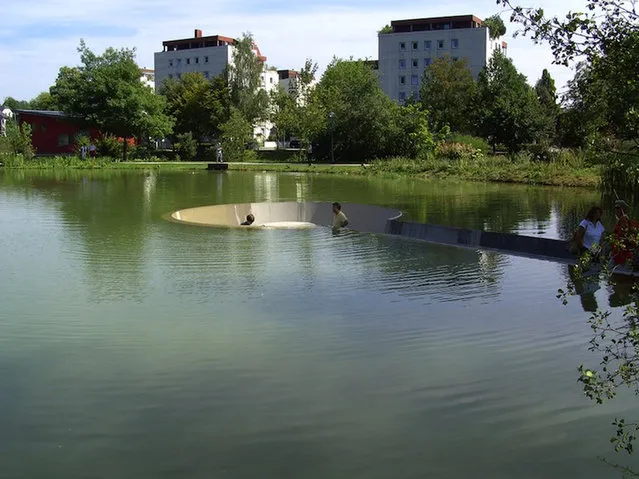
Vocklabruck Platform In The Middle Of A Lake

There's a wonderfully picturesque spot in Vöcklabruck, Austria where visitors are able to sit in the middle of a pond without getting wet. The scenic landscape includes a path leading down to a hollowed out circular area where people can take a seat and relax amongst nature. It's a surreal journey along the gradual ramp to the observational platform as the water level gains height either side. Once in the resting area, depending on perspective, visitors seem like they're wading in the lake without a drop of water on them.
Details
09 Apr 2013 09:23:00
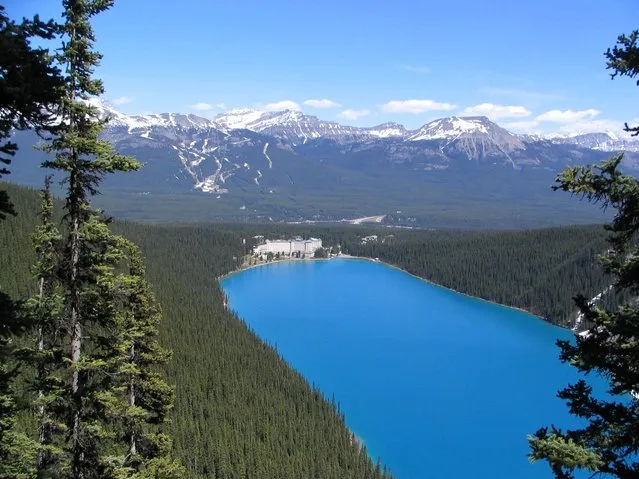
Lake Louise In  Canada

Lake Louise, named Lake of the Little Fishes by the Stoney Natoka First Nations people, is a glacial lake within Banff National Park in Alberta, Canada. It is located 5 km (3.1 mi) west of the Hamlet of Lake Louise and the Trans-Canada Highway (Highway 1).
Details
01 Oct 2013 04:42:00
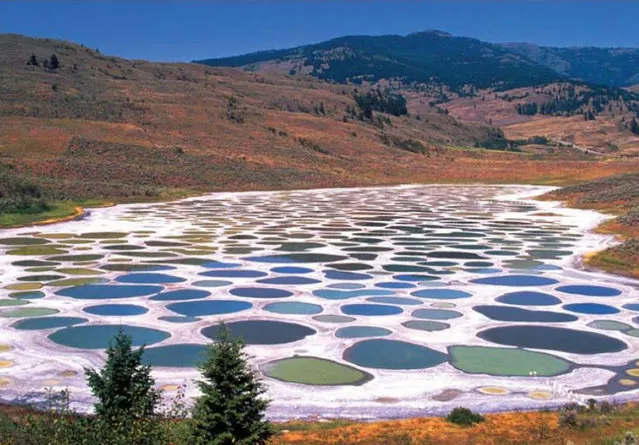
Kliluk, the Spotted Lake, Canada

Originally known to the First Nations of the Okanagan Valley as Khiluk, which was- and remains today revered as a sacred site producing therapeutic waters. During World War I the minerals of Spotted Lake were used in manufacturing ammunition. Later the area came under the control of the Ernest Smith Family, for a term of about 40 years. In 1979 Smith attempted to create interest in a spa at the lake. The First Nations responded with an effort to buy the lake; in October 2001 they finally struck a deal. First Nations arranged the purchase of 22 hectares of land for a total of $720,000, and contributed about 20% of the cost. The Indian Affairs Department paid the remainder.
Details
06 Mar 2015 12:59:00