Loading...
Done
M42 Subtle V1 cropped. One of the most well-known astronomical objects in our universe is the Orion Nebula and this image depicts the wider region of the Orion Molecular Cloud Complex that is its home. This complex also includes another popular target for astrophotographers, the Horsehead Nebula, as well as Barnard’s Loop and the Running Man Nebula, which can be seen to the left of this photograph. (Photo by Patrick Gilliland)

M42 Subtle V1 cropped. One of the most well-known astronomical objects in our universe is the Orion Nebula and this image depicts the wider region of the Orion Molecular Cloud Complex that is its home. This complex also includes another popular target for astrophotographers, the Horsehead Nebula, as well as Barnard’s Loop and the Running Man Nebula, which can be seen to the left of this photograph. (Photo by Patrick Gilliland)
Details
17 Nov 2015 08:05:00
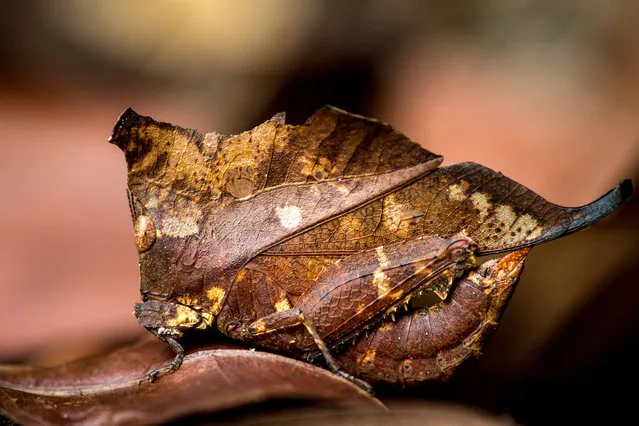
Dead leaf or almost by Guilhem Duvot. Taken in Nován Stráž, Slovakia. Describe what is pictured? A dead leaf grasshopper. How does this image fit with the theme of the competition? The perfect camouflage – nature is amazing. I saw the grasshopper only because it jumped. (Photo by Guilhem Duvot/Royal Society of Biology)

Dead leaf or almost by Guilhem Duvot. Taken in Nován Stráž, Slovakia. Describe what is pictured? A dead leaf grasshopper. How does this image fit with the theme of the competition? The perfect camouflage – nature is amazing. I saw the grasshopper only because it jumped. (Photo by Guilhem Duvot/Royal Society of Biology)
Details
10 Oct 2018 00:05:00
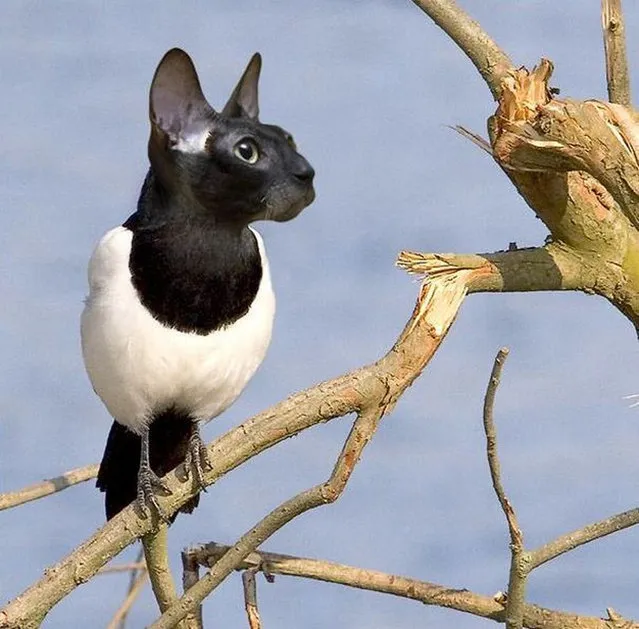
Impossible Animals By Jan Oliehoek. Part1

We’re showcasing photo-manipulation by Jan Oliehoek, a Dutch artist with a love for animals, photography and Photoshop. Oliehoek loves creating animal species that somehow never made it into our biology books, such as felines with rodent heads, lambs with the body of a squirrel, zebra rhinos and hippo-frogs! He’s currently having two of his pictures featured in Crazy Photography, an upcoming title from Vivays Publishing
Details
23 May 2013 11:34:00
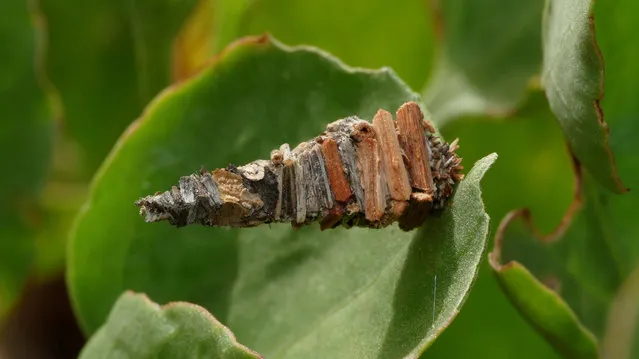
An undated handout photo made available by the Zerynthia Association shows the pupa of an amicta moneiba, a recently discovered species of moth endemic to La Gomera and El Hierro islands in the Canary Islands, Spain (issued 01 July 2020), as those two islands pulled apart from the rest of the Canary Islands 2.5 million years ago. The Institute of Evolutionary Biology of the Spanish National Research Council (CSIC) and the Zerynthia Association have recently discovered two new moth species in El Hierro and La Gomera. (Photo by Yeray Monasterio/Zerynthia/EPA/EFE)

An undated handout photo made available by the Zerynthia Association shows the pupa of an amicta moneiba, a recently discovered species of moth endemic to La Gomera and El Hierro islands in the Canary Islands, Spain (issued 01 July 2020), as those two islands pulled apart from the rest of the Canary Islands 2.5 million years ago. The Institute of Evolutionary Biology of the Spanish National Research Council (CSIC) and the Zerynthia Association have recently discovered two new moth species in El Hierro and La Gomera. (Photo by Yeray Monasterio/Zerynthia/EPA/EFE)
Details
11 Oct 2020 00:01:00
Garbage, including plastic waste, is seen at the beach of Costa del Este, in Panama City, on April 19, 2021. Every two weeks, Marine Biology students descend about five meters in the sea to take care of a coral nursery of the staghorn species (Acropora cervicornis) in Portobelo, Panama, with which they aim to restore reefs damaged by climate change and pollution, as part of the Reef2Reef project. (Photo by Luis Acosta/AFP Photo)

Garbage, including plastic waste, is seen at the beach of Costa del Este, in Panama City, on April 19, 2021. Every two weeks, Marine Biology students descend about five meters in the sea to take care of a coral nursery of the staghorn species (Acropora cervicornis) in Portobelo, Panama, with which they aim to restore reefs damaged by climate change and pollution, as part of the Reef2Reef project. (Photo by Luis Acosta/AFP Photo)
Details
21 Jun 2021 07:30:00
Thomas Thwaites of the United Kingdom accepts the 2016 Ig Nobel Prize in Biology for “creating prosthetic extensions of his limbs that allowed him to move in the manner of, and spend time roaming the hills in the company of, goats” during the 26th First Annual Ig Nobel Prize ceremony at Harvard University in Cambridge, Massachusetts, U.S. September 22, 2016. (Photo by Brian Snyder/Reuters)

Thomas Thwaites of the United Kingdom accepts the 2016 Ig Nobel Prize in Biology for “creating prosthetic extensions of his limbs that allowed him to move in the manner of, and spend time roaming the hills in the company of, goats” during the 26th First Annual Ig Nobel Prize ceremony at Harvard University in Cambridge, Massachusetts, U.S. September 22, 2016. (Photo by Brian Snyder/Reuters)
Details
24 Sep 2016 10:46:00
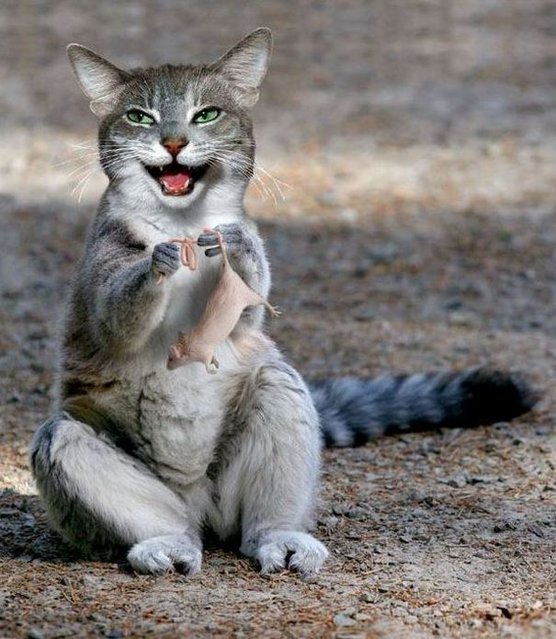
Impossible Animals By Jan Oliehoek. Part2

We’re showcasing photo-manipulation by Jan Oliehoek, a Dutch artist with a love for animals, photography and Photoshop. Oliehoek loves creating animal species that somehow never made it into our biology books, such as felines with rodent heads, lambs with the body of a squirrel, zebra rhinos and hippo-frogs! He’s currently having two of his pictures featured in Crazy Photography, an upcoming title from Vivays Publishing
Details
25 May 2013 11:56:00
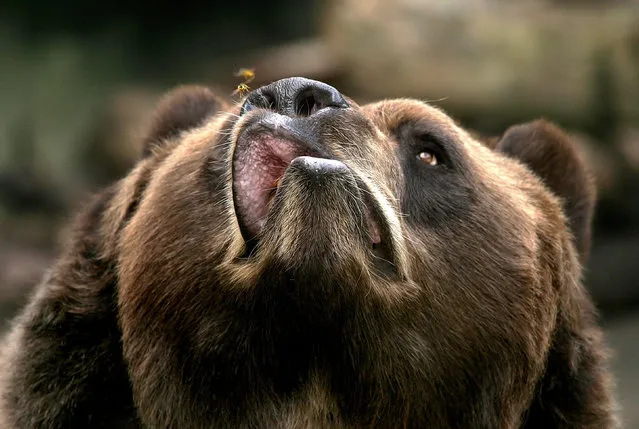
The Kodiak bear tries to chomp down on the main culprit) - These pictures capture the hilarious moment a cheeky little bee decides to pick on a grumpy bear. A massive Kodiak bear is finding this pesky bee a pain in the bear-hind as it buzzes around his head just out of reach. This incredible comedic moment was captured in the bear den at Buffalo Zoo. Terry Cervi from Buffalo, New York, U.S.A. saw this incredible sight on one of her regular visits to her local zoo. (Photo by Terry Cervi/Caters News)

These picture capture the hilarious moment a cheeky little bee decides to pick on a grumpy bear. A massive Kodiak bear is finding this pesky bee a pain in the bear-hind as it buzzes around his head just out of reach. This incredible comedic moment was captured in the bear den at Buffalo Zoo. Terry Cervi from Buffalo, New York, U.S.A. saw this incredible sight on one of her regular visits to her local zoo. (Photo by Terry Cervi/Caters News)
Details
14 Dec 2013 14:36:00