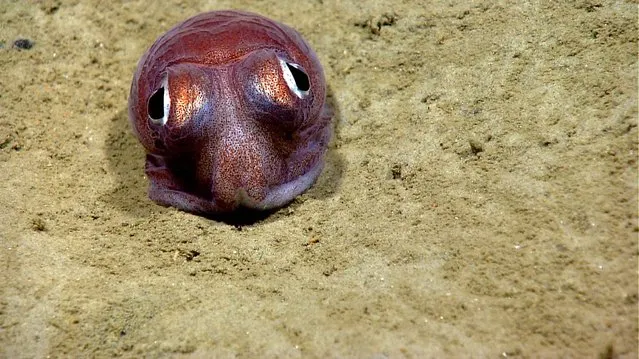
An octopus is filmed by the National Oceanic and Atmospheric Administration ship Okeanos Explorer and its robotic sub. (Photo by National Oceanic and Atmospheric Administration)
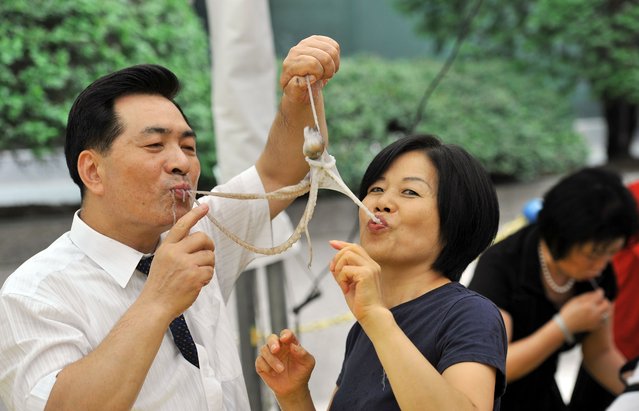
Live octopus is a delicacy in South Korea but is a known choking hazard, since the still-moving suction cups can cause tentacle pieces to stick in a person's throat. A baby octopus is often consumed whole, while larger varieties are cut up and the still-wriggling tentacles eaten with a splash of sesame oil. Photo: A South Korean man and a woman eat a live octopus during an event to promote a local food festival in Seoul on September 12, 2013. (Photo by Jung Yeon-Je/AFP Photo)
Underwater photographer of the year – winner. Dancing Octopus by Gabriel Barathieu (France). Location: Island of Mayotte, off the coast of south-east Africa. “Balletic and malevolent”, one judge said of this octopus, hunting in a lagoon. Barathieu waited until spring tides when there was just 30cm of water on the flats and plenty of light in the shallows. (Photo by Gabriel Barathieu/UPY2017)
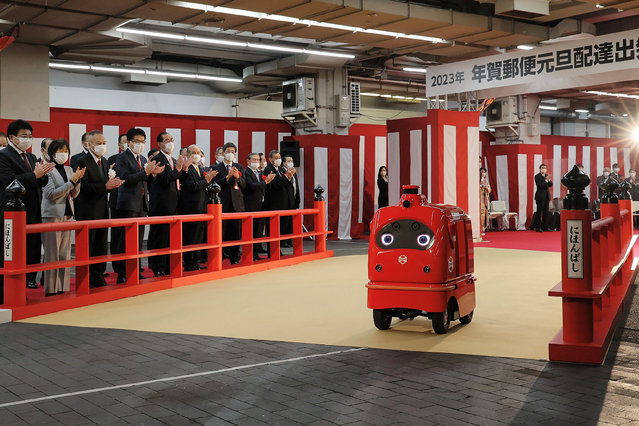
People applaud as a delivery robot departs from the Nihonbashi Post Office to deliver traditional New Year's Day cards, during a ceremony in Tokyo on January 1, 2023. (Photo by JIJI Press/AFP Photo)
US actress Tiffany Haddish attends a photocall for the film “The Card Counter” presented in competition during the 78th Venice Film Festival, on September 2, 2021 at Venice Lido. (Photo by Yara Nardi/Reuters)
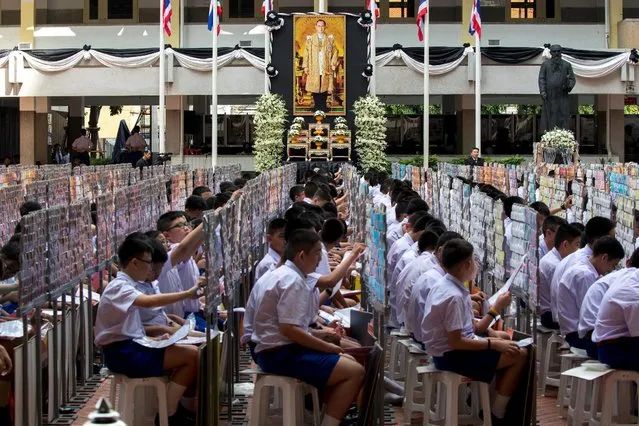
Some 1,250 students from the Assumption College flip their cards to form an image of Thailand's late King Bhumibol Adulyadej, in his honour, in Bangkok, Thailand, October 28, 2016. (Photo by Athit Perawongmetha/Reuters)
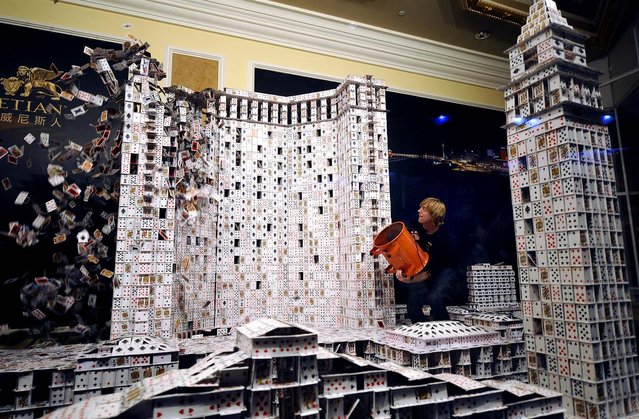
Bryan Berg was introduced to card-stacking by his grandfather at the age of 8. He is a self-taught artist in all of the techniques he uses today. Berg's freestanding card structures are based on a grid-like arrangement, which Berg tested in a structural engineering lab to support 660 lbs per square foot―using no tape, no glue, no folding, and no tricks.