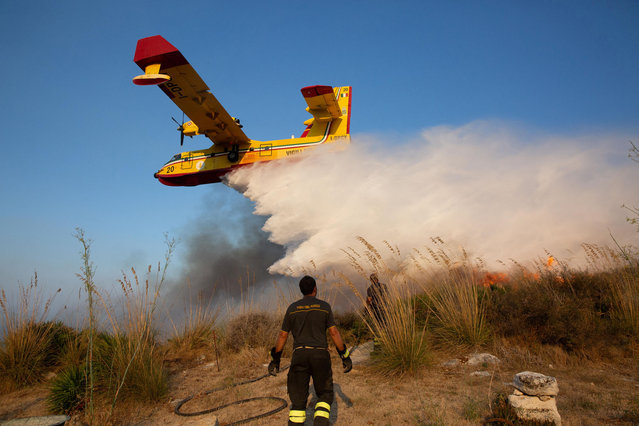
A fireman looks on as a Canadair aircraft drops water to extinguish a wildfire in Sicily's Trapani, Italy on August 27, 2023. (Photo by Antonio Cascio/Reuters)
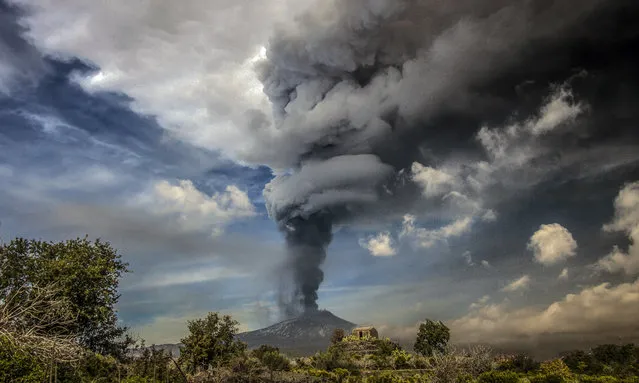
Smoke plumes rise from Mount Etna, one of the most active volcanoes in the world in Sicily, Italy on June 28, 2016. (Photo by Etna Walk/Rex Feature/Shutterstock)
Italy's Mount Etna, Europe's tallest and most active volcano, spews lava as it erupts on the southern island of Sicily, Italy, February 28, 2017. (Photo by Antonio Parrinello/Reuters)
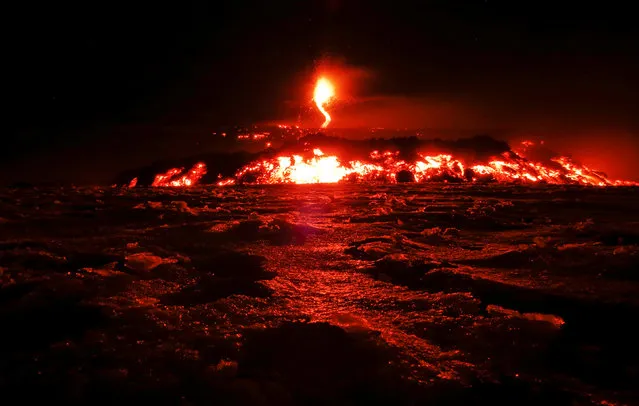
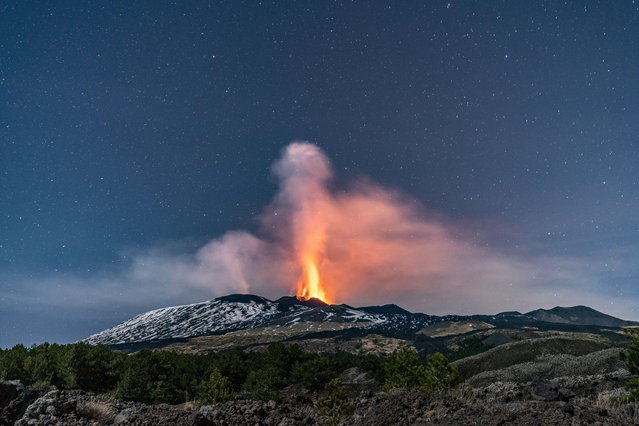
Lava gushes from the southern side crater of Mt. Etna, Europe's largest active volcano, near Catania, southern Italy Sicily, early Tuesday, May 25, 2021. (Photo by Salvatore Allegra/AP Photo)
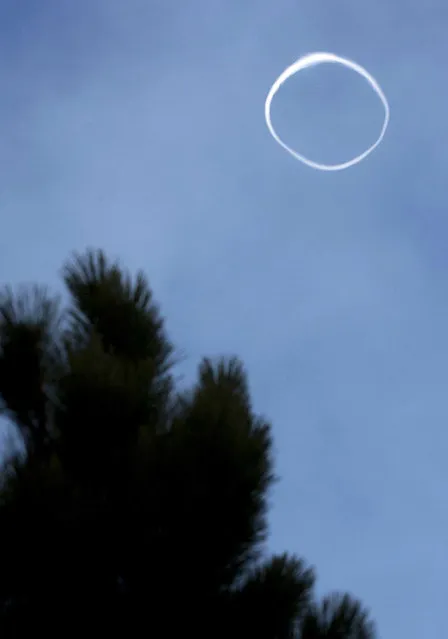
A round circle of smoke coming from the mouth of the Etna volcano is seen in the sky during an eruption on the southern Italian island of Sicily April 11, 2013. Mount Etna is Europe's tallest and most active volcano. (Photo by Antonio Parrinello/Reuters)
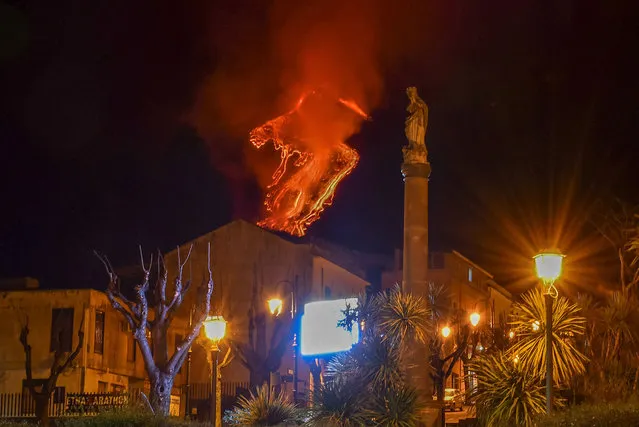
This photo taken late on February 21, 2021 in Milo, near Catania, Sicily, and obtained on February 22, 2021 from Italian news agency Ansa, shows lava flowing along the sides of the southern crater of the Etna volcano as a new eruptive episode of tall lava fountains, known as paroxysm, occurred. (Photo by ANSA/Handout via AFP Photo)
Mount Etna erupts in Sicily, Italy on February 21, 2021 sending plumes of ash and spewing lava into air. There was a major increase in volcanic activity that led to a paroxysmal event at the Southeast crater for the fourth time in the past six days. (Photo by Wead/Alamy Live News)
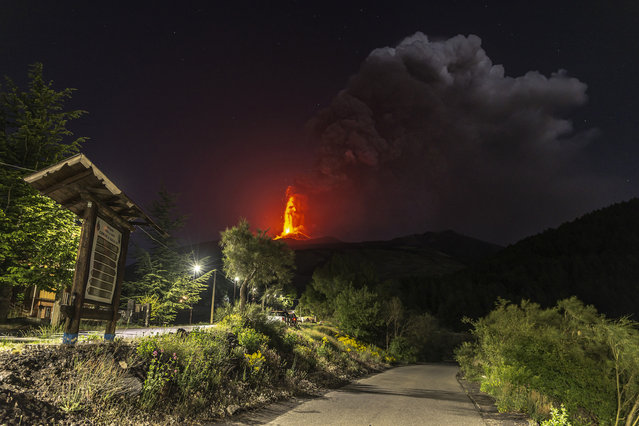
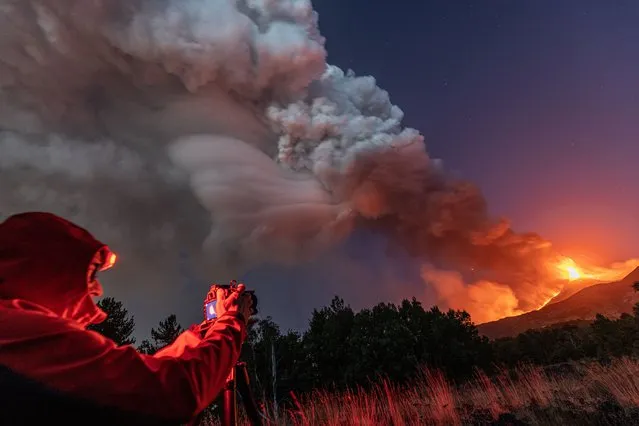
Smoke billows from the Mt Etna volcano as seen from Linguaglossa, Sicily on Monday, August 9, 2021. Europe's most active volcano remains active scattering ashes around a vastly populated area on its slopes. (Photo by Marco Restivo/Barcroft Media via Getty Images)