Loading...
Done
A file photograph dated 07 January 2006 and released by Greenpeace, showing the Yushin Maru, a factory ship in a Japanese whaling fleet, injuring a whale with it's first harpoon attempt. A UN court in The Hague on 31 March 2014 halted Japan's much-criticized whaling programme, ruling that it contravenes a 1986 moratorium on whale hunting. Japan must end its 'research whaling' programme, the International Court of Justice (ICJ) said. (Photo by Kate Davison/EPA)

A file photograph dated 07 January 2006 and released by Greenpeace, showing the Yushin Maru, a factory ship in a Japanese whaling fleet, injuring a whale with it's first harpoon attempt. A UN court in The Hague on 31 March 2014 halted Japan's much-criticized whaling programme, ruling that it contravenes a 1986 moratorium on whale hunting. Japan must end its 'research whaling' programme, the International Court of Justice (ICJ) said. Japan said the programme was for scientific research and permitted under international conventions. Australia had brought the case to the ICJ in 2010, charging that Japan was breaching international law by killing hundreds of whales every year for commercial purposes. Japan was “deeply disappointed” by the ruling, an unnamed government official was quoted by the Kyodo News agency as saying. But the official said Japan would stand by the ruling. (Photo by Kate Davison/EPA)
Details
01 Apr 2014 08:38:00
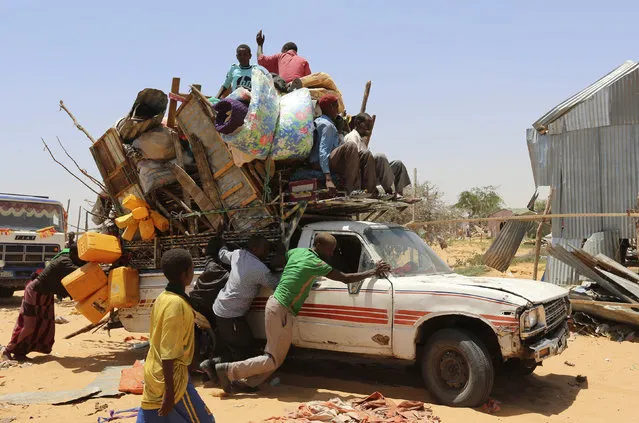
More than 6 billion people live in countries where serious levels of public sector corruption are fueling inequality and exploitation, according to Transparency International's 2015 index of perceived public sector corruption. The group's annual report measures perceptions of corruption due to the secrecy surrounding most corrupt dealings. Two thirds of the 168 countries assessed were identified as having a serious corruption problem. Somalia, which has been mired in conflict since civil war broke out in 1991, ranks bottom of the list. (Photo by Feisal Omar/Reuters)

More than 6 billion people live in countries where serious levels of public sector corruption are fueling inequality and exploitation, according to Transparency International's 2015 index of perceived public sector corruption. The group's annual report measures perceptions of corruption due to the secrecy surrounding most corrupt dealings. Two thirds of the 168 countries assessed were identified as having a serious corruption problem. Somalia, which has been mired in conflict since civil war broke out in 1991, ranks bottom of the list. (Photo by Feisal Omar/Reuters)
Details
13 May 2016 12:10:00
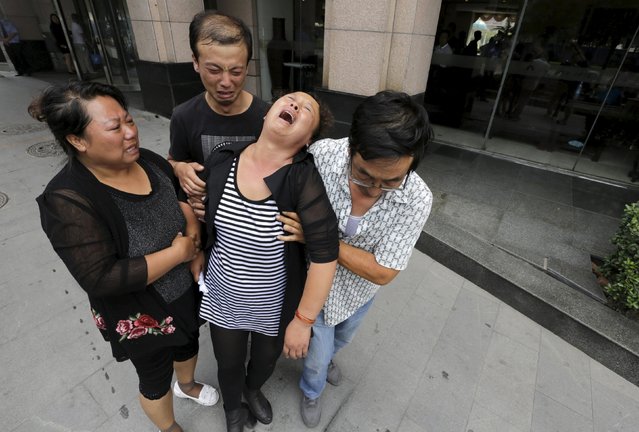
The mother (2nd R) of missing firefighter Xue Ning is helped by other family members as she cries outside the venue of a news conference after trying to demand for more information from government officials, following the explosions on Wednesday night at Binhai new district in Tianjin, China, August 15, 2015. (Photo by Jason Lee/Reuters)

The mother (2nd R) of missing firefighter Xue Ning is helped by other family members as she cries outside the venue of a news conference after trying to demand for more information from government officials, following the explosions on Wednesday night at Binhai new district in Tianjin, China, August 15, 2015. (Photo by Jason Lee/Reuters)
Details
16 Aug 2015 12:29:00
Patients from Rady Children's Hospital hug a bottlenose dolphin after being invited to swim and interact with dolphins at Sea World in San Diego, California  August 27, 2015. (Photo by Mike Blake/Reuters)

Patients from Rady Children's Hospital hug a bottlenose dolphin after being invited to swim and interact with dolphins at Sea World in San Diego, California August 27, 2015. Sea World has hosted Dolphin Interaction Program for seven years. It was started by dolphin trainer Joy Soto who battled and overcame non-Hodgkin’s lymphoma. (Photo by Mike Blake/Reuters)
Details
28 Aug 2015 12:19:00
Kawakanih Yawalapiti, 9, Upper Xingu region of Mato Grosso, Brazil, 2018: Kawakanih lives with her tribe, the Yawalapiti, in Xingu national park, a preserve in the Amazon basin of Brazil. The Yawalapiti collect seeds to preserve species unique to their ecosystem, which lies between the rain forest and savannah. Kawakanih’s diet is simple, consisting mainly of fish, cassava, porridge, fruit and nuts. “It takes five minutes to catch dinner”, says Kawakanih. “When you’re hungry, you just go to the river with your net”. (Photo by Gregg Segal/The Guardian)

Photographer Gregg Segal travelled the world to document children and the food they eat in a week. Partly inspired by the increasing problems of childhood obesity, he tracked traditional regional diets as yet unaffected by globalisation, and ironically, found that the healthiest diets were often eaten by the least well off. (Photo by Gregg Segal/The Guardian)
Details
03 Jul 2019 00:03:00
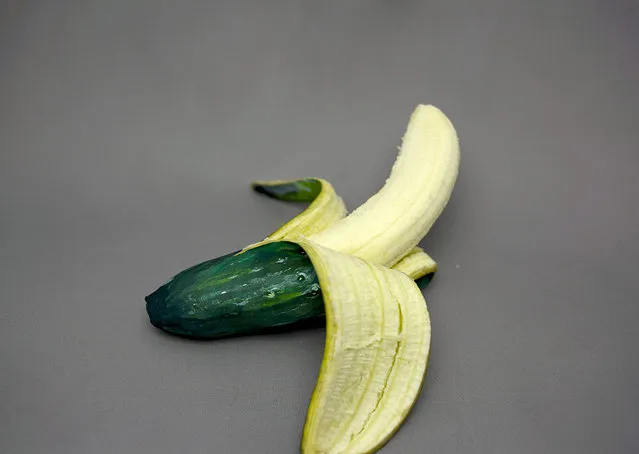
It’s Not What It Seems By Artist Hikaru Cho

Japanese artist Hikaru Cho is already well-known for her bizarre and realistic body paintings, but now the Tokyo-based artist has applied her talent to everyday food items as well. In her playful “It’s Not What It Seems” series, she turns common foods into other kinds of food using only acrylic paint and her extraordinary talent.
Details
22 Mar 2014 11:32:00
What Ali Wore By Zoe Spawton

Every morning at 9:05 AM sharp, a strikingly dapper octogenarian saunters by Zoe Spawton's coffee shop on his way to work in the Berlin borough of Neukölln. That man's name is Ali. He is an 83-year-old Turkish tailor who has been living in Germany for the past 44 years. He has 18 kids, and an impeccable sense of style.
Details
05 Apr 2013 10:44:00
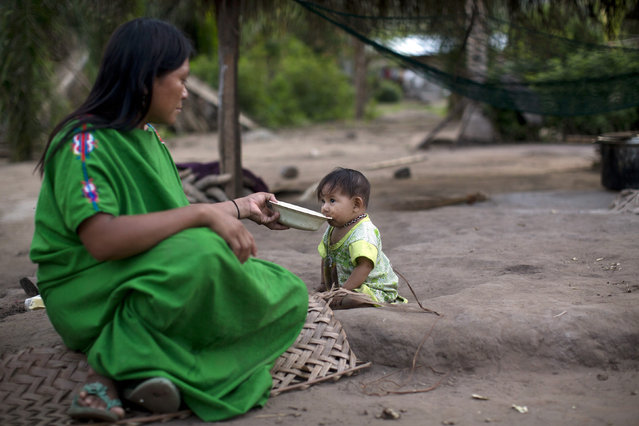
In this November 19, 2015 photo, Ester Melendez feeds banana porridge to her nine-month-old daughter Dina, in Pichiquia, an Ashaninka indigenous community in Peru's Junin region. Incursions and assaults by loggers, miners, colonists and leftist guerrillas have reduced the lands of the Ashaninka people in the Peruvian Amazon, leaving many of the 97,000 members of the group malnourished, despite efforts by the government and independent organizations to help. (Photo by Rodrigo Abd/AP Photo)

In this November 19, 2015 photo, Ester Melendez feeds banana porridge to her nine-month-old daughter Dina, in Pichiquia, an Ashaninka indigenous community in Peru's Junin region. Incursions and assaults by loggers, miners, colonists and leftist guerrillas have reduced the lands of the Ashaninka people in the Peruvian Amazon, leaving many of the 97,000 members of the group malnourished, despite efforts by the government and independent organizations to help. (Photo by Rodrigo Abd/AP Photo)
Details
10 Dec 2015 08:00:00