Loading...
Done


“Dog meat refers to edible parts and the flesh derived from (predominantly domestic) dogs. Human consumption of dog meat has been recorded in many parts of the world, including ancient China, ancient Mexico, and ancient Rome. According to contemporary reports, dog meat is consumed in a variety of countries such as Switzerland, China, Vietnam, the Philippines, and Korea. In addition, dog meat has also been used as survival food in times of war and/or other hardships”. – Wikipedia

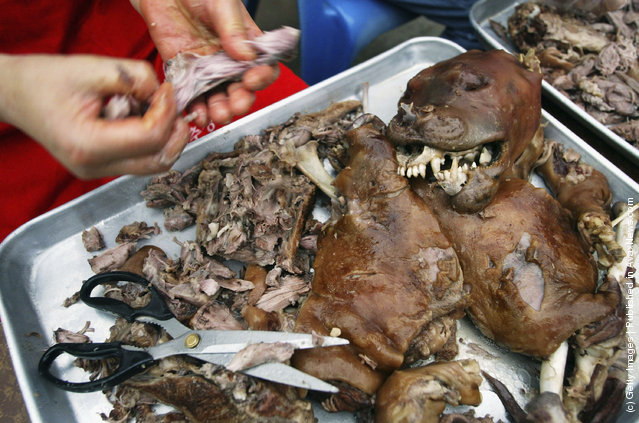
Photo: A chef prepares dog meat at a restaurant on July 4, 2005 in Gwacheon, South Korea. Dog meat is a traditional dish in Korea dating back to the Samkuk period (period of the three kingdoms BC 57 – AD 668). Although many recipes existed historically for dog meat, now chefs only make soups, or dishes using boiled or roasted meat. Koreans traditionally eat dog meat on the hottest day of the summer, for it's reputed benefits of virility, invigoration and health. (Photo by Chung Sung-Jun/Getty Images)
Details
24 Jul 2011 13:21:00
Colorful Illustrations By Rlon Wang

Through his series entitled Impetuous World Life, the Chinese artist and illustrator Rlon Wang, based in Shenzhen, reveals some beautiful and colorful illustrations inspired by nature and wildlife, playing with talent with the aesthetics and strength of ancient Japanese and Chinese prints.
Details
22 Aug 2015 14:59:00
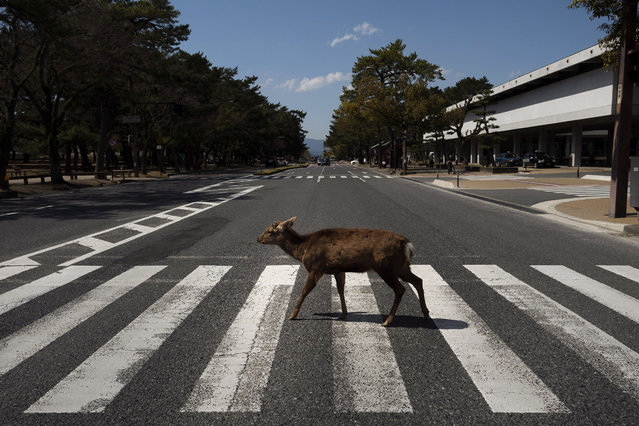
A deer walks across a pedestrian crossing in Nara, Japan, Thursday, March 19, 2020. More than 1,000 deer roam free in the ancient capital city of Japan. Despite the town's tourism decline, these wild animals are doing just fine without treats from tourists, according to a deer protection group. (Photo by Jae C. Hong/AP Photo)

A deer walks across a pedestrian crossing in Nara, Japan, Thursday, March 19, 2020. More than 1,000 deer roam free in the ancient capital city of Japan. Despite the town's tourism decline, these wild animals are doing just fine without treats from tourists, according to a deer protection group. (Photo by Jae C. Hong/AP Photo)
Details
31 Mar 2020 00:01:00
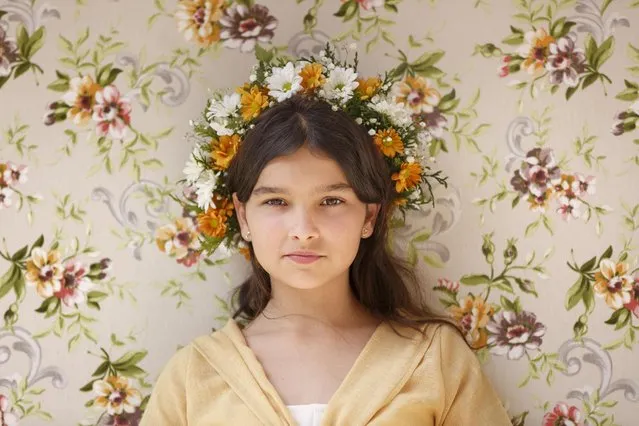
A “Maya” girl sits in an altar during the traditional celebration of “Las Mayas” on the streets in Madrid, Spain Sunday, May 10, 2015. The festivity of the Maya comes from pagan rites and dates from the medieval age, appearing in ancient documents. It takes place every year in the beginning of May and celebrates the beginning of the spring. (Photo by Daniel Ochoa de Olza/AP Photo)

A “Maya” girl sits in an altar during the traditional celebration of “Las Mayas” on the streets in Madrid, Spain Sunday, May 10, 2015. The festivity of the Maya comes from pagan rites and dates from the medieval age, appearing in ancient documents. It takes place every year in the beginning of May and celebrates the beginning of the spring. Girls between 7 and 11 years old are chosen as “Maya” and should sit still, serious and quiet for a couple of hours in altars on the street decorated with flowers and plants and afterwards they walk to the church with their family where they attend a ceremony. (Photo by Daniel Ochoa de Olza/AP Photo)
Details
14 May 2015 11:12:00
A Syrian rebel walks past Sham 2, a homemade armored vehicle, in Bishqatin, Syria, on December 8, 2012. From a distance it looks rather like a big rusty metal box but closer inspection reveals a homemade armored vehicle waiting to be deployed. Sham II, named after ancient Syria, is built from the chassis of a car and touted by rebels as “100 percent made in Syria”. (Photo by Herve Bar/AFP Photo)

A Syrian rebel walks past Sham 2, a homemade armored vehicle, in Bishqatin, Syria, on December 8, 2012. From a distance it looks rather like a big rusty metal box but closer inspection reveals a homemade armored vehicle waiting to be deployed. Sham II, named after ancient Syria, is built from the chassis of a car and touted by rebels as “100 percent made in Syria”. (Photo by Herve Bar/AFP Photo)
Details
03 Sep 2013 09:30:00
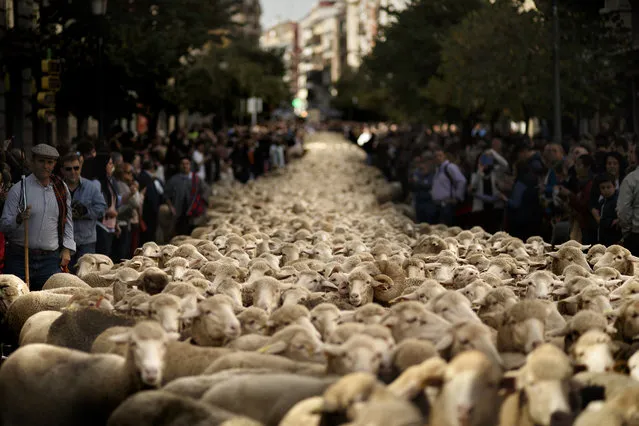
Shepherds lead their sheep through the centre of Madrid, Spain, Sunday, October 25, 2015. Shepherds have guided a flock of 2,000 sheep through Madrid streets in defense of ancient grazing, droving and migration rights increasingly threatened by urban sprawl and modern agricultural practices. Photo by Daniel Ochoa de Olza/AP Photo)

Shepherds lead their sheep through the centre of Madrid, Spain, Sunday, October 25, 2015. Shepherds have guided a flock of 2,000 sheep through Madrid streets in defense of ancient grazing, droving and migration rights increasingly threatened by urban sprawl and modern agricultural practices. Tourists and city-dwellers were surprised to see the capital's traffic cut to permit the ovine parade to bleat bells clanking its way past the city's most emblematic locations. (Photo by Daniel Ochoa de Olza/AP Photo)
Details
28 Oct 2015 08:02:00
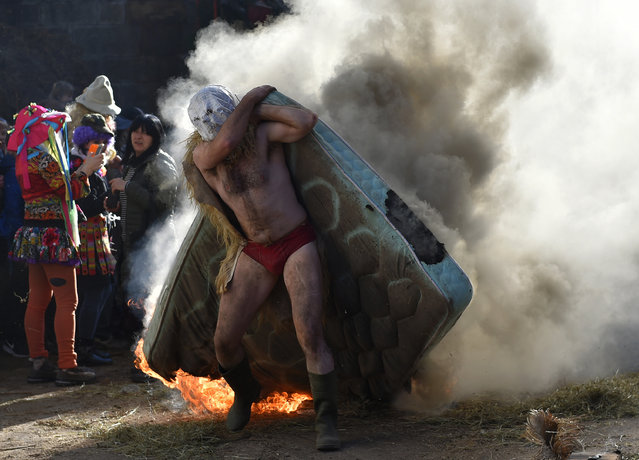
A masked participant carries a burning matress during the ancient carnival of Zubieta, in the northern Spanish Navarra province on January 30, 2018. The yearly three day festivities, revolving mainly around agriculture and principally sheep hearding, run on the last Sunday, Monday and Tuesday of January where Navarra Valley locals from two villages dress up and participate in a variety of activites as they perform a pilgrimage through each village. (Photo by Ander Gillenea/AFP Photo)

A masked participant carries a burning matress during the ancient carnival of Zubieta, in the northern Spanish Navarra province on January 30, 2018. The yearly three day festivities, revolving mainly around agriculture and principally sheep hearding, run on the last Sunday, Monday and Tuesday of January where Navarra Valley locals from two villages dress up and participate in a variety of activites as they perform a pilgrimage through each village. (Photo by Ander Gillenea/AFP Photo)
Details
01 Feb 2018 08:52:00
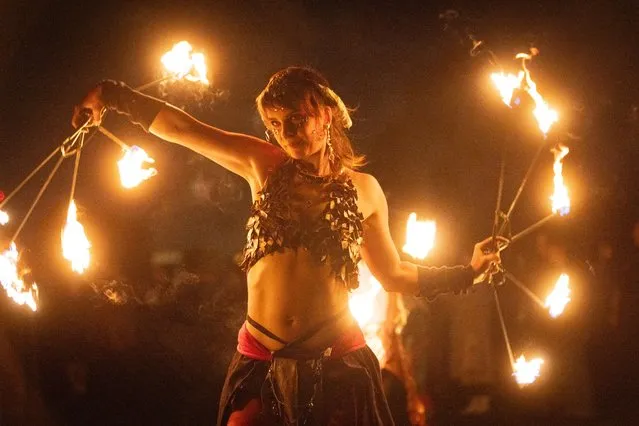
Members of the Beltane Fire Society take part in Samhuinn Fire Festival on October 31, 2023 in Edinburgh, Scotland. Once celebrated from October 31 to November 1 by ancient Celts, Samhain, pronounced “SOW-in” or “SAH-win”, marked the shift from the brighter to the darker half of the year and was seen as a time when the boundary between the physical and spirit worlds was thought to weaken, influencing the development of contemporary Halloween customs. (Photo by Murdo MacLeod/The Guardian)

Members of the Beltane Fire Society take part in Samhuinn Fire Festival on October 31, 2023 in Edinburgh, Scotland. Once celebrated from October 31 to November 1 by ancient Celts, Samhain, pronounced “SOW-in” or “SAH-win”, marked the shift from the brighter to the darker half of the year and was seen as a time when the boundary between the physical and spirit worlds was thought to weaken, influencing the development of contemporary Halloween customs. (Photo by Murdo MacLeod/The Guardian)
Details
16 Nov 2023 05:16:00