Loading...
Done
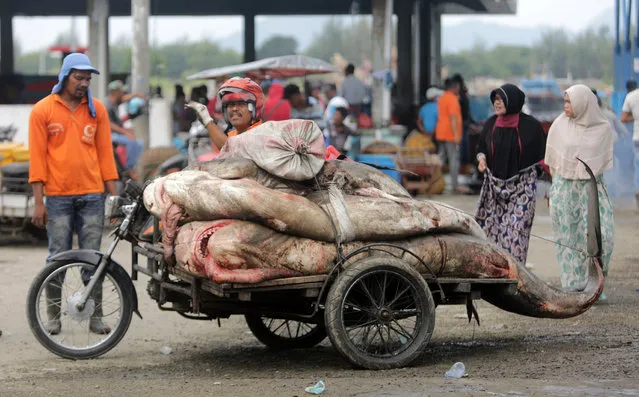
Fisherman transport sharks to the fish market in the traditional fishing port in Banda Aceh, Indonesia, 26 August 2020. According to media reports, the marine and fisheries sector is considered as one of the affected by the coronavirus pandemic, affecting more than 3.5 million fishermen and all sectors working throughout the supply chain. (Photo by Hotli Simanjuntak/EPA/EFE)

Fisherman transport sharks to the fish market in the traditional fishing port in Banda Aceh, Indonesia, 26 August 2020. According to media reports, the marine and fisheries sector is considered as one of the affected by the coronavirus pandemic, affecting more than 3.5 million fishermen and all sectors working throughout the supply chain. (Photo by Hotli Simanjuntak/EPA/EFE)
Details
11 Sep 2020 00:05:00
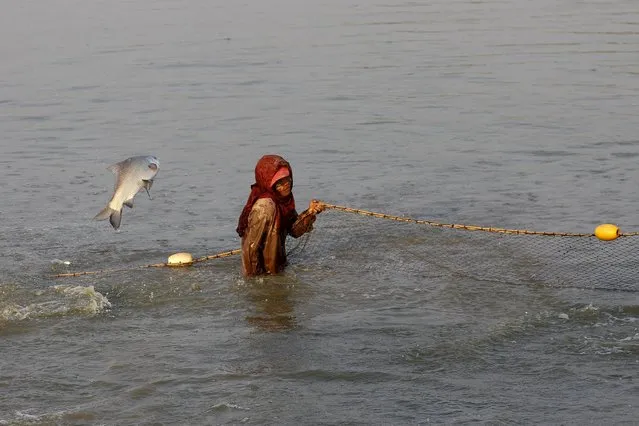
A fish jumps over a net as a boy works in a fish farm at Htantapin township, outside Yangon, Myanmar February 18, 2016. (Photo by Soe Zeya Tun/Reuters)

A fish jumps over a net as a boy works in a fish farm at Htantapin township, outside Yangon, Myanmar February 18, 2016. One in five children in Myanmar aged 10-17 go to work instead of school, according to figures from a census report on employment published last month, and the opening up of the economy since 2011 has triggered a spike in demand for labour. Many children work in fish farming and processing. At Yangon's San Pya fish market, the country's largest, girls and boys as young as nine clean and process fish and unload boats and trucks during 12-hour overnight shifts. (Photo by Soe Zeya Tun/Reuters)
Details
20 Apr 2016 12:18:00
Mimmo Paladino

"La Montagna di Sale (The Salt Mountain)" by Mimmo Paladino is displayed in Piazza Duomo on April 5, 2011 in Milan, Italy.
Details
05 Apr 2011 17:00:00
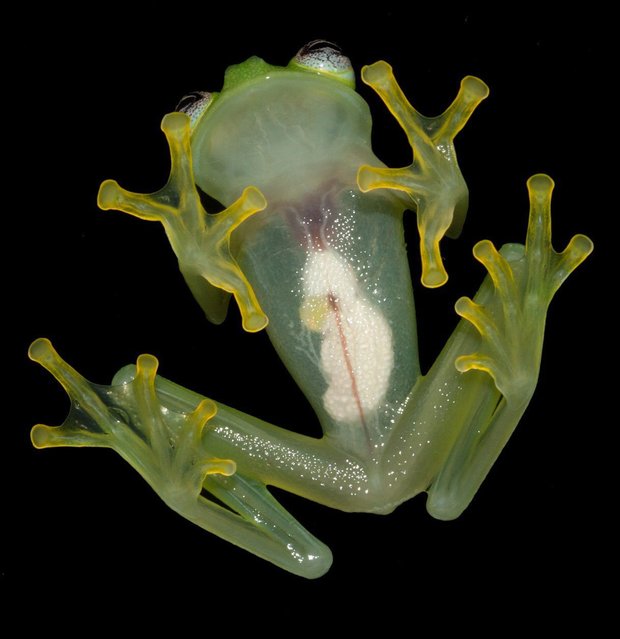
A handout photograph provided by Brian Kubicki of Costa Rican Amphibian Research Center on 26 April 2016 shows a “Crystal frog”, Hyalinobatrachium dianae (H. diane). This frog was discovered by US biologist Brian Kubicki and Costa Ricans Stanley Salazar and Robert Puschendorf in a rainy forest of Costa Rican caribbean after 40 years without notice of any new example of this kind. (Photo by Brian Kubicki/EPA/Costa Rican Amphibian Research Center)

A handout photograph provided by Brian Kubicki of Costa Rican Amphibian Research Center on 26 April 2016 shows a “Crystal frog”, Hyalinobatrachium dianae (H. diane). This frog was discovered by US biologist Brian Kubicki and Costa Ricans Stanley Salazar and Robert Puschendorf in a rainy forest of Costa Rican caribbean after 40 years without notice of any new example of this kind. (Photo by Brian Kubicki/EPA/Costa Rican Amphibian Research Center)
Details
02 May 2015 15:23:00
Dutch cyclist Fabio Jakobsen's bicycle (behind, L) flies through the air as he collides with compatriot Dylan Groenewegen (on the ground, L) during the opening stage of the Tour of Poland race in Katowice, southern Poland on August 5, 2020. The Dutch rider was fighting for his life on Wednesday after he was thrown into and over a barrier at 80km/h in a sickening conclusion to the opening stage of the Tour of Poland. (Photo by Szymon Gruchalski/Forum/AFP Photo)

Dutch cyclist Fabio Jakobsen's bicycle (behind, L) flies through the air as he collides with compatriot Dylan Groenewegen (on the ground, L) during the opening stage of the Tour of Poland race in Katowice, southern Poland on August 5, 2020. The Dutch rider was fighting for his life on Wednesday after he was thrown into and over a barrier at 80km/h in a sickening conclusion to the opening stage of the Tour of Poland. (Photo by Szymon Gruchalski/Forum/AFP Photo)
Details
10 Aug 2020 00:03:00
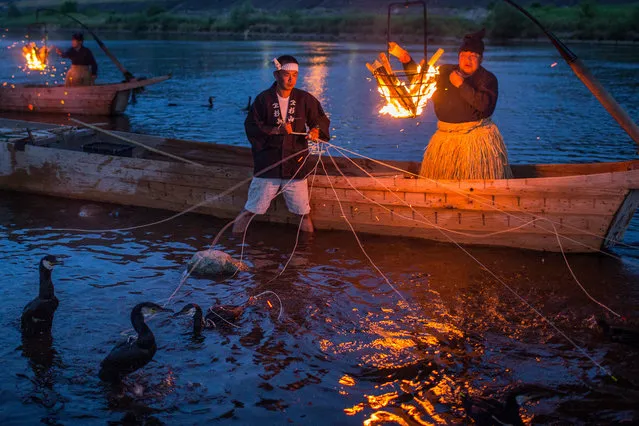
Cormorant masters and boatmen prepare sea cormorants for the nights “Ukai” on July 2, 2014 in Gifu, Japan. In this traditional fishing art “ukai”, a cormorant master called “usho” manages cormorants to capture ayu or sweetfish. The ushos of River Nagara have been the official staff of the Imperial Household Agency of Japan since 1890. Currently six imperial fishermen of Nagara River conduct special fishing to contribute to the Imperial family eight times a year, on top of daily fishing from mid-May to mid-October. (Photo by Chris McGrath/Getty Images)

Cormorant masters and boatmen prepare sea cormorants for the nights “Ukai” on July 2, 2014 in Gifu, Japan. In this traditional fishing art “ukai”, a cormorant master called “usho” manages cormorants to capture ayu or sweetfish. The ushos of River Nagara have been the official staff of the Imperial Household Agency of Japan since 1890. Currently six imperial fishermen of Nagara River conduct special fishing to contribute to the Imperial family eight times a year, on top of daily fishing from mid-May to mid-October. (Photo by Chris McGrath/Getty Images)
Details
04 Jul 2014 09:41:00
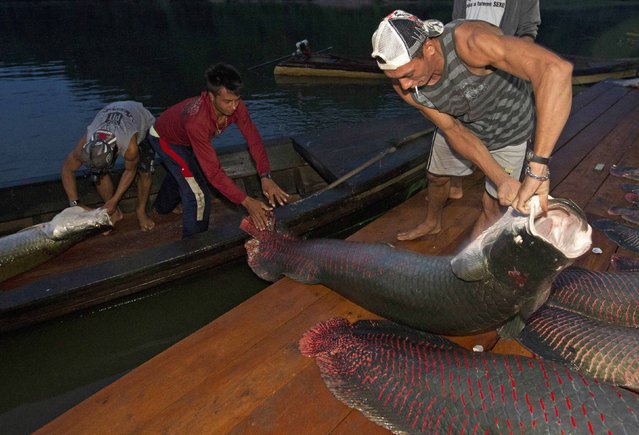
Villagers from the Medio Jurua nature reserve of Brazil's Amazon rainforest arrive with their catch of pirarucus, the largest freshwater fish in South America, after a night of fishing in Manaria Lake, Carauari municipality, September 3, 2012. Catching the pirarucu, a fish that is sought after for its meat and is considered by biologists to be a living fossil, is only allowed once a year by Brazil's environmental protection agency. (Photo by Bruno Kelly/Reuters)

Villagers from the Medio Jurua nature reserve of Brazil's Amazon rainforest arrive with their catch of pirarucus, the largest freshwater fish in South America, after a night of fishing in Manaria Lake, Carauari municipality, September 3, 2012. Catching the pirarucu, a fish that is sought after for its meat and is considered by biologists to be a living fossil, is only allowed once a year by Brazil's environmental protection agency. (Photo by Bruno Kelly/Reuters)
Details
19 Jul 2013 08:53:00
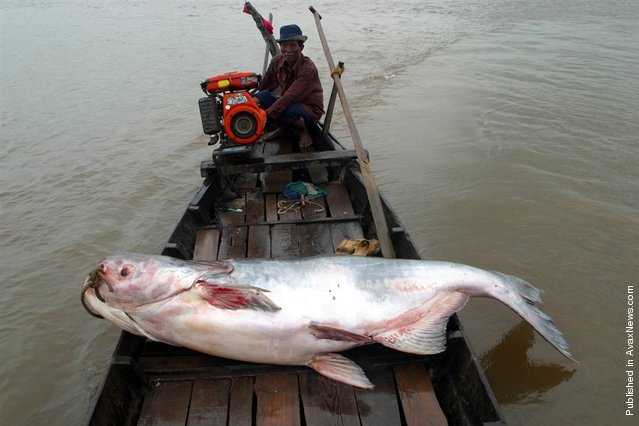
Among the fish populations that could be harmed by the Xayaburi dam in Laos is the critically endangered Mekong giant catfish, considered by the Guinness Book of World Records to be the world’s largest freshwater fish. The fish, which grows to 650 pounds and about 10 feet long, is only found in the Mekong River. It is migratory, moving between downstream habitats in Cambodia upstream to northern Thailand and Laos each year to spawn. Some experts fear the Xayaburi dam could block the migration and drive the giant catfish to extinction

Among the fish populations that could be harmed by the Xayaburi dam in Laos is the critically endangered Mekong giant catfish, considered by the Guinness Book of World Records to be the world’s largest freshwater fish. The fish, which grows to 650 pounds and about 10 feet long, is only found in the Mekong River. It is migratory, moving between downstream habitats in Cambodia upstream to northern Thailand and Laos each year to spawn. Some experts fear the Xayaburi dam could block the migration and drive the giant catfish to extinction. (Photo by Courtesy of Zeb Hogan/University of Nevada, Reno)
Details
20 Apr 2012 13:10:00