Loading...
Done
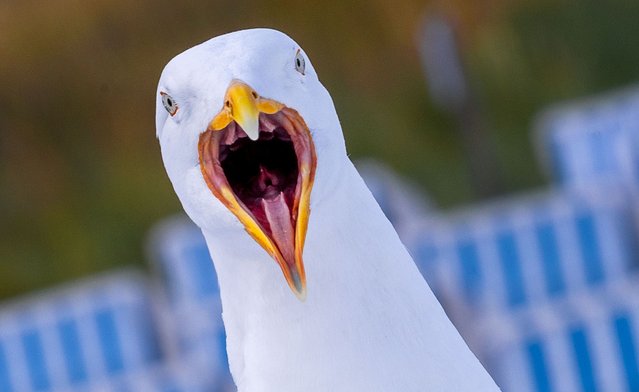
A gull gives its familiar cry on the roof of a beach bar on the Baltic coast on July 16, 2024. (Photo by Jens Büttner/dpa)

A gull gives its familiar cry on the roof of a beach bar on the Baltic coast on July 16, 2024. (Photo by Jens Büttner/dpa)
Details
28 Jul 2024 04:59:00
This photo taken on February 10, 2025 shows a captured green iguana being held by hunters after it was brought down by a slingshot in Pingtung. Taiwan's iguana population has exploded since the spikey-backed giant lizards were introduced from Central and South America more than 20 years ago as exotic pets. Many escaped or were dumped by their owners and have bred rapidly in the warm climate of southern Taiwan, invading neighbourhoods and ravaging farmers' crops. (Photo by I-Hwa Cheng/AFP Photo)

This photo taken on February 10, 2025 shows a captured green iguana being held by hunters after it was brought down by a slingshot in Pingtung. Taiwan's iguana population has exploded since the spikey-backed giant lizards were introduced from Central and South America more than 20 years ago as exotic pets. Many escaped or were dumped by their owners and have bred rapidly in the warm climate of southern Taiwan, invading neighbourhoods and ravaging farmers' crops. (Photo by I-Hwa Cheng/AFP Photo)
Details
02 Mar 2025 04:03:00
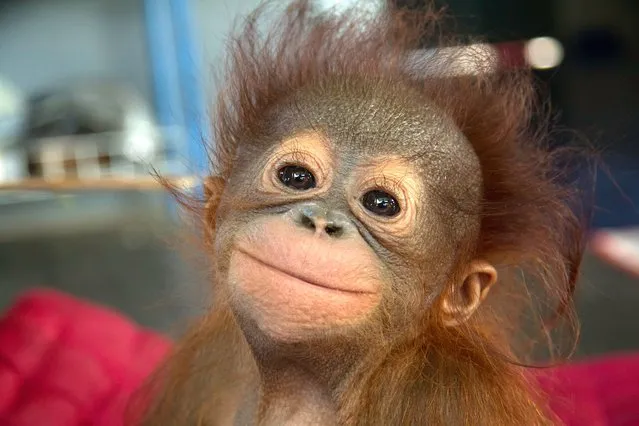
Meet the star students of orangutan school – the unique rehab centre where orphaned apes are taught how to climb trees and survive in the wild without their mum and dad. (Photo by Caters News)

Meet the star students of orangutan school – the unique rehab centre where orphaned apes are taught how to climb trees and survive in the wild without their mum and dad. (Photo by Caters News)
Details
23 Jun 2014 12:09:00
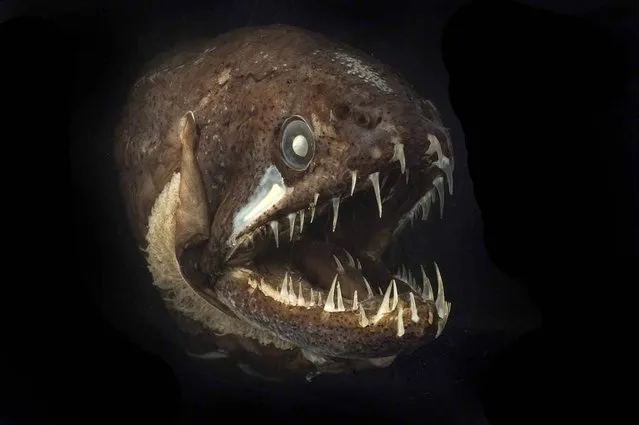
Imagine living in the sea where it is permanently dark, cold, and food is hard to find. For many animals at depth, it may be weeks to months between meals. If you find something to eat, you have to hang on to it

Imagine living in the sea where it is permanently dark, cold, and food is hard to find. For many animals at depth, it may be weeks to months between meals. If you find something to eat, you have to hang on to it. This is why so many deep-sea fishes have lots of big teeth. This dragonfish, spotted off the coast of Australia, even has teeth on its tongue. They would be terrifying animals ... if they weren’t the size of a banana. (Photo by Julian Finn/Museum Victoria)
Details
21 May 2012 12:14:00
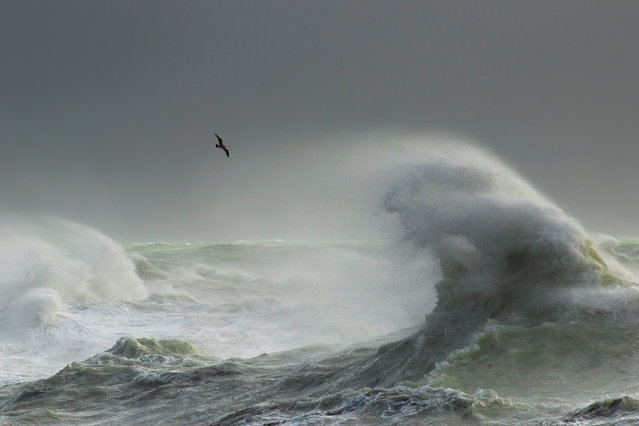
Coast and marine winner: Storm Gull (Lesser black-backed gull), New Haven, East Sussex. (Photo by Craig Denford/British Wildlife Photography Awards)

Coast and marine winner: Storm Gull (Lesser black-backed gull), New Haven, East Sussex. (Photo by Craig Denford/British Wildlife Photography Awards)
Details
07 Nov 2018 00:05:00
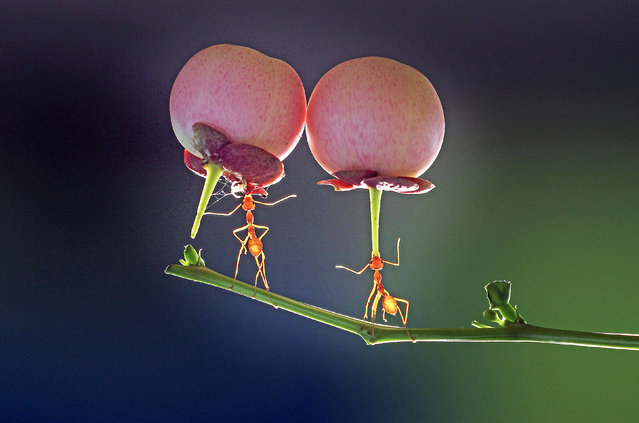
The strength of a weaver ant carrying fruit in Indonesia in the last decade of August 2024 is equivalent to the average man or woman picking up a minibus. (Photo by Ridho Arifuddin/Solent News)

The strength of a weaver ant carrying fruit in Indonesia in the last decade of August 2024 is equivalent to the average man or woman picking up a minibus. (Photo by Ridho Arifuddin/Solent News)
Details
20 Oct 2024 00:25:00
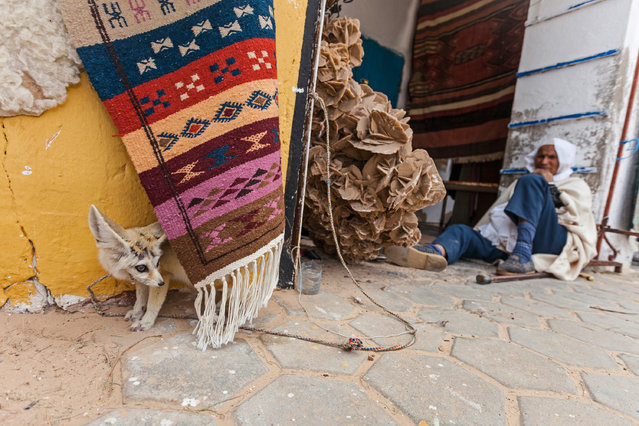
Sultan, a famous captive fennec that is displayed tied on a rope in front of a tourist shop, is the main attraction in the souk of Douz, a desert town in Tunisia. By the display of such a charismatic animal, tourists are often lured to buy things or pay for pictures. On inquiry, although Sultan has been caught as a pup in the wild, the owners of the shop reassure the foreigners stating that the animal is ‘domestic’. (Photo by Bruno D’Amicis/Fritz Pölking Prize/GDT EWPY 2015)

Sultan, a famous captive fennec that is displayed tied on a rope in front of a tourist shop, is the main attraction in the souk of Douz, a desert town in Tunisia. By the display of such a charismatic animal, tourists are often lured to buy things or pay for pictures. On inquiry, although Sultan has been caught as a pup in the wild, the owners of the shop reassure the foreigners stating that the animal is ‘domestic’. (Photo by Bruno D’Amicis/Fritz Pölking Prize/GDT EWPY 2015)
Details
23 Nov 2015 08:02:00
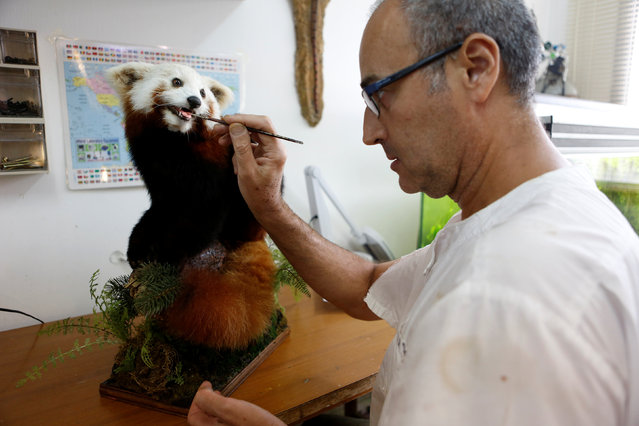
Igor Gavrilov, the main taxidermist of the Zoological centre at Tel Aviv University, works on a taxidermied animal, part of a collection which will be housed at the Steinhardt Museum of Natural History, a new Israeli natural history museum set to open next year in Tel Aviv, Israel June 8, 2016. Legions of insects, sea creatures and ancient fossils are lining up in a new museum shaped liked a giant Noah's Ark, telling the story of a crucial evolutionary byway across Israel. Experts say all humans and other animals had to pass through Israel on their first journey out of Africa into Europe and Asia. (Photo by Nir Elias/Reuters)

Igor Gavrilov, the main taxidermist of the Zoological centre at Tel Aviv University, works on a taxidermied animal, part of a collection which will be housed at the Steinhardt Museum of Natural History, a new Israeli natural history museum set to open next year in Tel Aviv, Israel June 8, 2016. Legions of insects, sea creatures and ancient fossils are lining up in a new museum shaped liked a giant Noah's Ark, telling the story of a crucial evolutionary byway across Israel. (Photo by Nir Elias/Reuters)
Details
25 Aug 2016 09:42:00