Loading...
Done
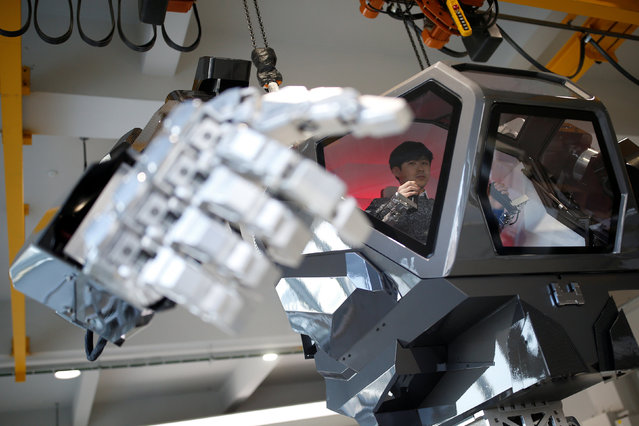
An employee controls the arms of a manned biped walking robot “METHOD-2” during a demonstration in Gunpo, South Korea, December 27, 2016. (Photo by Kim Hong-Ji/Reuters)

An employee controls the arms of a manned biped walking robot “METHOD-2” during a demonstration in Gunpo, South Korea, December 27, 2016. It stands 13-feet (3,96 m) tall, weighs 1.3 tons and wields a pair of 286-pound (129,73 kg), motion-tracking metal arms. (Photo by Kim Hong-Ji/Reuters)
Details
28 Dec 2016 07:04:00
A member of the Revolutionary Armed Forces of Colombia (FARC) pose for a picture at a camp in the Colombian mountains on February 2005. (Photo by Frank Piasecki Poulsen)

A member of the Revolutionary Armed Forces of Colombia (FARC) pose for a picture at a camp in the Colombian mountains on February 2005. (Photo by Frank Piasecki Poulsen)
Details
29 Sep 2016 08:51:00
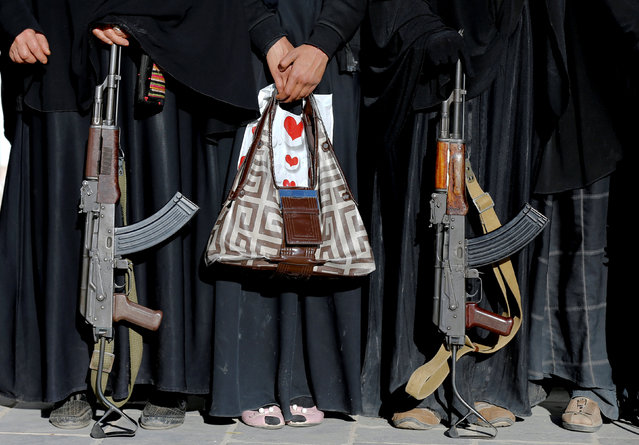
Armed women attend a rally to show support to the Houthi movement in Sanaa, Yemen January 13, 2018. (Photo by Khaled Abdullah/Reuters)

Armed women attend a rally to show support to the Houthi movement in Sanaa, Yemen January 13, 2018. (Photo by Khaled Abdullah/Reuters)
Details
14 Jan 2018 08:34:00
Kazakh troops march during a parade of the armed forces to mark the Defender of the Fatherland Day in Astana, May 7, 2014. (Photo by Mukhtar Kholdorbekov/Reuters)

Kazakh troops march during a parade of the armed forces to mark the Defender of the Fatherland Day in Astana, May 7, 2014. (Photo by Mukhtar Kholdorbekov/Reuters)
Details
24 Sep 2014 12:31:00
Ceramic Poppies Surround the Tower of London

To commemorate the centennial of Britain’s involvement in the First World War, ceramic artist Paul Cummins and stage designer Tom Piper conceived of a staggering installation of ceramic poppies planted in the famous dry moat around the Tower of London. Titled “Blood Swept Lands and Seas of Red,” the final work will consist of 888,246 red ceramic flowers—each representing a British or Colonial military fatality—that flow through grounds around the tower.
Details
04 Mar 2015 11:47:00
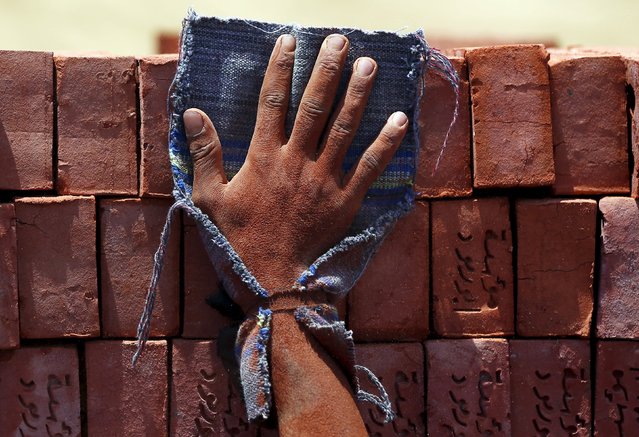
A hand of a labourer pushes bricks at a traditional brick factory in Arab Mesad district of Helwan, northeast of Cairo, May 14, 2015. (Photo by Amr Abdallah Dalsh/Reuters)

A hand of a labourer pushes bricks at a traditional brick factory in Arab Mesad district of Helwan, northeast of Cairo, May 14, 2015. About 45 labourers are employed at the brick factory and most work 10 hours a day. Adult workers earn a daily wage of 70 Egyptian pounds ($9) and child workers earn 40 Egyptian pounds ($5). The labourers, who are usually temporary or seasonally employed in Egypt's brick-making industry, experience unsafe work conditions, according to local media. (Photo by Amr Abdallah Dalsh/Reuters)
Details
19 May 2015 11:37:00
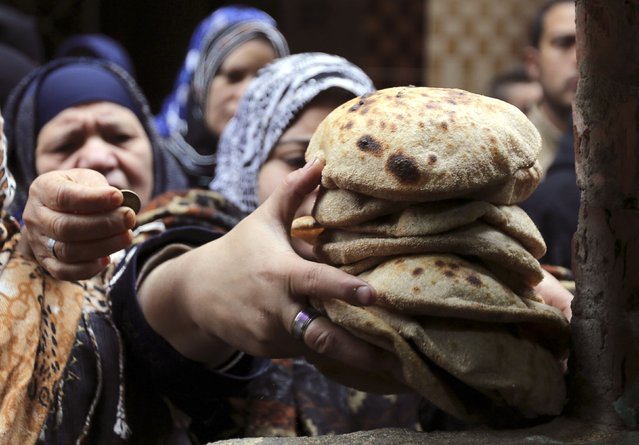
A woman buys bread at a bakery in Cairo, January 8, 2015. The successful roll-out so far of a new “smart card” system to distribute subsidised bread has been a major achievement for Egypt's government, saving money while earning praise from families who no longer have to wake early to fight for loaves. (Photo by Mohamed Abd El Ghany/Reuters)

A woman buys bread at a bakery in Cairo, January 8, 2015. The successful roll-out so far of a new “smart card” system to distribute subsidised bread has been a major achievement for Egypt's government, saving money while earning praise from families who no longer have to wake early to fight for loaves. (Photo by Mohamed Abd El Ghany/Reuters)
Details
13 Jan 2015 14:35:00
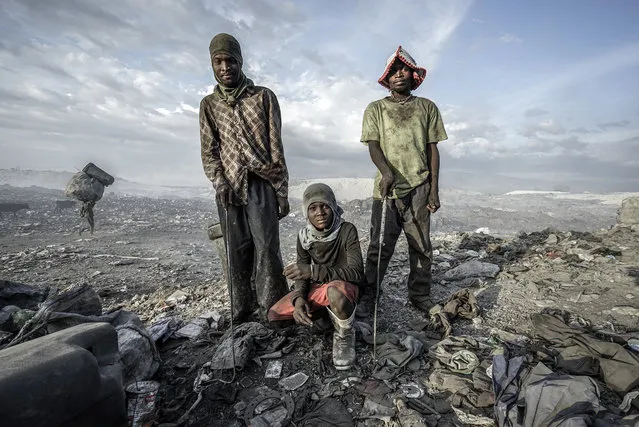
In a 200-acre-plus dump 5 kilometers north of Haiti’s capital, Port-au-Prince, hundreds of men, women and children scavenge day and night through the burning wasteland. They earn $12 to $15 a day – on a good day – for recycling plastics as well as clothing, household items and aluminum (for smelting). Some 5,000 tons of waste is created each day in the Port-au-Prince area. (Photo and caption by Giles Clarke/Getty Images Reportage)

In a 200-acre-plus dump 5 kilometers north of Haiti’s capital, Port-au-Prince, hundreds of men, women and children scavenge day and night through the burning wasteland. They earn $12 to $15 a day – on a good day – for recycling plastics as well as clothing, household items and aluminum (for smelting). Some 5,000 tons of waste is created each day in the Port-au-Prince area. (Photo and caption by Giles Clarke/Getty Images Reportage)
Details
02 Feb 2015 11:21:00