Loading...
Done
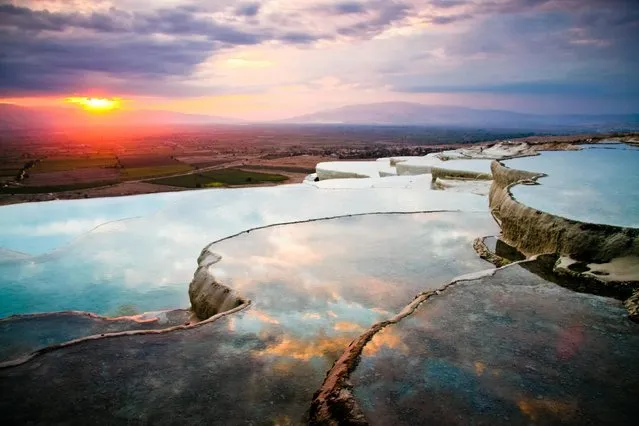
Pamukkale, Turkey, is home to these terrace pools, formed by the build-up of carbonate mineral from the warm water flowing from the thermal springs above. (Photo by Image Courtesy of Jennifer Hayes/Getty Images)

Pamukkale, Turkey, is home to these terrace pools, formed by the build-up of carbonate mineral from the warm water flowing from the thermal springs above. (Photo by Image Courtesy of Jennifer Hayes/Getty Images)
Details
17 Jul 2017 07:59:00
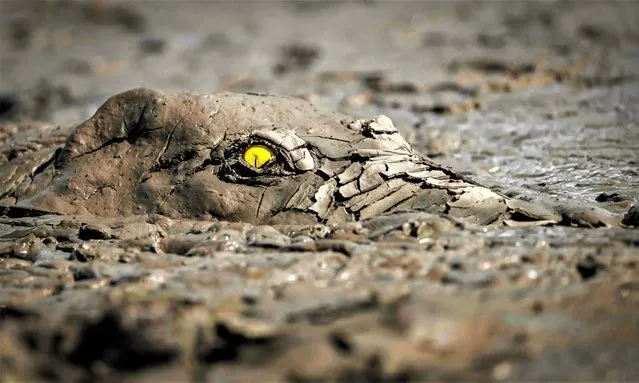
“Danger in the mud” – a crocodile at Mana Pools National Park, Zimbabwe. The grand prize winner. (Photo by Jens Cullmann/World Nature Photography Awards 2022)

“Danger in the mud” – a crocodile at Mana Pools National Park, Zimbabwe. The grand prize winner. (Photo by Jens Cullmann/World Nature Photography Awards 2022)
Details
08 Mar 2023 04:28:00
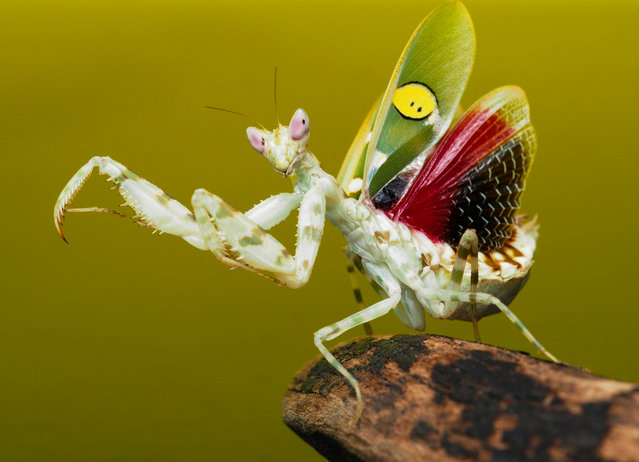
The jewelled flower mantis, commonly found in Asia, is believed to be the inspiration for many martial artists is seen in Jakarta, Indonesia on August 2, 2016. (Photo by Prabu Dennaga/Barcroft Images)

The jewelled flower mantis, commonly found in Asia, is believed to be the inspiration for many martial artists is seen in Jakarta, Indonesia on August 2, 2016. (Photo by Prabu Dennaga/Barcroft Images)
Details
26 Sep 2016 06:52:00
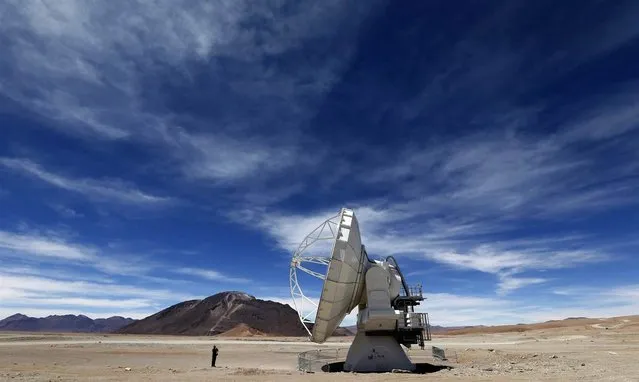
A man takes a photo of a radio antenna that's part of the Atacama Large Milimeter Array Observatory on March 12, 2013 at Llano de Chajnantor, about 43 miles (70 kilometers) from San Pedro de Atacama, Chile. The $1.5 billion ALMA facility, which had its official inauguration on March 13, is considered the world's most expensive ground-based observatory. (Photo by Felipe Trueba/EPA)

A man takes a photo of a radio antenna that's part of the Atacama Large Milimeter Array Observatory on March 12, 2013 at Llano de Chajnantor, about 43 miles (70 kilometers) from San Pedro de Atacama, Chile. The $1.5 billion ALMA facility, which had its official inauguration on March 13, is considered the world's most expensive ground-based observatory. (Photo by Felipe Trueba/EPA)
Details
03 Apr 2013 09:25:00
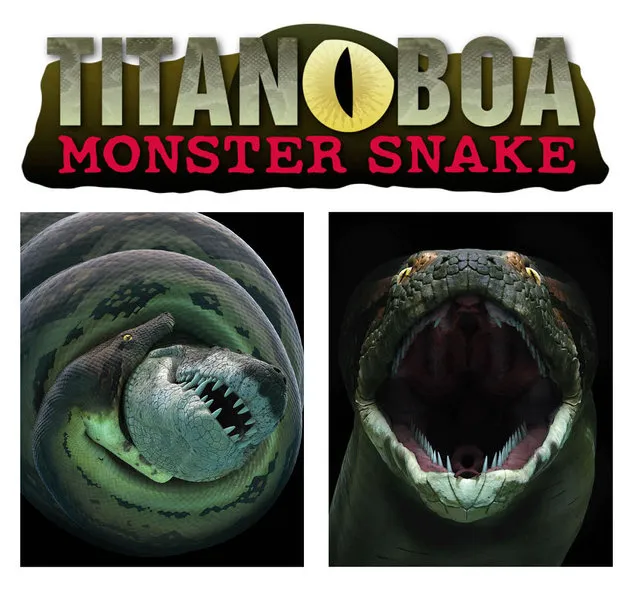
Titanoboa: Monster Snake

Titanoboa, meaning "titanic boa," is an extinct genus of snake that lived approximately 60–58 million years ago, during the Paleocene epoch, a 10-million-year period immediately following the dinosaur extinction event. The only known species is Titanoboa cerrejonensis, the largest, longest, and heaviest snake ever discovered, which supplanted the previous record holder, Gigantophis.

A full-scale model of the snake was unveiled at New York City's Grand Central station before the exhibit opens at the Smithsonian in Washington DC.

Details
06 Feb 2014 12:38:00
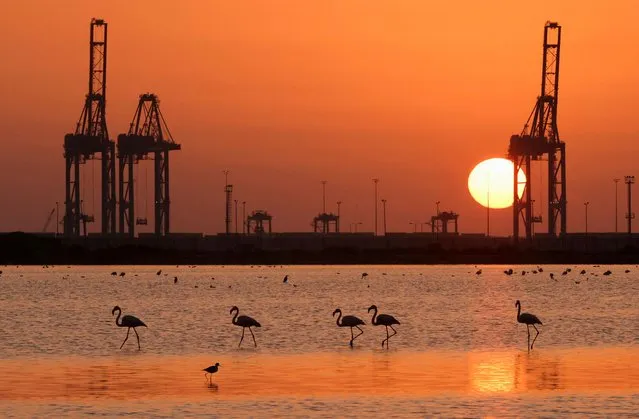
Migratory flamingos arriving from Europe are seen in Port Fouad Nature Reserve, on the outskirts of Port Said Governorate, Egypt on December 12, 2022. (Photo by Mohamed Abd El Ghany/Reuters)

Migratory flamingos arriving from Europe are seen in Port Fouad Nature Reserve, on the outskirts of Port Said Governorate, Egypt on December 12, 2022. (Photo by Mohamed Abd El Ghany/Reuters)
Details
19 Jan 2023 05:12:00
People dressed as characters from the computer game “World of Warcraft” walk across a field near the town of Kamyk nad Vltavou, Czech Republic, April 28, 2018. (Photo by David W. Cerny/Reuters)

People dressed as characters from the computer game “World of Warcraft” walk across a field near the town of Kamyk nad Vltavou, Czech Republic, April 28, 2018. (Photo by David W. Cerny/Reuters)
Details
03 May 2018 00:05:00
“Viva (Cheer)”. (Jaime Lluch)

“Viva (Cheer)”. (Photo by Jaime Lluch)

Details
09 Feb 2013 11:32:00