Loading...
Done
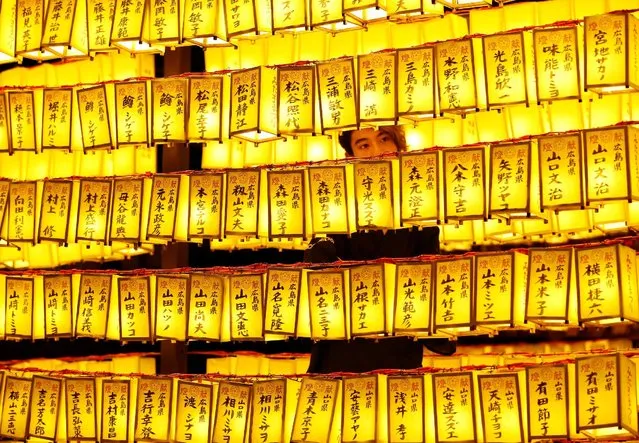
A man stands between thousands of paper lanterns, which were displayed and lit up the precincts of the shrine, where more than 2.4 million war-dead are enshrined, during the Mitama Festival at Yasukuni Shrine in Tokyo, Japan July 13, 2016. “Mitama” is a respectful word that means “the soul of a dead person” in Japanese, and this “Soul Festival” honors just that. The Yasukuni Shrine is dedicated to the honoring of the souls of those who gave their lives to defend Japan, and this festival is an early step towards the Japanese holiday season of Obon, during which Japanese people honor their deceased ancestors. (Photo by Issei Kato/Reuters)

A man stands between thousands of paper lanterns, which were displayed and lit up the precincts of the shrine, where more than 2.4 million war-dead are enshrined, during the Mitama Festival at Yasukuni Shrine in Tokyo, Japan July 13, 2016. “Mitama” is a respectful word that means “the soul of a dead person” in Japanese, and this “Soul Festival” honors just that. (Photo by Issei Kato/Reuters)
Details
14 Jul 2016 09:37:00
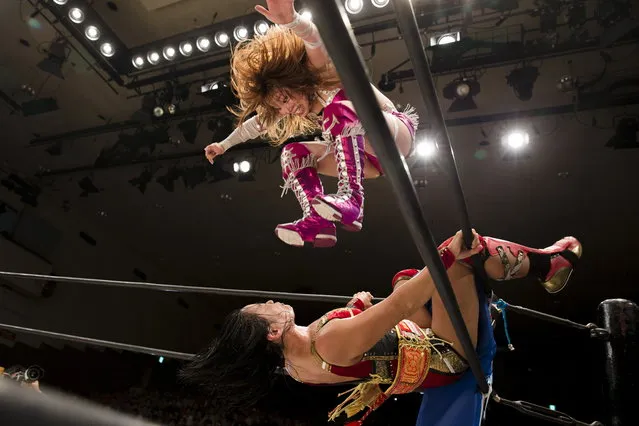
Wrestler Kairi Hojo jumps at her opponent Mieko satomura during their Stardom female professional wrestling show at Korakuen Hall in Tokyo, Japan, July 26, 2015. Professional women's wrestling in Japan means body slams, sweat, and garish costumes. But Japanese rules on hierarchy also come into play, with a culture of deference to veteran fighters. The brutal reality of the ring is masked by a strong fantasy element that feeds its popularity with fans, most of them men. (Photo by Thomas Peter/Reuters)

Wrestler Kairi Hojo jumps at her opponent Mieko satomura during their Stardom female professional wrestling show at Korakuen Hall in Tokyo, Japan, July 26, 2015. Professional women's wrestling in Japan means body slams, sweat, and garish costumes. But Japanese rules on hierarchy also come into play, with a culture of deference to veteran fighters. The brutal reality of the ring is masked by a strong fantasy element that feeds its popularity with fans, most of them men. (Photo by Thomas Peter/Reuters)
Details
14 Dec 2016 07:58:00


Отава Ё – Яблочко (Otava Yo – Yablochko; Russian: Яблочко, “Little Apple”). Yablochko is a Russian folk song of chastushka style and dance, traditionally presented as sailors' dance. The choreographed version of the dance first appeared in the 1926 Reinhold Glière ballet The Red Poppy and from there is known in the West as the Russian Sailors Dance.
Details
17 Aug 2019 00:03:00


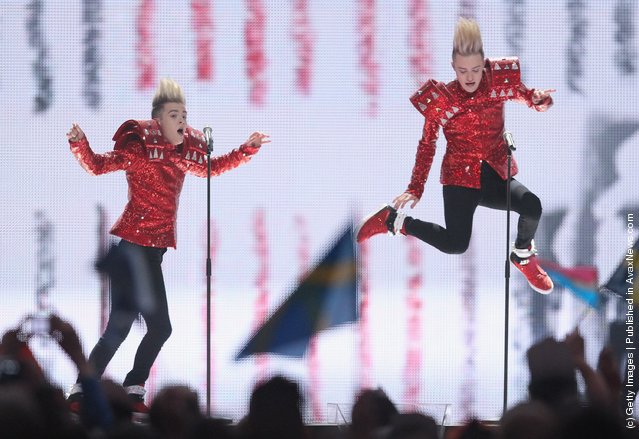
John and Edward Grimes of the band Jedward from Ireland peform at a dress rehearsal the day before the second semi-finals of the Eurovision Song Contest 2011 on May 11, 2011 in Duesseldorf, Germany. (Photo by Sean Gallup/Getty Images)
Details
13 May 2011 09:38:00
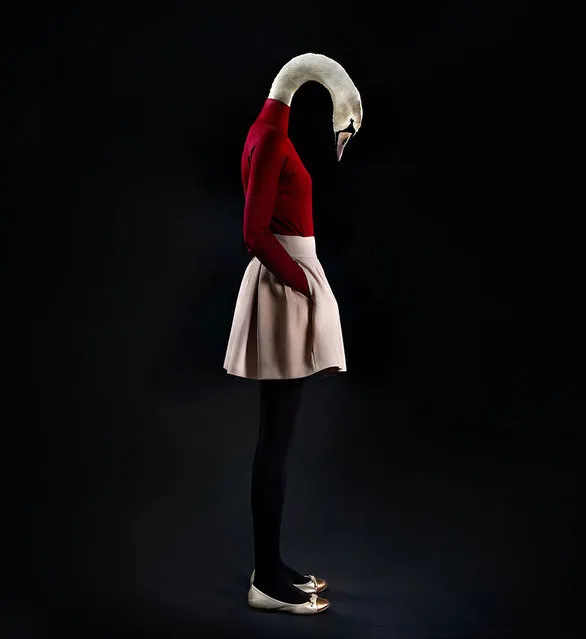
Animals Dressed By Miguel Vallinas

A Spanish photographer has created a collection of pictures featuring animals dressed in human clothing. Miguel Vallinas who is based in Madrid, has called the project Segundas Pieles which means Second Skins. But rather than just creating a collection of funny pictures, Vallinas tries to imagine which clothes the animals would choose for themselves if they could.
Details
16 Oct 2013 10:28:00
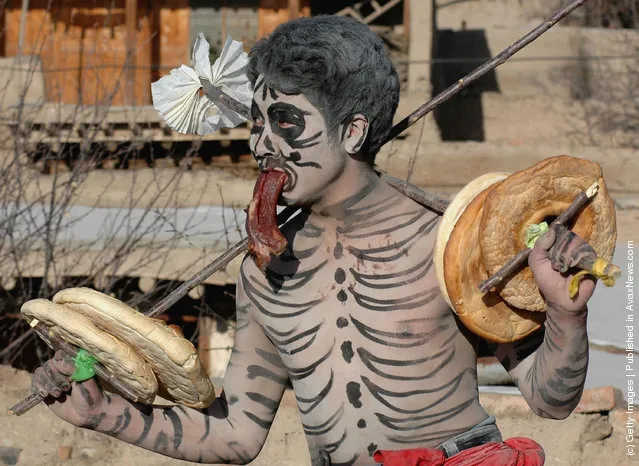
Tu Ethnic Minority Men Dance During Exorcism Ceremony

A Chinese man made up like “Wutu” which means tiger in ancient time, dances during an annual exorcism ceremony of the local Tu ethnic minority group at Nianduhu Village on December 31, 2004 in Tongren County, northwest of China. (Photo by China Photos/Getty Images)
Details
13 Dec 2011 10:55:00


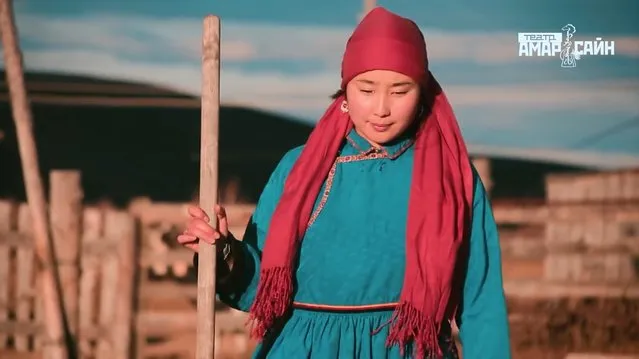
Erzhena Zhamyanova (“Amar Sain” theater) and Buryat folk instruments orchestra – Dance Monkey. “Dance Monkey” is a song by Australian singer Tones and I, released on May 10, 2019 as the second single (first in the US) from Tones and I's debut EP The Kids Are Coming.
Details
17 Jun 2021 06:37:00
Sanremo 2011

Belen Rodriguez and Elisabetta Canalis attends the 61th Sanremo Song Festival at the Ariston Theatre on February 15, 2011 in San Remo, Italy.
Details
18 Mar 2011 12:22:00