Loading...
Done
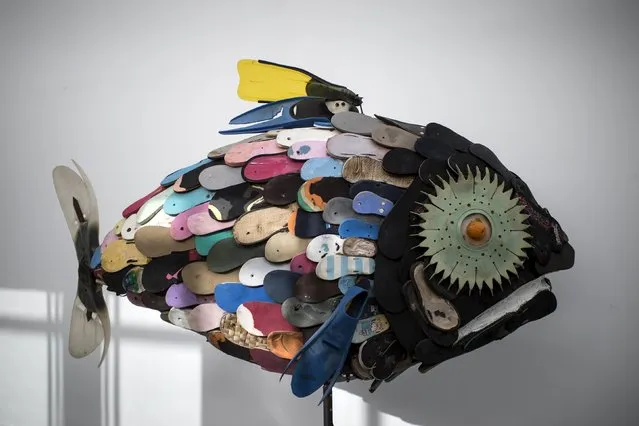
A sculpture of a fish made from waste products collected from the sea is displayed during the exhibition Keep The Oceans Clean by art collective Skeleton Sea, at the Torre Madariaga Biodiversity Centre in Busturia, Spain, May 17, 2015. (Photo by Vincent West/Reuters)

A sculpture of a fish made from waste products collected from the sea is displayed during the exhibition Keep The Oceans Clean by art collective Skeleton Sea, at the Torre Madariaga Biodiversity Centre in Busturia, Spain, May 17, 2015. Skeleton Sea, a group of surfers and artists, recycle waste collected from the world's oceans to create artworks and draw attention to the dangers faced from overfishing, pollution and oil spills. (Photo by Vincent West/Reuters)
Details
19 May 2015 11:16:00
Models are seen backstage prior to the Walter Van Beirendonck Menswear Spring/Summer 2024 show as part of Paris Fashion Week on June 21, 2023 in Paris, France. (Photo by Francois Durand/Getty Images)

Models are seen backstage prior to the Walter Van Beirendonck Menswear Spring/Summer 2024 show as part of Paris Fashion Week on June 21, 2023 in Paris, France. (Photo by Francois Durand/Getty Images)
Details
23 Sep 2024 02:48:00
Coco Gauff celebrates during her victory over Aryna Sabalenka of Russia in the women's final of US Open at the USTA Billie Jean King National Tennis Center on September 09, 2023 in New York City. (Photo by Shannon Stapleton/Reuters)

Coco Gauff celebrates during her victory over Aryna Sabalenka of Russia in the women's final of US Open at the USTA Billie Jean King National Tennis Center on September 09, 2023 in New York City. (Photo by Shannon Stapleton/Reuters)
Details
19 Sep 2023 02:49:00
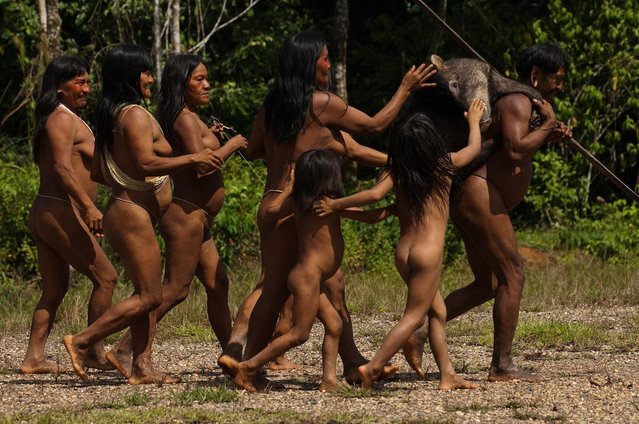
Spectacular images offering insight into the lives of the Huaorani people in the Ecuadorian Amazon have been revealed showing how they use traditional methods to hunt monkeys for food. The stunning pictures were taken by conservation photographer Pete Oxford from Torquay, Devon in the Ecuadorian Amazon. “The Huaorani Indians are a forest people highly in tune with their environment. Many are now totally acculturated since the 1950s by missionaries”, said Pete. “Today they face radical change to their culture to the proximity of oil exploration within their territory and the Yasuni National Park and Biosphere Reserve, they are vastly changed. Some still live very traditionally and for this shoot, through my Huaorani friend, a direct relative of those photographed he wanted to depict them as close to their original culture as possible. They still largely hunt with blow pipes and spears eating a lot of monkeys and peccaries”. The Huaorani are also known as the Waorani, Waodani or the Waos and are native Amerindians. Their lands are located between the Curaray and Napo rivers and speak the Huaorani language. Pete says that during his visit he was welcomed into the group and hopes that ancient cultures can be saved. Here: The tribe were seen celebrating after a hunter returned to camp with a wild pig. (Photo by Pete Oxford/Mediadrumworld.com)

Spectacular images offering insight into the lives of the Huaorani people in the Ecuadorian Amazon have been revealed showing how they use traditional methods to hunt monkeys for food. The stunning pictures were taken by conservation photographer Pete Oxford from Torquay, Devon in the Ecuadorian Amazon. Here: The tribe were seen celebrating after a hunter returned to camp with a wild pig. (Photo by Pete Oxford/Mediadrumworld.com)
Details
20 Jan 2017 07:58:00
A Turkana man and a boy carrying a gun look on as a G3 battle rifle hangs from a structure used to dry fish at a fishing camp on the shores of Lake Turkana, some kilometres from Todonyang near the Kenya-Ethiopia border in northwestern Kenya October 12, 2013. (Photo by Siegfried Modola/Reuters)

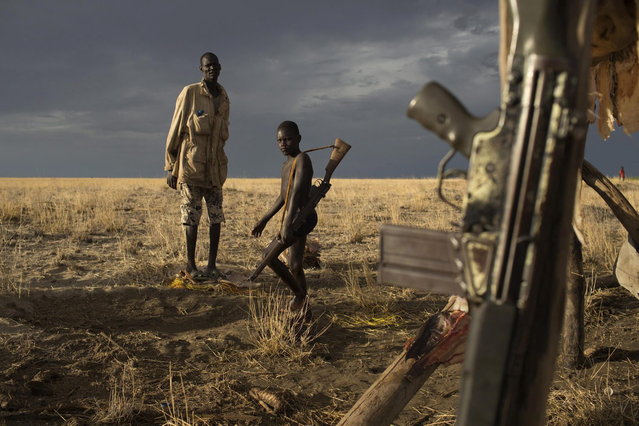
A Turkana man and a boy carrying a gun look on as a G3 battle rifle hangs from a structure used to dry fish at a fishing camp on the shores of Lake Turkana, some kilometres from Todonyang near the Kenya-Ethiopia border in northwestern Kenya October 12, 2013The Turkana are traditionally nomadic pastoralists, but they have seen the pasture that they need to feed their herds suffer from recurring droughts and many have turned to fishing. However, Lake Turkana is overfished, and scarcity of food and pastureland is fuelling long-standing conflict with Ethiopian indigenous Dhaasanac, who have seen grazing grounds squeezed by large-scale government agricultural schemes in southern Ethiopia. The Dhaasanac now venture ever deeper into Kenyan territory in search of fish and grass, clashing with neighbours. Fighting between the communities has a long history, but the conflict has become ever more fatal as automatic weapons from other regional conflicts seep into the area. While the Turkana region is short of basics like grass and ground-water, it contains other resources including oil reserves and massive, newly discovered underground aquifers. (Photo by Siegfried Modola/Reuters)

Details
05 Dec 2013 12:08:00
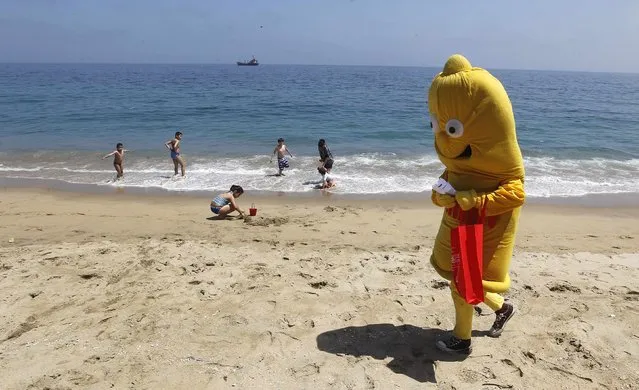
A man dressed in a condom costume walks at Caleta Portales beach, during a summer awareness campaign by the Chilean Corporation for the Prevention of AIDS in Valparaiso city, northwest of Santiago January  9, 2015. (Photo by Rodrigo Garrido/Reuters)

A man dressed in a condom costume walks at Caleta Portales beach, during a summer awareness campaign by the Chilean Corporation for the Prevention of AIDS in Valparaiso city, northwest of Santiago January 9, 2015. (Photo by Rodrigo Garrido/Reuters)
Details
10 Jan 2015 13:42:00
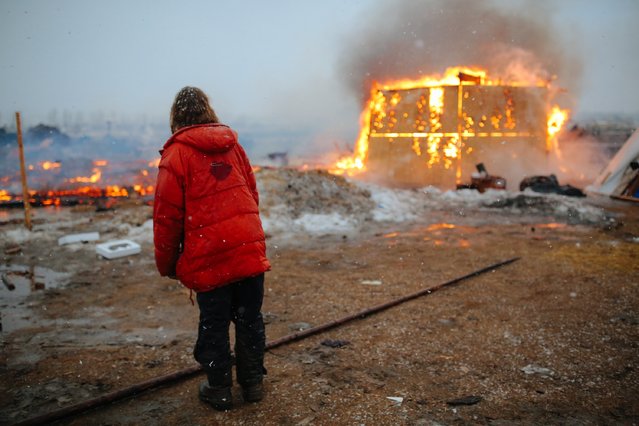
Campers set structures on fire in preparation of the Army Corp's 2pm deadline to leave the Oceti Sakowin protest camp on February 22, 2017 in Cannon Ball, North Dakota. (Photo by Stephen Yang/Getty Images)

Campers set structures on fire in preparation of the Army Corp's 2pm deadline to leave the Oceti Sakowin protest camp on February 22, 2017 in Cannon Ball, North Dakota. Activists and protesters have occupied the Standing Rock Sioux reservation for months in opposotion to the completion of the Dakota Access Pipeline. (Photo by Stephen Yang/Getty Images)
Details
26 Feb 2017 00:01:00
A dead green sea turtle is collected from the beach at the Khor Kalba Conservation Reserve, in the city of Kalba, on the east coast of the United Arab Emirates, Tuesday, February 1, 2022.  A staggering 75% of all dead green turtles and 57% of all loggerhead turtles in Sharjah had eaten marine debris, including plastic bags, bottle caps, rope and fishing nets, a new study published in the Marine Pollution Bulletin. The study seeks to document the damage and danger of the throwaway plastic that has surged in use around the world and in the UAE, along with other marine debris. (Photo by Kamran Jebreili/AP Photo)

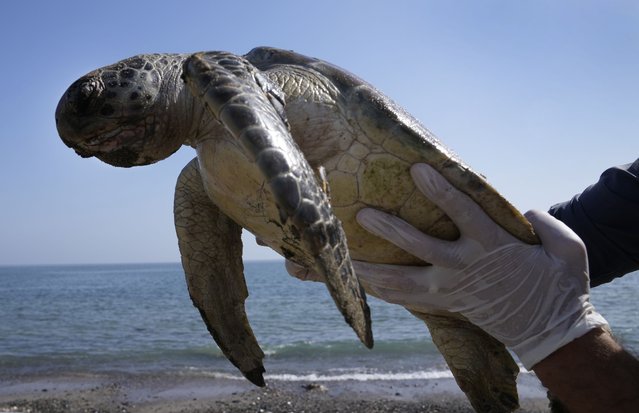
A dead green sea turtle is collected from the beach at the Khor Kalba Conservation Reserve, in the city of Kalba, on the east coast of the United Arab Emirates, Tuesday, February 1, 2022. A staggering 75% of all dead green turtles and 57% of all loggerhead turtles in Sharjah had eaten marine debris, including plastic bags, bottle caps, rope and fishing nets, a new study published in the Marine Pollution Bulletin. The study seeks to document the damage and danger of the throwaway plastic that has surged in use around the world and in the UAE, along with other marine debris. (Photo by Kamran Jebreili/AP Photo)
Details
26 Feb 2022 04:58:00