Loading...
Done
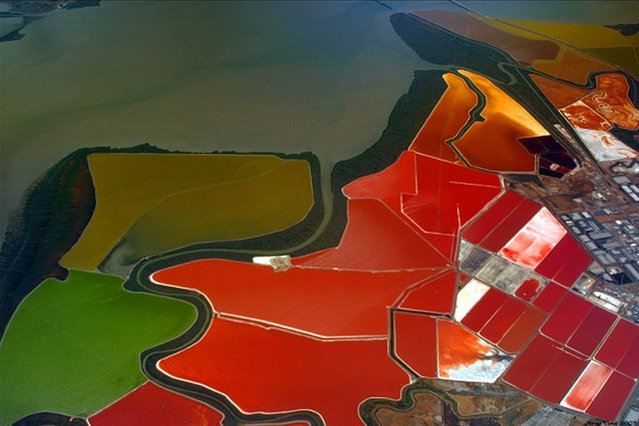
Salt ponds in San Francisco Bay

Salt evaporation ponds, also called salterns or salt pans, are shallow artificial ponds designed to produce salts from sea water or other brines. The seawater or brine is fed into large ponds and water is drawn out through natural evaporation which allows the salt to be subsequently harvested. The ponds also provide a productive resting and feeding ground for many species of waterbirds, which may include endangered species. The ponds are commonly separated by levees.
Details
11 Oct 2012 12:49:00
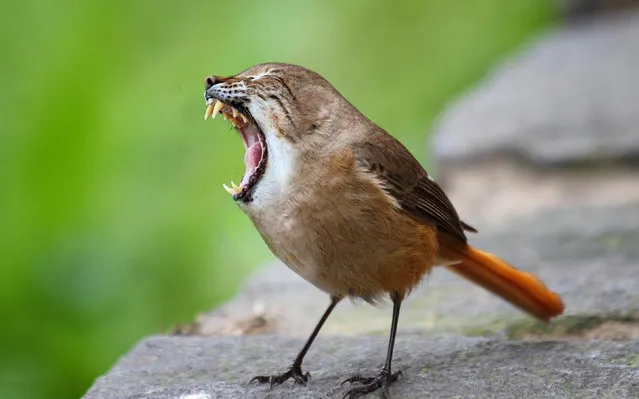
New species have been created by an enterprising artist who has merged photos of animals together in this incredible series of pictures. Californian Sarah DeRemer, 25, started making hybrid animals as a way to improve her photoshop skills. Here: cross between a tabby cat and a sparrow. (Photo by Sarah DeRemer/Caters News)

New species have been created by an enterprising artist who has merged photos of animals together in this incredible series of pictures. Californian Sarah DeRemer, 25, started making hybrid animals as a way to improve her photoshop skills. Here: cross between a tabby cat and a sparrow. (Photo by Sarah DeRemer/Caters News)
Details
04 Nov 2014 12:29:00
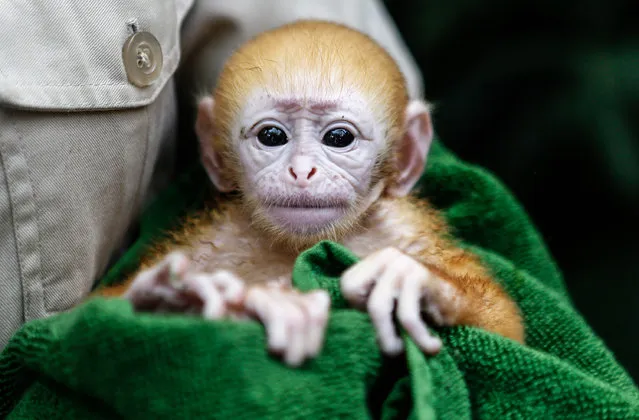
A zookeeper handles a week-old newborn baby Langur at Bali Zoo on June 19, 2014 in Gianyar, Bali, Indonesia. Javan Langurs are found in Java, Bali and Lombok in Indonesia and are listed as a threatened species due to hunting, agricultural expansion and habitat loss. (Photo by Putu Sayoga/Getty Images)

A zookeeper handles a week-old newborn baby Langur at Bali Zoo on June 19, 2014 in Gianyar, Bali, Indonesia. Javan Langurs are found in Java, Bali and Lombok in Indonesia and are listed as a threatened species due to hunting, agricultural expansion and habitat loss. (Photo by Putu Sayoga/Getty Images)
Details
20 Jun 2014 11:20:00
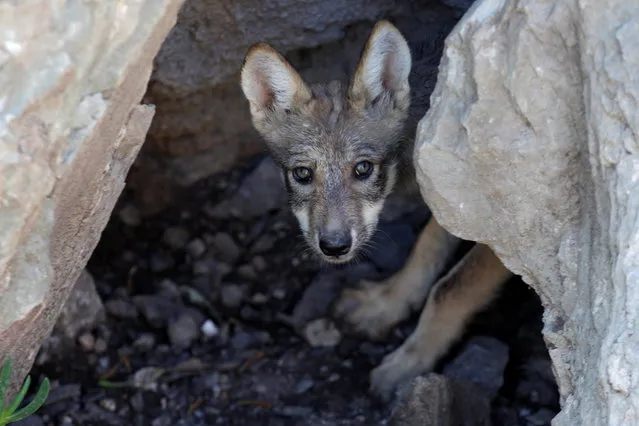
A newly born Mexican gray wolf cub, an endangered native species, is seen at its enclosure at the Museo del Desierto in Saltillo, Mexico, July 19, 2016. (Photo by Daniel Becerril/Reuters)

A newly born Mexican gray wolf cub, an endangered native species, is seen at its enclosure at the Museo del Desierto in Saltillo, Mexico, July 19, 2016. Though once held in high regard in Pre-Columbian Mexico, it is the most endangered gray wolf in North America, having been extirpated in the wild during the mid-1900s through a combination of hunting, trapping, poisoning and digging pups from dens. (Photo by Daniel Becerril/Reuters)
Details
21 Jul 2016 13:34:00
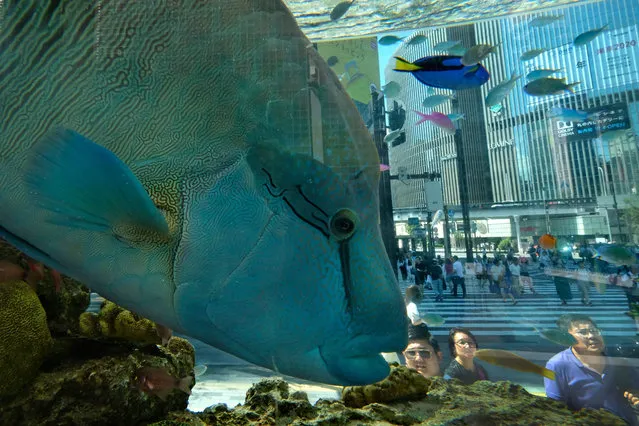
Listed as endangered on the IUCN red list of threatened species, a humphead wrasse, or Napoleon fish, swims in an aquarium during an event in Tokyo's shopping district of Ginza on August 5, 2019. (Photo by Kazuhiro Nogi/AFP Photo)

Listed as endangered on the IUCN red list of threatened species, a humphead wrasse, or Napoleon fish, swims in an aquarium during an event in Tokyo's shopping district of Ginza on August 5, 2019. (Photo by Kazuhiro Nogi/AFP Photo)
Details
18 Sep 2019 00:01:00
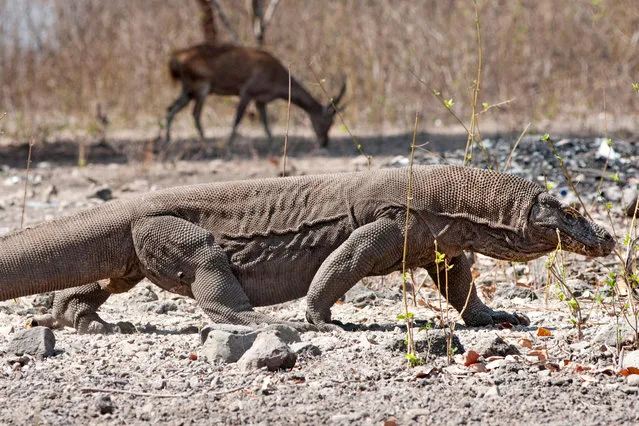
The Komodo dragon (Varanus komodoensis) was the most popular species overall based on English language Wikipedia page views. It is the world’s largest lizard, living on the islands of Komodo, Rinca and other smaller islands, and on Flores island in Indonesia. (Photo by Eric Nathan/Alamy)

The Komodo dragon (Varanus komodoensis) was the most popular species overall based on English language Wikipedia page views. It is the world’s largest lizard, living on the islands of Komodo, Rinca and other smaller islands, and on Flores island in Indonesia. (Photo by Eric Nathan/Alamy)
Details
06 May 2016 13:15:00
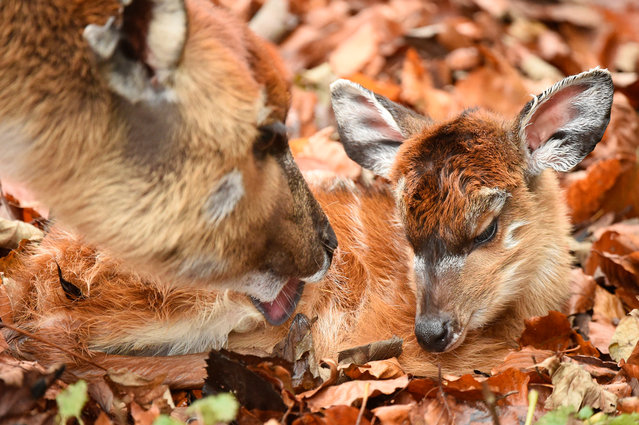
A newly born Sitatunga calf seen at ZSL Whipsnade Zoo on November 24, 2016 in Whipsnade, England. The swamp-dwelling species, also known as a marshbuck, is Africa's only true amphibious antelope. It was snuggled up in the leaves and almost perfectly camouflaged as it mother tended it. (Photo by Tony Margiocchi/Barcroft Images)

A newly born Sitatunga calf seen at ZSL Whipsnade Zoo on November 24, 2016 in Whipsnade, England. The swamp-dwelling species, also known as a marshbuck, is Africa's only true amphibious antelope. It was snuggled up in the leaves and almost perfectly camouflaged as it mother tended it. (Photo by Tony Margiocchi/Barcroft Images)
Details
27 Nov 2016 09:19:00
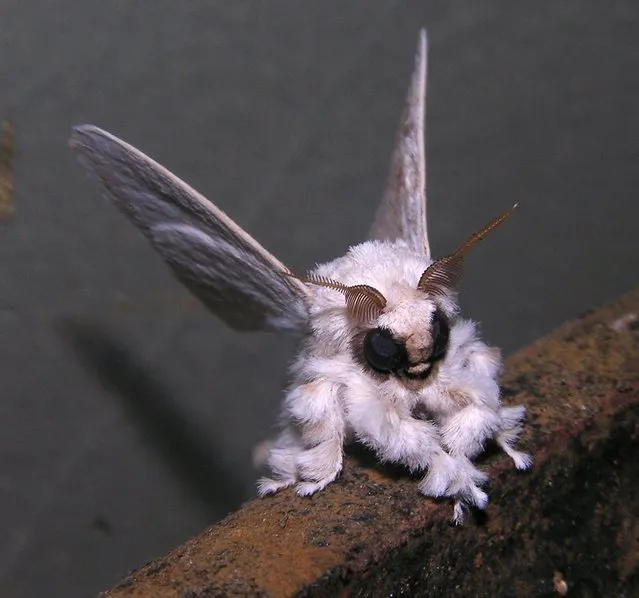
Venezuelan Poodle Moth

The Venezuelan Poodle Moth is a possible new species of moth discovered in 2009 by Dr. Arthur Anker of Bishkek, Kyrgyzstan, in the Gran Sabana region of Venezuela. It bears similarities to the Diaphora mendica, the Muslin Moth, but most likely belongs to the lepidopteran family Artace.
Details
13 Jan 2013 12:48:00