Loading...
Done


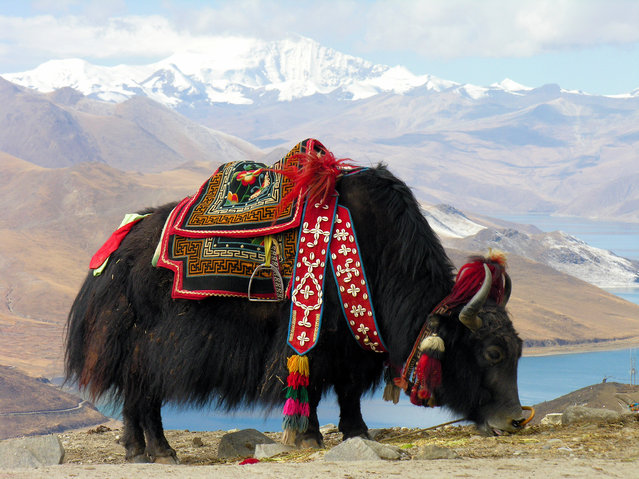
A young man “painting” the Eiffel Tower. (Photo by Keystone/Getty Images). 9th May 1970
Details
12 May 2011 09:05:00
In this October 5, 2016 photo a man looks at the work “Not to be Reproduced” by Rene Magritte at the Kunsthalle art gallery in Hamburg, Germany. The exhibition, which runs from Oct. 7,  2016 until Jan. 22,  2017, features more than 150 masterpieces of surrealism from four of the most significant European private collections of the 20th century. (Photo by Daniel Reinhardt/DPA via AP Photo)

In this October 5, 2016 photo a man looks at the work “Not to be Reproduced” by Rene Magritte at the Kunsthalle art gallery in Hamburg, Germany. The exhibition, which runs from Oct. 7, 2016 until Jan. 22, 2017, features more than 150 masterpieces of surrealism from four of the most significant European private collections of the 20th century. (Photo by Daniel Reinhardt/DPA via AP Photo)
Details
07 Oct 2016 10:29:00
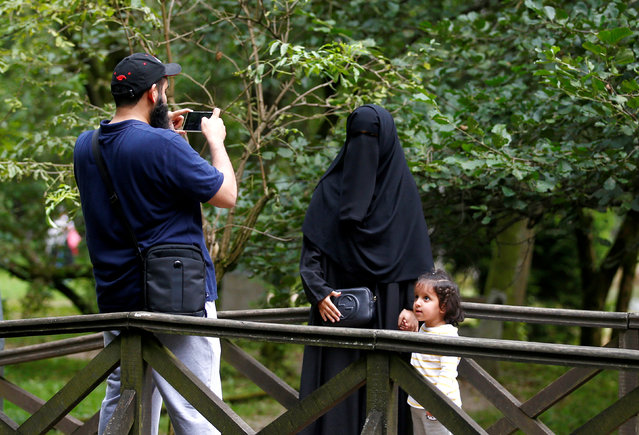
Tourists from the Middle East take pictures at Vrelo Bosne nature park in Ilidza near Sarajevo, Bosnia and Herzegovina, August 19, 2016. (Photo by Dado Ruvic/Reuters)

Tourists from the Middle East take pictures at Vrelo Bosne nature park in Ilidza near Sarajevo, Bosnia and Herzegovina, August 19, 2016. They discovered mountainous Bosnia, where half the population is Muslim, after the Arab Spring which destabilized many traditional holiday destinations such as Libya, Tunisia and Egypt. (Photo by Dado Ruvic/Reuters)
Details
25 Aug 2016 09:37:00
Yak near Yamdrok lake, Tibet. It is a long-haired bovinae found throughout the Himalayan region of south Central Asia, the Tibetan Plateau and as far north as Mongolia and Russia. The Tibetan economy is dominated by subsistence agriculture. Due to limited arable land, the primary occupation of the Tibetan Plateau is raising livestock, such as sheep, cattle, goats, camels, yaks, dzo, and horses. The Tibetan yak is an integral part of Tibetan life. (Photo by Dennis Jarvis)
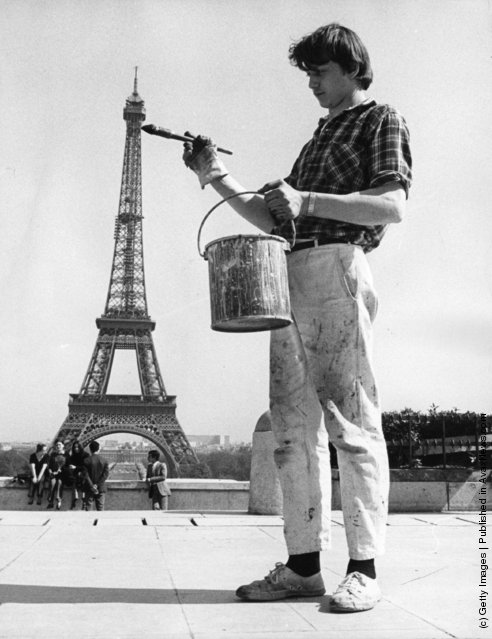

Yak near Yamdrok lake, Tibet. It is a long-haired bovinae found throughout the Himalayan region of south Central Asia, the Tibetan Plateau and as far north as Mongolia and Russia. The Tibetan economy is dominated by subsistence agriculture. Due to limited arable land, the primary occupation of the Tibetan Plateau is raising livestock, such as sheep, cattle, goats, camels, yaks, dzo, and horses. The Tibetan yak is an integral part of Tibetan life. (Photo by Dennis Jarvis)

Details
10 Jun 2015 10:48:00
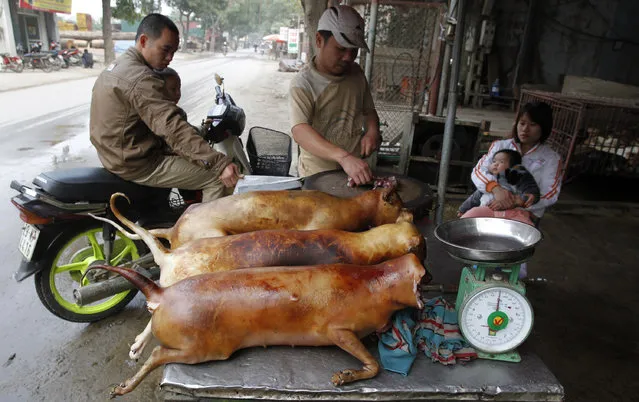
A vendor (C) cuts slaughtered dogs for sale at his roadside stall in Duong Noi village, outside Hanoi December 16, 2011. While animal rights activists have condemned eating dog meat as cruel treatment of the animals, it is still an accepted popular delicacy for some Vietnamese, as well in some other Asian countries. (Photo by Reuters/Kham)

A vendor (C) cuts slaughtered dogs for sale at his roadside stall in Duong Noi village, outside Hanoi December 16, 2011. While animal rights activists have condemned eating dog meat as cruel treatment of the animals, it is still an accepted popular delicacy for some Vietnamese, as well in some other Asian countries. Duong Noi is well-known as a dog-meat village, where hundreds of dogs are killed each day for sale as popular traditional food. Dog-eating as a custom is rooted in Vietnam and was developed as a result of poverty. One kilogram of dog meat costs about 130,000 dongs ($6.2). (Photo by Reuters/Kham)
Details
16 Jul 2013 11:40:00
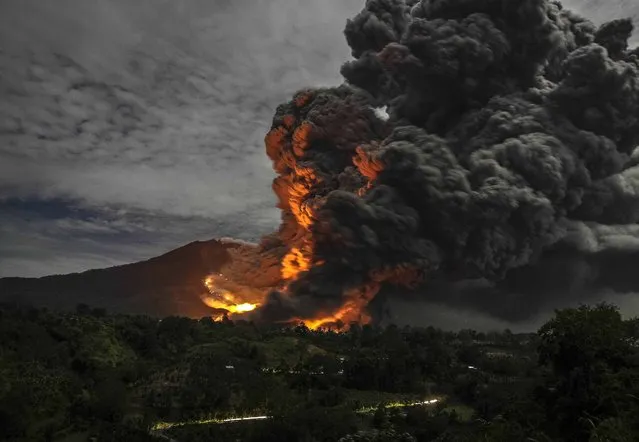
Mount Sinabung volcano erupts, as seen from Tiga Pancur village, Karo Regency in Indonesia's North Sumatra province October 8, 2014. (Photo by Y. T. Haryono/Reuters)

Mount Sinabung volcano erupts, as seen from Tiga Pancur village, Karo Regency in Indonesia's North Sumatra province October 8, 2014. (Photo by Y. T. Haryono/Reuters)
Details
11 Oct 2014 13:23:00
sniper

7th August 1941: A Soviet sniper targets the enemy with the telescopic sight on his rifle.
Details
16 Apr 2011 18:38:00
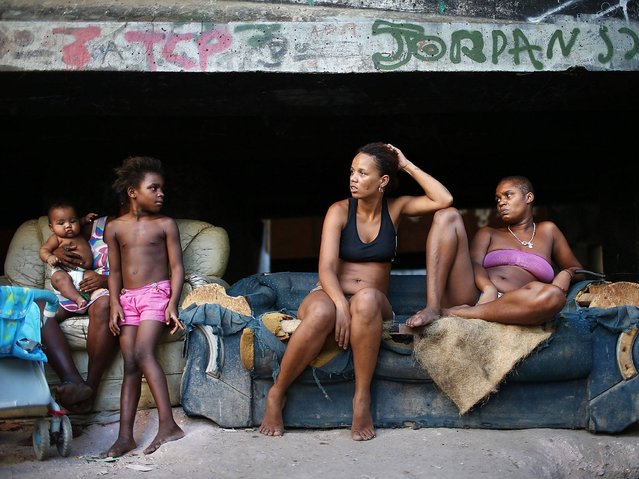
Residents (R to L) Luiza, Janubie, Leiticia and Lucas sit beneath an overpass near their houses in an impoverished area in the unpacified Complexo da Mare slum complex, one of the largest “favela” complexes in Rio de Janeiro. (Photo by Mario Tama/Getty Images)

Residents (R to L) Luiza, Janubie, Leiticia and Lucas sit beneath an overpass near their houses in an impoverished area in the unpacified Complexo da Mare slum complex, one of the largest “favela” complexes in Rio, on March 18, 2014 in Rio de Janeiro, Brazil. (Photo by Mario Tama/Getty Images)
Details
21 Mar 2014 06:07:00