Loading...
Done
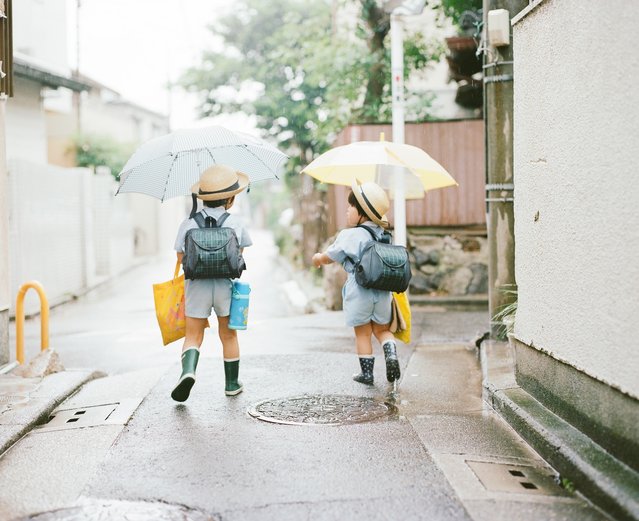
“Rainy days and mondays #1”. (Photo and caption by Hideaki Hamada)

“My children are not only my little darlings but off-shoots of myself. When I look at them, I have a strange feeling – as if I am watching myself re-living my life. What I want to show is their “living form”. – Hideaki Hamada. Photo: “Rainy days and mondays #1”. (Photo and caption by Hideaki Hamada)
Details
23 Mar 2015 09:56:00
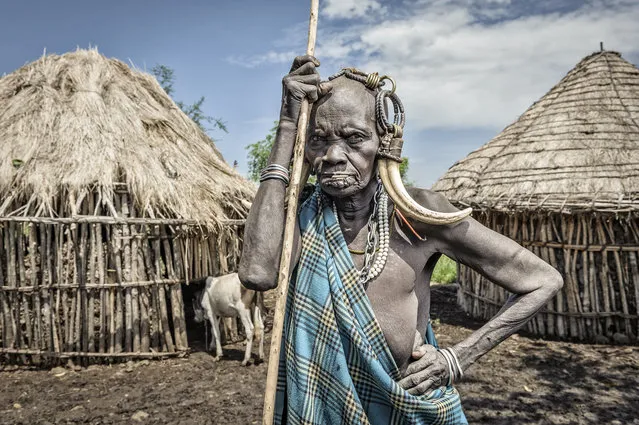
“Old Mursi woman”. Old woman by the huts of her village. Location: Marenke, Omo valley, Ethiopia. (Photo and caption by Jorge Fernandez/National Geographic Traveler Photo Contest)

“Old Mursi woman”. Old woman by the huts of her village. Location: Marenke, Omo valley, Ethiopia. (Photo and caption by Jorge Fernandez/National Geographic Traveler Photo Contest)

ATTENTION! All pictures are presented in high resolution. To see Hi-Res images – just TWICE click on any picture. In other words, click small picture – opens the BIG picture. Click BIG picture – opens VERY BIG picture.

Details
24 Jun 2013 09:55:00
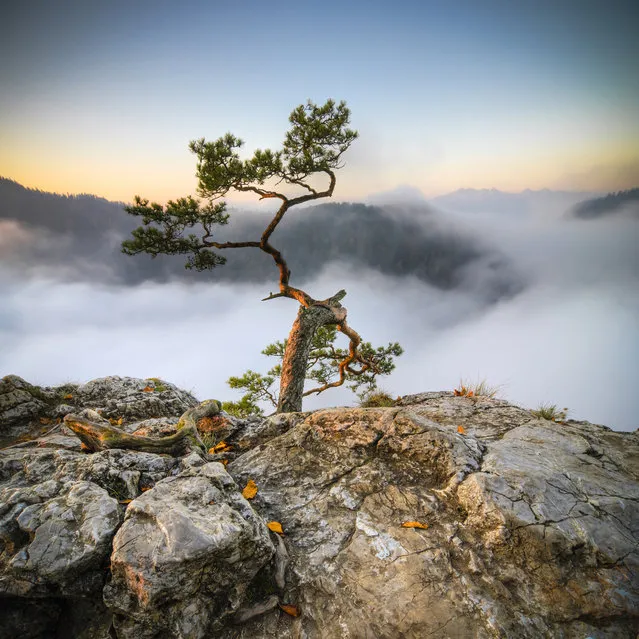
“Sokolica”. Sokolica, Poland. (Photo and caption by Marcin Kęsek/National Geographic Traveler Photo Contest)

“Sokolica”. Sokolica, Poland. (Photo and caption by Marcin Kęsek/National Geographic Traveler Photo Contest)

ATTENTION! All pictures are presented in high resolution. To see Hi-Res images – just TWICE click on any picture. In other words, click small picture – opens the BIG picture. Click BIG picture – opens VERY BIG picture.
Details
25 Jun 2013 09:13:00
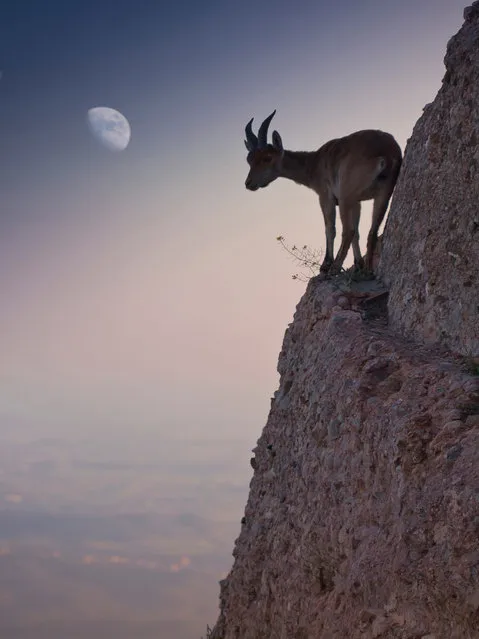
“For a bouquet of flowers”. Photographs made ​​in the last hours of the day. A goat is directed by a dangerous way to eat a small bouquet of flowers. Location: España, Barcelona, Montserrat. (Photo and caption by Renato Lopez Baldo/National Geographic Traveler Photo Contest)

“For a bouquet of flowers”. Photographs made ​​in the last hours of the day. A goat is directed by a dangerous way to eat a small bouquet of flowers. Location: España, Barcelona, Montserrat. (Photo and caption by Renato Lopez Baldo/National Geographic Traveler Photo Contest)

ATTENTION! All pictures are presented in high resolution. To see Hi-Res images – just TWICE click on any picture. In other words, click small picture – opens the BIG picture. Click BIG picture – opens VERY BIG picture.
Details
25 Jun 2013 12:51:00
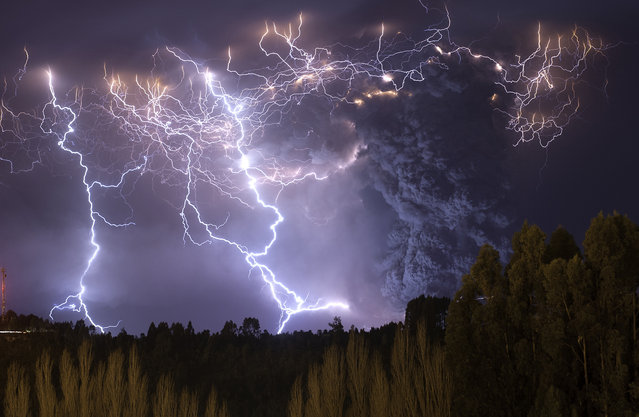
The eruption of Cordon Caulle began on June 4, 2011, located in the Region of Los Rios in Chile. For about 12 months, people and animals became accustomed to living with the daily fall of ash, which also caused problems in the air traffic in South America. The explosions and lightning during first days of the eruption could be seen from hundreds of miles around. This photograph was taken on the second night of eruption from the town of Lago Ranco. (Photo and caption by Francisco Negroni/National Geographic Traveler Photo Contest)

The eruption of Cordon Caulle began on June 4, 2011, located in the Region of Los Rios in Chile. For about 12 months, people and animals became accustomed to living with the daily fall of ash, which also caused problems in the air traffic in South America. The explosions and lightning during first days of the eruption could be seen from hundreds of miles around. This photograph was taken on the second night of eruption from the town of Lago Ranco. (Photo and caption by Francisco Negroni/National Geographic Traveler Photo Contest)

ATTENTION! All pictures are presented in high resolution. To see Hi-Res images – just TWICE click on any picture. In other words, click small picture – opens the BIG picture. Click BIG picture – opens VERY BIG picture.
Details
23 Jun 2013 11:24:00
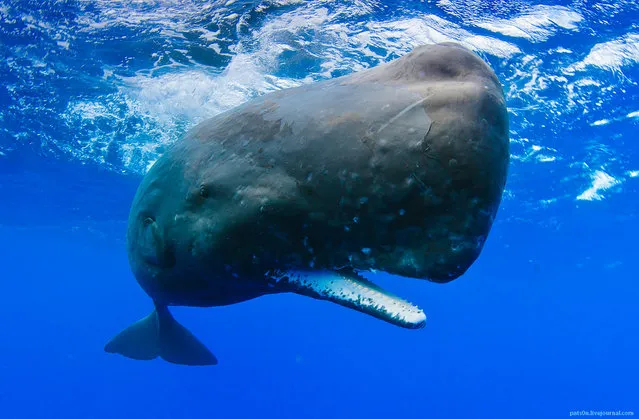
“Sperm whale opening it's huge mouth, Ogasawara Islands, Japan. Sperm whales are the biggest carnivorous animals on the planet. Each teeth in the mouth of adult specimen weights more than 1 kilogram. Interestingly enough that modern marine biologists believe that these teeth despite being fearsome play little role in capturing and eating giant squid – with their main function being mainly ritual aggression between males!”. (Alexander Safonov)

“Sperm whale opening it's huge mouth, Ogasawara Islands, Japan. Sperm whales are the biggest carnivorous animals on the planet. Each teeth in the mouth of adult specimen weights more than 1 kilogram. Interestingly enough that modern marine biologists believe that these teeth despite being fearsome play little role in capturing and eating giant squid – with their main function being mainly ritual aggression between males!”. (Photo by Alexander Safonov)
Details
30 Nov 2012 11:22:00
In this Wednesday, April 8, 2020, photo, youths remove their mask to record a dance routine on the streets of Wuhan in central China's Hubei province. Released from their apartments after a 2 1/2-month quarantine, residents of the city where the coronavirus pandemic began are cautiously returning to shopping and strolling in the street but say they still go out little and keep children home while they wait for schools to reopen. (Photo by Ng Han Guan/AP Photo)

In this Wednesday, April 8, 2020, photo, youths remove their mask to record a dance routine on the streets of Wuhan in central China's Hubei province. Released from their apartments after a 2 1/2-month quarantine, residents of the city where the coronavirus pandemic began are cautiously returning to shopping and strolling in the street but say they still go out little and keep children home while they wait for schools to reopen. (Photo by Ng Han Guan/AP Photo)
Details
17 Apr 2020 00:01:00
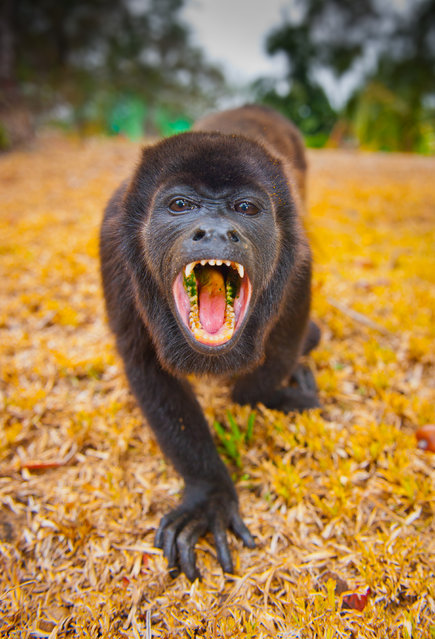
“Attacking Howler Monkey”. Due to a major tropical rainstorm my wife and I were forced to stay overnight in a Howler Monkey Rescue center in Panama. I used the time to explore the area and to take photos of the monkeys. Just after the rain finally stopped, I ran into this monkey that tried to mock attack me. I quickly took a couple of photos before retreating to a (more) safe distance. (Photo and caption by Christian Mueller-Planitz/National Geographic Traveler Photo Contest)

“Attacking Howler Monkey”. Due to a major tropical rainstorm my wife and I were forced to stay overnight in a Howler Monkey Rescue center in Panama. I used the time to explore the area and to take photos of the monkeys. Just after the rain finally stopped, I ran into this monkey that tried to mock attack me. I quickly took a couple of photos before retreating to a (more) safe distance. (Photo and caption by Christian Mueller-Planitz/National Geographic Traveler Photo Contest)

ATTENTION! All pictures are presented in high resolution. To see Hi-Res images – just TWICE click on any picture. In other words, click small picture – opens the BIG picture. Click BIG picture – opens VERY BIG picture.
Details
30 Jun 2013 12:25:00